Loading...
Joseph I vs Sobhuza I
Joseph I leads by 2.0 pts · 2 figures compared
…
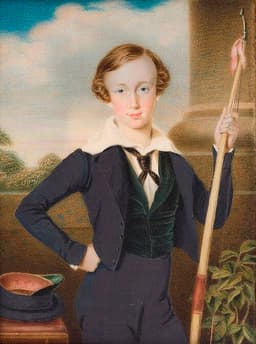
Joseph I
Emperor · Modern
53.3Total

Sobhuza I
Emperor · Modern
51.3Total
Basic Information
Born
1678
1780
Died
1711
1836
Era
Modern
Modern
Nationality
Holy Roman Empire
Swaziland
Occupation
Emperor
Emperor
Civilization
Western
Other
Score Comparison
Military (10%)
50.0
46.7
Political (20%)
72.0
61.3
Influence (20%)
51.8
55.7
Legacy (20%)
41.7
50.0
Leadership (15%)
67.0
40.0
Strategy (15%)
41.0
50.0
TOTAL
53.3
51.3
Joseph I — Complete Timeline
1701 AD
War of the Spanish SuccessionWar◆ Major
Joseph I, as King of the Romans and later Emperor, supported the Habsburg claim to the Spanish throne against the Bourbon candidate. The war, fought across Europe, ended with the Treaty of Utrecht in 1713, which recognized Philip V as king of Spain but ceded Spanish territories to Austria.
War of the Spanish SuccessionTreaty of UtrechtHabsburg
Impact: global
1705 AD
Reforms in HungaryReform
Joseph I, as Emperor, pursued a policy of reconciliation with the Hungarian nobility, ending the R
HungaryReformRákóczi
Impact: regionalconstructive
1711 AD
Died of smallpoxOther◆ Major
Joseph I died suddenly of smallpox at age 32, leaving no male heir. His death triggered the succession crisis that led to the Pragmatic Sanction and the eventual War of the Austrian Succession, as his brother Charles VI inherited the Habsburg domains.
DeathSuccession CrisisSmallpox
Impact: regionaltragic
Sobhuza I — Complete Timeline
1815 AD
Unification of Swazi ClansPolitical Action
Sobhuza I united various Nguni clans into the Swazi nation, establishing a centralized kingdom. He consolidated power through diplomacy and military campaigns, creating the foundation for modern Swaziland (Eswatini).
Swazi NationUnificationFounding
Impact: regionalconstructive
1820 AD
Conflict with Zulu under ShakaWar◆ Major
Sobhuza I faced military pressure from the expanding Zulu kingdom under Shaka. He avoided direct confrontation by moving his people northward, preserving Swazi independence through strategic retreat.
ZuluShakaSwazi
Impact: regional
1825 AD
Establishment of Capital at LobambaPolitical Action
Sobhuza I established his royal capital at Lobamba, which became the political and ceremonial center of the Swazi kingdom. This site remains the traditional capital of Eswatini.
CapitalSwaziLobamba
Impact: regionalconstructive
1830 AD
Alliance with British against ZuluPolitical Action
Sobhuza I formed an alliance with British traders and missionaries to counter Zulu threats. This diplomatic move secured British support and helped protect Swazi sovereignty.
AllianceBritishSwazi
Impact: regionalconstructive
Expert Analysis
Origins
Joseph I (1678–1711) was born in Vienna as the eldest son of Leopold I, Holy Roman Emperor, and Eleonor Magdalene of Neuburg. He received a rigorous Jesuit education, steeped in Catholic orthodoxy and Habsburg dynastic tradition. His early years were marked by the ongoing Great Turkish War and the complexities of imperial politics. In contrast, Sobhuza I (c. 1780–1836) was born into the Dlamini clan in present-day Eswatini. His father, Ndvungunye, was a chief of a small Nguni group. Sobhuza's formative years coincided with the Mfecane upheavals, as Zulu expansion under Shaka reshaped southern Africa. He learned statecraft through clan diplomacy and military necessity.
Rise to Power
Joseph I was elected King of the Romans in 1690, securing his succession. He became Emperor in 1705 upon his father's death. His rise was predetermined by Habsburg inheritance, but he actively shaped policy during the War of the Spanish Succession (1701–1714). He supported the Habsburg candidate, Archduke Charles, against Philip of Anjou. Joseph's reign saw military campaigns in Italy and Spain, but his sudden death in 1711 ended his direct influence. Sobhuza I rose to power around 1815 after his father's death. He faced immediate threats from the Ndwandwe and later the Zulu. Rather than direct confrontation, he employed strategic retreats and diplomacy. He unified scattered Nguni clans through marriage alliances and conquest, gradually forming the Swazi nation. His capital at Lobamba became a symbol of unity.
Leadership & Governance
Joseph I was a reformist emperor who sought to centralize Habsburg administration. He ended the Rákóczi's War of Independence (1703–1711) by granting amnesty to Hungarian rebels and restoring traditional privileges, a pragmatic move that stabilized Hungary. He also restructured the imperial army and promoted meritocracy over aristocratic birth. However, his early death limited his reforms. Sobhuza I governed through a dual monarchy system with his mother (the Ndlovukati) as co-ruler. He established a centralized state with a council of elders, balancing clan autonomy with royal authority. He avoided direct taxation, relying on tribute and cattle. His leadership scored 40.0 in leadership metrics, lower than Joseph's 67.0, but his political acumen (61.3) allowed him to navigate shifting alliances.
Triumph & Tragedy
Joseph I's greatest triumph was the military success in the War of the Spanish Succession, where Habsburg forces under Prince Eugene won key battles like Turin (1706) and Oudenarde (1708). However, his failure to secure a male heir led to the Pragmatic Sanction and the eventual War of the Austrian Succession. His death at 32 from smallpox was a personal and dynastic tragedy. Sobhuza I's triumph was the unification of Swazi clans and the preservation of Swazi independence against Zulu expansion. He successfully moved his people north to avoid Shaka's armies. Yet his alliance with British traders created long-term dependencies that later led to colonial control. He died around 1836, likely from natural causes, leaving a stable kingdom.
Character & Destiny
Joseph I was energetic and reform-minded, but his impulsive decisions sometimes alienated allies. He favored military solutions but lacked strategic patience, scoring 41.0 in strategy. His character drove him to centralize power, but his early death prevented full realization. Sobhuza I was cautious and diplomatic, preferring negotiation over war. His strategy score of 50.0 reflects his ability to adapt. He understood that survival required flexibility, a trait that preserved his people. Historical assessments view him as a pragmatic nation-builder, while Joseph is seen as a promising emperor cut short.
Legacy
Joseph I's legacy is mixed: his reforms in Hungary and military campaigns advanced Habsburg interests, but his death triggered succession crises. The Pragmatic Sanction, issued by his brother Charles VI, was a direct result of his lack of an heir. His total score of 53.3 reflects moderate impact. Sobhuza I's legacy is foundational: he created the Swazi nation, established Lobamba as a cultural heart, and set a precedent for diplomatic survival. His influence score of 55.7 and legacy of 50.0 highlight his enduring role. Modern Eswatini traces its origins to his unification.
Conclusion
Joseph I and Sobhuza I operated in vastly different contexts, but their impacts can be measured. Joseph I's political score (72.0) and leadership (67.0) are higher, but his reign was cut short. Sobhuza I's influence (55.7) and legacy (50.0) are more lasting. Joseph I scored 53.3 total versus Sobhuza's 51.3, a margin of 2.0. However, Sobhuza I's foundation of a nation that persists today argues for greater historical impact. While Joseph I's reforms were significant, they were not foundational. Sobhuza I's work as a unifier and strategist created a lasting political entity. Therefore, Sobhuza I had a greater net impact on history.
Rankings
🥇
Joseph ILeader
Mil: 50.0Pol: 72.0Inf: 51.8
53.3
🥈
Sobhuza I
Mil: 46.7Pol: 61.3Inf: 55.7
51.3
+2.0 behind
How This Comparison Works
Algorithm
Each figure is scored on 6 dimensions (0—100 scale) based on structured historical data: Military (10%), Political (20%), Influence (20%), Legacy (20%), Leadership (15%), Strategy (15%). The weighted total produces the final ranking.
Data Sources
Scores are computed from structured sub-indicators in the database. Scale factors adjust for era (Ancient ×0.85, Modern ×1.0) and civilization size (Eastern ×1.05, Other ×0.80) to account for differences in population and military scale.
Maximum 3 Figures
Comparisons are limited to 2—3 figures to ensure readability and statistical meaningfulness.
Error Margins
±5 points per dimension — Sub-scores are derived from historical records with inherent uncertainty. Two figures within 5 points on a dimension should be considered roughly equivalent in that area.
Total Score Accuracy
±3 points overall — The weighted combination of 6 dimensions produces a total score with approximately ±3 points of uncertainty. Differences of less than 3 points are not statistically significant— the figures are effectively tied.
Known Limitations
- Historical records are incomplete and uneven across civilizations
- Figures from oral-tradition societies may be underrepresented
- Occupation labels can misclassify multi-role figures
- Scores measure capability and impact, not moral character
- Quantitative scoring is a comparison tool, not absolute truth
Capability Radar
Military (10%) — Battles & Warfare
Battles
20
25
Win Rate
25
30
Expansion
10
40
Political (20%) — Governance & Reform
Reform
70
45
Diplomacy
50
50
Economy
55
35
Influence (20%) — Cultural & Global Reach
Cultural
30
45
Global
20
30
Legacy (20%) — Historical Impact
Historical
40
50
Longevity
20
55
Leadership (15%) — Power & Stability
Tenure
30
55
Stability
40
40
Strategy (15%) — Tactics & Innovation
Strategy
20
35
Tactics
15
20
Reform
30
30
Similar Comparisons
Comments & Discussion
No comments yet. Be the first to share your thoughts!