Loading...
This comparison has not been analyzed yet.
One-time AI generation (~1 minute). Scores and timeline are already available below.
Joseph Estrada vs Nur Hassan Hussein
Nur Hassan Hussein leads by 8.1 pts · 2 figures compared
…
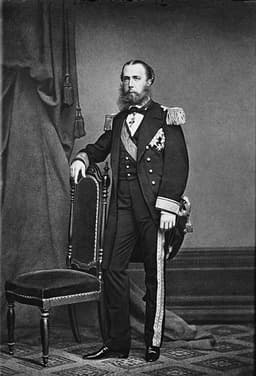
Joseph Estrada
Politician · Modern
39.2Total

Nur Hassan Hussein
Politician · Modern
47.3Total
Basic Information
Born
1937
1938
Died
—
—
Era
Modern
Modern
Nationality
Philippines
Somalia
Occupation
Politician
Politician
Civilization
Eastern
Other
Score Comparison
Military (10%)
15.8
47.1
Political (20%)
26.4
54.7
Influence (20%)
52.5
47.1
Legacy (20%)
38.3
37.5
Leadership (15%)
48.4
58.8
Strategy (15%)
37.2
44.6
TOTAL
39.2
47.3
Joseph Estrada — Complete Timeline
1969 AD
Elected Mayor of San Juan, Metro ManilaPolitical Action◆ Major
Joseph Estrada was elected Mayor of San Juan, a municipality in Metro Manila. He served for 17 years, transforming the town into a city and building a political base.
Local GovernmentPolitical Career
constructive
1992 AD
Elected Vice President of the PhilippinesPolitical Action◆ Major
Joseph Estrada was elected Vice President of the Philippines under President Fidel V. Ramos. He used the position to build a national political profile and prepare for a presidential run.
Vice PresidencyPolitical Career
Impact: national
1998 AD
Elected President of the PhilippinesPolitical Action
Joseph Estrada was elected President of the Philippines in a landslide victory, winning 39.9% of the vote. He campaigned on a pro-poor platform, promising to help the masses.
PresidencyElection
Impact: nationalconstructive
2001 AD
Ousted in EDSA II RevolutionPolitical Action
Joseph Estrada was ousted from the presidency after mass protests (EDSA II) following allegations of corruption and a failed impeachment trial. He was replaced by Vice President Gloria Macapagal Arroyo.
OusterPeople Power
Impact: nationaldestructive
2007 AD
Convicted of plunderPolitical Action◆ Major
Joseph Estrada was convicted of plunder by the Sandiganbayan anti-graft court and sentenced to life imprisonment. He was later pardoned by President Gloria Macapagal Arroyo in 2007.
Corruption ConvictionPlunder
Impact: nationaldestructive
Nur Hassan Hussein — Complete Timeline
2007 AD
Appointed Prime Minister of SomaliaPolitical Action◆ Major
Nur Hassan Hussein was appointed Prime Minister of Somalia in November 2007 by President Abdullahi Yusuf Ahmed. He took office during a period of intense conflict between the Transitional Federal Government and insurgent groups, including Al-Shabaab.
Transitional GovernmentAppointmentConflict
Impact: national
2008 AD
Promoted Djibouti Peace ProcessPolitical Action◆ Major
Nur Hassan Hussein supported the Djibouti Peace Process in 2008, which led to a ceasefire agreement between the Transitional Federal Government and the Alliance for the Re-liberation of Somalia. This process facilitated the withdrawal of Ethiopian troops and the formation of a unity government.
Peace ProcessReconciliationCeasefire
Impact: regionalconstructive
2009 AD
Resigned as Prime MinisterPolitical Action
Nur Hassan Hussein resigned as Prime Minister in February 2009 following a power struggle with President Abdullahi Yusuf Ahmed and the failure to achieve lasting peace. His resignation paved the way for a new government under President Sharif Sheikh Ahmed.
ResignationPolitical CrisisTransition
Impact: nationaltragic
This comparison has not been analyzed yet.
One-time AI generation (~1 minute). Scores and timeline are already available below.
Rankings
🥇
Nur Hassan HusseinLeader
Mil: 47.1Pol: 54.7Inf: 47.1
47.3
🥈
Joseph Estrada
Mil: 15.8Pol: 26.4Inf: 52.5
39.2
+8.1 behind
How This Comparison Works
Algorithm
Each figure is scored on 6 dimensions (0—100 scale) based on structured historical data: Military (10%), Political (20%), Influence (20%), Legacy (20%), Leadership (15%), Strategy (15%). The weighted total produces the final ranking.
Data Sources
Scores are computed from structured sub-indicators in the database. Scale factors adjust for era (Ancient ×0.85, Modern ×1.0) and civilization size (Eastern ×1.05, Other ×0.80) to account for differences in population and military scale.
Maximum 3 Figures
Comparisons are limited to 2—3 figures to ensure readability and statistical meaningfulness.
Error Margins
±5 points per dimension — Sub-scores are derived from historical records with inherent uncertainty. Two figures within 5 points on a dimension should be considered roughly equivalent in that area.
Total Score Accuracy
±3 points overall — The weighted combination of 6 dimensions produces a total score with approximately ±3 points of uncertainty. Differences of less than 3 points are not statistically significant— the figures are effectively tied.
Known Limitations
- Historical records are incomplete and uneven across civilizations
- Figures from oral-tradition societies may be underrepresented
- Occupation labels can misclassify multi-role figures
- Scores measure capability and impact, not moral character
- Quantitative scoring is a comparison tool, not absolute truth
Capability Radar
Military (10%) — Battles & Warfare
Battles
12
21
Win Rate
16
27
Expansion
21
27
Political (20%) — Governance & Reform
Reform
10
40
Diplomacy
20
50
Economy
15
20
Influence (20%) — Cultural & Global Reach
Cultural
40
10
Global
15
10
Legacy (20%) — Historical Impact
Historical
20
15
Longevity
10
10
Leadership (15%) — Power & Stability
Tenure
30
30
Stability
10
25
Strategy (15%) — Tactics & Innovation
Strategy
23
33
Tactics
24
32
Reform
27
34
Similar Comparisons
Comments & Discussion
No comments yet. Be the first to share your thoughts!