Loading...
Jose Gaspar Rodriguez de Francia vs Naresuan
Naresuan leads by 13.8 pts · 2 figures compared
…
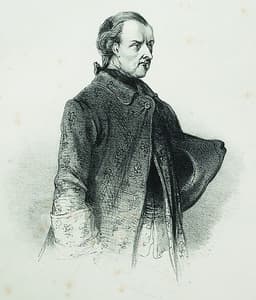
Jose Gaspar Rodriguez de Francia
Emperor · Modern
51.0Total

Naresuan
Emperor · Modern
64.8Total
Basic Information
Born
1766
1555
Died
1840
1605
Era
Modern
Modern
Nationality
Paraguay
Thailand
Occupation
Emperor
Emperor
Civilization
Western
Eastern
Score Comparison
Military (10%)
20.0
72.0
Political (20%)
68.0
78.0
Influence (20%)
50.2
56.7
Legacy (20%)
43.3
52.0
Leadership (15%)
78.0
78.0
Strategy (15%)
36.8
70.0
TOTAL
51.0
64.8
Jose Gaspar Rodriguez de Francia — Complete Timeline
1814 AD
Appointed Supreme Dictator of ParaguayPolitical Action◆ Major
Francia was appointed Supreme Dictator of Paraguay by a congress, consolidating absolute power. He established a regime of total isolation, banning foreign trade and travel, and suppressing internal opposition to maintain Paraguayan independence from Argentina and Brazil.
DictatorshipIsolationIndependence
Impact: national
Closed Paraguay's bordersPolitical Action◆ Major
Francia ordered the complete closure of Paraguay's land and river borders, cutting off all external trade and communication. This policy, enforced for decades, aimed to protect Paraguay from foreign influence but led to economic stagnation and self-sufficiency.
IsolationEconomic PolicyNationalism
Impact: nationaldestructive
1820 AD
Confiscated church propertyPolitical Action
Francia confiscated all property of the Catholic Church in Paraguay, including land and buildings, and placed the clergy under state control. He also suppressed religious orders and executed several priests who opposed his rule.
Church-State ConflictSecularizationRepression
Impact: nationaldestructive
1840 AD
Died in officeOther◆ Major
Francia died of natural causes in Asunci
DeathEnd of EraDictatorship
Impact: national
Naresuan — Complete Timeline
1584 AD
Declaration of Independence from BurmaPolitical Action◆ Major
Prince Naresuan declared Ayutthaya's independence from the Toungoo dynasty of Burma, refusing to be a vassal state. This act triggered a series of wars between Ayutthaya and Burma.
IndependenceBurmese WarAyutthaya
Impact: regional
1590 AD
Reforms of the Ayutthaya MilitaryReform
King Naresuan reorganized the Ayutthaya military, introducing new tactics and training methods. He also expanded the use of firearms and elephants in warfare, making the army more effective.
Military ReformAyutthayaWarfare
Impact: nationalconstructive
1592 AD
Battle of Don ChediWar
King Naresuan of Ayutthaya defeated the Burmese crown prince in single combat on elephant back at Don Chedi. This victory secured Ayutthaya's independence from Burmese suzerainty and is celebrated as a national triumph.
Burmese WarElephant BattleThai Independence
Impact: national
1599 AD
Capture of PeguWar◆ Major
King Naresuan led an Ayutthaya army to capture the Burmese capital of Pegu. This victory temporarily weakened the Toungoo dynasty and expanded Ayutthaya's influence into Burmese territory.
Burmese WarPeguAyutthaya Expansion
Impact: regional
Expert Analysis
Origins
Jose Gaspar Rodriguez de Francia was born on January 6, 1766, in Asunción, Paraguay, to a Portuguese father and a Paraguayan mother. He studied theology and law at the University of Córdoba in Argentina, earning a doctorate in theology. His early career as a lawyer and professor gave him a reputation for intellectual rigor and moral severity. Francia was deeply influenced by Enlightenment ideas, particularly Rousseau's concept of the general will, but he applied them with an authoritarian twist.
Naresuan, born in 1555 in Phitsanulok, Siam (now Thailand), was the son of King Maha Thammaracha and a princess of the Sukhothai dynasty. As a child, he was taken as a hostage to Burma in 1564 after the Burmese conquest of Ayutthaya. He spent nine years in the Burmese capital, Pegu, where he received military training and observed the workings of the Toungoo Empire. This experience shaped his determination to free Siam from Burmese domination.
Rise to Power
Francia's rise began in 1809 when he was appointed as a lawyer for the Spanish colonial administration. During the May Revolution of 1811 in Buenos Aires, Francia supported the independence movement and was elected to the junta governing Paraguay. He quickly outmaneuvered rivals, and in 1813, a congress appointed him "Supreme Dictator" for a term of three years. In 1814, he became "Perpetual Dictator," holding absolute power until his death in 1840. He eliminated all political opposition, closed the congress, and ruled by decree.
Naresuan's rise was more martial. In 1571, he was appointed as the vice-king of Phitsanulok, a vassal state under Burmese control. After his father's death in 1584, Naresuan declared Ayutthaya's independence from Burma. This triggered a series of wars. His pivotal moment came in 1592 at the Battle of Don Chedi, where he killed the Burmese crown prince in single combat on elephant back. This victory secured Siam's independence and established Naresuan as a national hero.
Leadership & Governance
Francia's leadership was characterized by total isolation and state control. He closed Paraguay's borders to all external trade and communication, banned foreign publications, and suppressed the Spanish language in favor of Guarani. He confiscated church property, placed the clergy under state control, and forced the elite into labor. His governance was efficient in maintaining order but stifled economic development. Paraguay became a self-sufficient but impoverished fortress. Francia scored 78.0 in leadership, reflecting his iron grip, but only 36.8 in strategy, as his isolationist policies ultimately failed to secure long-term prosperity.
Naresuan's governance focused on military reorganization and territorial expansion. He reformed the Ayutthaya military, introducing new tactics, training, and the use of firearms. He also expanded the use of war elephants. Politically, he centralized power and reduced the influence of nobility. His leadership score matches Francia's at 78.0, but his strategy score of 70.0 reflects his successful military campaigns. Naresuan's reign saw the peak of Ayutthaya's power, with vassal states in Cambodia and Laos.
Triumph & Tragedy
Francia's greatest success was maintaining Paraguayan sovereignty during the turbulent early years of independence. He prevented the country from being absorbed by Argentina or Brazil. His policies created a society free from foreign debt and external influence. However, his greatest failure was the economic and cultural stagnation caused by isolation. By the time of his death, Paraguay had no foreign trade, a weak currency, and a population that had lost contact with global developments. His total score of 51.0 reflects this mixed legacy.
Naresuan's triumph was the liberation of Siam from Burmese rule and the expansion of its territory. His victory at Don Chedi is celebrated in Thai history. He also captured the Burmese capital of Pegu in 1599, temporarily weakening the Toungoo dynasty. However, his tragedy was that his conquests were not sustainable. After his death, Ayutthaya lost many of its vassal states, and the Burmese threat resurfaced. His total score of 64.8 indicates a stronger overall performance.
Character & Destiny
Francia was reclusive, paranoid, and micromanaging. He rarely appeared in public and relied on a network of spies. His character led to a regime that was stable but devoid of innovation. He died in office at age 74, leaving no clear successor, which led to a power vacuum. Historical assessments view him as a tragic figure who sacrificed progress for security.
Naresuan was brave, charismatic, and ambitious. His personal combat skills and leadership inspired loyalty. His character drove him to expand Siam's borders, but his early death at age 50 in 1605 (possibly from illness) cut short his plans. He is remembered as a warrior king who restored national pride.
Legacy
Francia's legacy is ambiguous. In Paraguay, he is seen as a defender of sovereignty but also a dictator who isolated the country. His policies of state control influenced later leaders, but his isolationist model was not replicated. He scored 43.3 in legacy, reflecting limited global impact.
Naresuan's legacy is immense in Thailand. He is revered as a national hero, and his image appears on currency and monuments. His military reforms influenced Thai warfare for centuries. His legacy score of 52.0 is higher, reflecting his enduring cultural significance.
Conclusion
Naresuan had a greater impact than Francia. With a total score of 64.8 versus 51.0, Naresuan outperformed in military (72.0 vs 20.0), political (78.0 vs 68.0), influence (56.7 vs 50.2), legacy (52.0 vs 43.3), and strategy (70.0 vs 36.8). While Francia's leadership score tied at 78.0, his isolationist policies ultimately failed to create lasting progress. Naresuan's military victories and political unification had a more enduring effect on Southeast Asia. Thus, Naresuan is the more significant historical figure.
Rankings
🥇
NaresuanLeader
Mil: 72.0Pol: 78.0Inf: 56.7
64.8
🥈
Jose Gaspar Rodriguez de Francia
Mil: 20.0Pol: 68.0Inf: 50.2
51.0
+13.8 behind
How This Comparison Works
Algorithm
Each figure is scored on 6 dimensions (0—100 scale) based on structured historical data: Military (10%), Political (20%), Influence (20%), Legacy (20%), Leadership (15%), Strategy (15%). The weighted total produces the final ranking.
Data Sources
Scores are computed from structured sub-indicators in the database. Scale factors adjust for era (Ancient ×0.85, Modern ×1.0) and civilization size (Eastern ×1.05, Other ×0.80) to account for differences in population and military scale.
Maximum 3 Figures
Comparisons are limited to 2—3 figures to ensure readability and statistical meaningfulness.
Error Margins
±5 points per dimension — Sub-scores are derived from historical records with inherent uncertainty. Two figures within 5 points on a dimension should be considered roughly equivalent in that area.
Total Score Accuracy
±3 points overall — The weighted combination of 6 dimensions produces a total score with approximately ±3 points of uncertainty. Differences of less than 3 points are not statistically significant— the figures are effectively tied.
Known Limitations
- Historical records are incomplete and uneven across civilizations
- Figures from oral-tradition societies may be underrepresented
- Occupation labels can misclassify multi-role figures
- Scores measure capability and impact, not moral character
- Quantitative scoring is a comparison tool, not absolute truth
Capability Radar
Military (10%) — Battles & Warfare
Battles
5
85
Win Rate
5
90
Expansion
5
75
Political (20%) — Governance & Reform
Reform
70
70
Diplomacy
10
80
Economy
60
65
Influence (20%) — Cultural & Global Reach
Cultural
30
70
Global
20
55
Legacy (20%) — Historical Impact
Historical
40
75
Longevity
30
65
Leadership (15%) — Power & Stability
Tenure
85
75
Stability
75
70
Strategy (15%) — Tactics & Innovation
Strategy
20
80
Tactics
10
85
Reform
15
70
Similar Comparisons
Comments & Discussion
No comments yet. Be the first to share your thoughts!