Loading...
Jonas Savimbi vs Vo Nguyen Giap
Vo Nguyen Giap leads by 17.0 pts · 2 figures compared
…

Jonas Savimbi
General · Modern
56.5Total
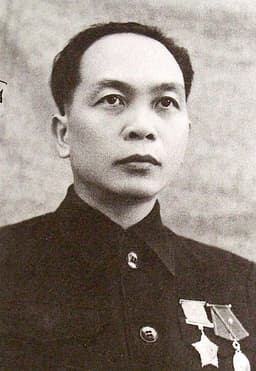
Vo Nguyen Giap
General · Modern
73.5Total
Basic Information
Born
1934
1911
Died
—
2013
Era
Modern
Modern
Nationality
Angola
Vietnam
Occupation
General
General
Civilization
Other
Eastern
Score Comparison
Military (10%)
67.5
74.0
Political (20%)
48.0
60.0
Influence (20%)
59.0
88.0
Legacy (20%)
48.3
72.0
Leadership (15%)
68.0
68.0
Strategy (15%)
55.0
69.2
TOTAL
56.5
73.5
Jonas Savimbi — Complete Timeline
1966 AD
Founding of UNITAPolitical Action◆ Major
Jonas Savimbi founded the National Union for the Total Independence of Angola (UNITA) as a breakaway from the FNLA. UNITA began a guerrilla war against Portuguese colonial rule, establishing a base in eastern Angola and gaining support from China and the Ovimbundu people.
UNITAGuerrilla MovementAnti-Colonial
Impact: national
1975 AD
Civil War Against MPLAWar
After Angolan independence, Savimbi's UNITA launched a civil war against the MPLA government. Backed by the US and South Africa, UNITA fought for control of the country, leading to a decades-long conflict that caused immense suffering and destabilized the region.
Civil WarCold War ProxyDestabilization
Impact: nationaldestructive
1991 AD
Bicesse Accords and Election DefeatPolitical Action◆ Major
Savimbi signed the Bicesse Accords with the MPLA, ending the civil war and leading to UN-monitored elections in 1992. When Savimbi lost the presidential election to Jos
Peace AccordsElection RejectionRenewed War
Impact: nationaldestructive
2002 AD
Death in CombatWar
Savimbi was killed in a firefight with Angolan government forces in Moxico province. His death effectively ended the 27-year civil war, as UNITA quickly sued for peace. His removal allowed for the consolidation of MPLA rule and the beginning of post-war reconstruction.
DeathEnd of Civil WarUNITA Collapse
Impact: national
Vo Nguyen Giap — Complete Timeline
1954 AD
Battle of Dien Bien PhuWar
General Giap commanded Viet Minh forces in a 56-day siege that defeated the French garrison at Dien Bien Phu. This victory ended French colonial rule in Indochina and forced France to negotiate the Geneva Accords.
DecolonizationVietnamMilitary Strategy
Impact: regional
1965 AD
Battle of the Ia Drang ValleyWar◆ Major
Giap's forces engaged US troops in the first major battle of the Vietnam War at Ia Drang. The battle demonstrated the effectiveness of North Vietnamese tactics against US air mobility and set the pattern for future engagements.
Vietnam WarBattleUS Military
Impact: regional
1968 AD
Tet OffensiveWar
Giap planned and executed the Tet Offensive, a coordinated attack on over 100 South Vietnamese cities and US bases. Though a military defeat for North Vietnam, it shocked US public opinion and led to the US withdrawal from Vietnam.
Vietnam WarTet OffensiveUS Public Opinion
Impact: globaldestructive
1972 AD
Easter OffensiveWar◆ Major
Giap launched the Easter Offensive, a large-scale conventional invasion of South Vietnam. The offensive was repelled by US and South Vietnamese forces with heavy losses, but it demonstrated North Vietnam's ability to sustain major operations.
Vietnam WarOffensiveConventional Warfare
Impact: regionaldestructive
1975 AD
Fall of SaigonWar
Giap's forces captured Saigon, ending the Vietnam War. The victory unified Vietnam under communist rule and led to the establishment of the Socialist Republic of Vietnam.
Vietnam WarUnificationCommunist Victory
Impact: national
Expert Analysis
Origins
Jonas Savimbi was born on August 3, 1934, in Munhango, Angola, then a Portuguese colony. His father was a station master and a Protestant pastor. Savimbi studied medicine in Portugal and later in Switzerland, where he became involved in anti-colonial politics. He returned to Angola in the 1960s and joined the National Front for the Liberation of Angola (FNLA) but soon broke away to form his own movement.
Vo Nguyen Giap was born on August 25, 1911, in Quang Binh Province, French Indochina (now Vietnam). His father was a scholar who was imprisoned by the French. Giap attended the Lycée Albert Sarraut in Hanoi and later studied law at the University of Hanoi. He became a history teacher and joined the Communist Party in the 1930s, eventually meeting Ho Chi Minh and becoming a key military leader.
Rise to Power
Savimbi founded the National Union for the Total Independence of Angola (UNITA) in 1966, breaking away from the FNLA. UNITA initially fought against Portuguese colonial rule but after independence in 1975, Savimbi turned against the MPLA government. He gained support from the United States and South Africa during the Cold War, becoming a key proxy in the fight against Soviet-backed regimes. His military score of 67.5 reflects his guerrilla tactics and ability to sustain a long insurgency.
Giap rose to prominence during the First Indochina War. In 1954, he commanded the Viet Minh forces at the Battle of Dien Bien Phu, a 56-day siege that decisively defeated the French. This victory forced France to negotiate and led to Vietnamese independence. Giap's political score of 60.0 was bolstered by his role in the communist hierarchy, but he was always subordinate to Ho Chi Minh. His military score of 74.0 reflects his strategic prowess, though some campaigns were costly.
Leadership & Governance
Savimbi was a charismatic leader who maintained tight control over UNITA. He was known for his ruthless discipline and ability to adapt to changing Cold War dynamics. However, he was also criticized for human rights abuses, including the use of child soldiers and landmines. His leadership score of 68.0 reflects his effectiveness in mobilizing forces but his political score of 48.0 shows his failure to transition to legitimate governance.
Giap was a disciplined strategist who emphasized mass mobilization and protracted warfare. He served as Minister of Defense and commander of the People's Army of Vietnam. His leadership style was methodical, but he faced setbacks like the 1972 Easter Offensive, which failed to achieve its objectives. Nonetheless, his ability to inspire troops and adapt to changing circumstances earned him a leadership score of 68.0.
Triumph & Tragedy
Savimbi's greatest triumph was surviving decades of war and maintaining UNITA as a viable military force. He scored 55.0 in strategy for his guerrilla campaigns. However, his tragedy was his inability to win power through elections. In 1992, he lost the UN-monitored presidential election to Jose Eduardo dos Santos and refused to accept the result, restarting the civil war. His death in combat on February 22, 2002, ended the conflict, but his legacy is marred by the destruction he caused.
Giap's greatest triumph was the victory at Dien Bien Phu, which ended French colonialism in Indochina. He also played a key role in the Fall of Saigon in 1975, unifying Vietnam under communist rule. His influence score of 88.0 reflects his global impact. However, his tragedy includes the Tet Offensive of 1968, which was a military defeat for the North despite its psychological impact. The Easter Offensive of 1972 also failed, resulting in heavy casualties.
Character & Destiny
Savimbi was a charismatic but erratic leader. He was known for his oratory skills and ability to forge alliances, but his stubbornness and distrust of peace processes led to prolonged war. His character shaped his destiny: he could have been a statesman but chose to remain a rebel. His total score of 56.5 reflects his mixed abilities.
Giap was a disciplined, intellectual general who believed in people's war. He was pragmatic, often advocating for caution when others pushed for risky offensives. His character contributed to his longevity and eventual victory, but his willingness to sacrifice troops for strategic gains has been criticized. His total score of 73.5 shows his overall effectiveness.
Legacy
Savimbi is remembered as a controversial figure who fought for his vision of Angola but left a legacy of destruction. UNITA's struggle for power resulted in an estimated 500,000 deaths. His legacy score of 48.3 is low because he failed to build enduring institutions and his death led to the quick collapse of his movement.
Giap is celebrated as a national hero in Vietnam and a master of guerrilla warfare. His tactics influenced revolutionaries worldwide, from Che Guevara to Nelson Mandela. His legacy score of 72.0 reflects his lasting impact on military thought and Vietnamese independence.
Conclusion
While both were formidable guerrilla leaders, Giap achieved his ultimate objective: the unification of Vietnam under communist rule. Savimbi, despite his military capabilities, never won political power and left his country devastated. Giap's total score of 73.5 versus Savimbi's 56.5 underscores this difference. Giap's strategic vision, political acumen, and lasting legacy make him the more significant figure in history.
Rankings
🥇
Vo Nguyen GiapLeader
Mil: 74.0Pol: 60.0Inf: 88.0
73.5
🥈
Jonas Savimbi
Mil: 67.5Pol: 48.0Inf: 59.0
56.5
+17.0 behind
How This Comparison Works
Algorithm
Each figure is scored on 6 dimensions (0—100 scale) based on structured historical data: Military (10%), Political (20%), Influence (20%), Legacy (20%), Leadership (15%), Strategy (15%). The weighted total produces the final ranking.
Data Sources
Scores are computed from structured sub-indicators in the database. Scale factors adjust for era (Ancient ×0.85, Modern ×1.0) and civilization size (Eastern ×1.05, Other ×0.80) to account for differences in population and military scale.
Maximum 3 Figures
Comparisons are limited to 2—3 figures to ensure readability and statistical meaningfulness.
Error Margins
±5 points per dimension — Sub-scores are derived from historical records with inherent uncertainty. Two figures within 5 points on a dimension should be considered roughly equivalent in that area.
Total Score Accuracy
±3 points overall — The weighted combination of 6 dimensions produces a total score with approximately ±3 points of uncertainty. Differences of less than 3 points are not statistically significant— the figures are effectively tied.
Known Limitations
- Historical records are incomplete and uneven across civilizations
- Figures from oral-tradition societies may be underrepresented
- Occupation labels can misclassify multi-role figures
- Scores measure capability and impact, not moral character
- Quantitative scoring is a comparison tool, not absolute truth
Capability Radar
Military (10%) — Battles & Warfare
Battles
65
85
Win Rate
55
80
Expansion
60
70
Political (20%) — Governance & Reform
Reform
30
60
Diplomacy
55
70
Economy
20
50
Influence (20%) — Cultural & Global Reach
Cultural
40
65
Global
45
70
Legacy (20%) — Historical Impact
Historical
50
80
Longevity
30
60
Leadership (15%) — Power & Stability
Tenure
60
65
Stability
15
55
Strategy (15%) — Tactics & Innovation
Strategy
65
88
Tactics
70
90
Reform
50
75
Similar Comparisons
Comments & Discussion
No comments yet. Be the first to share your thoughts!