Loading...
Joko Widodo vs Massimo D Alema
Massimo D Alema leads by 5.9 pts · 2 figures compared
…
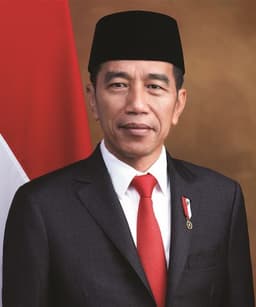
Joko Widodo
Politician · Modern
49.5Total

Massimo D Alema
Politician · Modern
55.4Total
Basic Information
Born
1961
1949
Died
—
—
Era
Modern
Modern
Nationality
Indonesia
Italy
Occupation
Politician
Politician
Civilization
Eastern
Western
Score Comparison
Military (10%)
12.6
50.0
Political (20%)
53.8
68.0
Influence (20%)
59.0
56.4
Legacy (20%)
44.2
46.7
Leadership (15%)
72.0
68.0
Strategy (15%)
35.5
42.2
TOTAL
49.5
55.4
Joko Widodo — Complete Timeline
2012 AD
Elected Governor of JakartaPolitical Action◆ Major
Joko Widodo, known as Jokowi, was elected Governor of Jakarta, the capital of Indonesia. His campaign focused on clean governance and direct engagement with citizens, and his tenure was marked by improvements in public services and infrastructure.
ElectionIndonesiaJakarta
constructive
2014 AD
Elected President of IndonesiaPolitical Action
Jokowi won the Indonesian presidential election, defeating Prabowo Subianto. His victory was historic as he was the first president from outside the political and military elite, coming from a humble background as a furniture salesman.
ElectionIndonesiaDemocracy
Impact: nationalconstructive
2015 AD
Launched Infrastructure Development ProgramReform◆ Major
Jokowi's government launched an ambitious infrastructure development program, including toll roads, ports, airports, and railways across the Indonesian archipelago. The program aimed to boost connectivity and economic growth, but faced challenges in funding and land acquisition.
InfrastructureIndonesiaDevelopment
Impact: nationalconstructive
2019 AD
Re-elected PresidentPolitical Action◆ Major
Jokowi was re-elected for a second term, again defeating Prabowo Subianto. The election was marked by allegations of irregularities and post-election protests, but Jokowi's victory was confirmed by the Constitutional Court.
ElectionIndonesiaRe-election
Impact: national
2022 AD
Relocated Capital to NusantaraPolitical Action◆ Major
Jokowi announced the relocation of Indonesia's capital from Jakarta to Nusantara in East Kalimantan. The move aimed to address Jakarta's overcrowding and environmental issues, but faced criticism over costs, environmental impact, and lack of transparency.
Capital RelocationIndonesiaPolicy
Impact: nationalconstructive
Massimo D Alema — Complete Timeline
1998 AD
First post-communist Prime MinisterPolitical Action◆ Major
D'Alema became the first former communist to serve as Prime Minister of Italy in October 1998, leading a center-left coalition. His appointment marked a historic shift in Italian politics, integrating the post-communist left into government.
Italian PoliticsPost-CommunismGovernment Formation
Impact: nationalconstructive
D'Alema government (1998-2000)Political Action◆ Major
D'Alema's government lasted from October 1998 to April 2000. It focused on economic reforms, including privatization and fiscal consolidation, and participated in the NATO bombing of Yugoslavia in 1999, which was controversial within his coalition.
Italian PoliticsEconomic ReformNATO Intervention
Impact: national
2000 AD
Resignation as Prime MinisterPolitical Action◆ Major
D'Alema resigned as Prime Minister in April 2000 after his center-left coalition suffered heavy losses in regional elections. His resignation reflected the fragility of the coalition and the public's dissatisfaction with his government's performance.
Italian PoliticsGovernment ResignationElectoral Defeat
Impact: nationaltragic
2006 AD
Minister of Foreign AffairsPolitical Action
D'Alema served as Minister of Foreign Affairs from 2006 to 2008 under Prime Minister Romano Prodi. He focused on multilateral diplomacy, including Italy's role in the European Union and relations with the Middle East.
Italian Foreign PolicyDiplomacyEuropean Union
Impact: regional
Expert Analysis
Origins
**Joko Widodo** was born on June 21, 1961, in Surakarta, Central Java, into a humble family. His father was a furniture seller, and Jokowi worked in a sawmill as a child. He studied forestry at Gadjah Mada University and later worked as a furniture exporter before entering politics. His background as a businessman and mayor shaped his pragmatic, hands-on approach.
**Massimo D'Alema** was born on April 20, 1949, in Rome, into a politically active family. His father was a communist partisan. D'Alema joined the Italian Communist Party (PCI) at age 14 and rose through its ranks. He studied philosophy at the University of Pisa but did not graduate, instead dedicating himself full-time to party activism. His formation was ideological and intellectual.
Rise to Power
**Jokowi** entered politics in 2005 as mayor of Surakarta, where he gained national attention for his clean governance and direct engagement with citizens (blusukan). He was elected Governor of Jakarta in 2012, defeating the incumbent. In 2014, he ran for president as the candidate of the Indonesian Democratic Party of Struggle (PDI-P) and won with 53.15% of the vote against Prabowo Subianto. His rise was meteoric, from furniture seller to president in under a decade.
**D'Alema** rose through the PCI, becoming its leader in 1994 after the party transformed into the Democratic Party of the Left (PDS). He served as Deputy Prime Minister from 1996 to 1998 under Romano Prodi. In October 1998, he became Prime Minister, the first former communist in a NATO country to hold such a position. His rise was gradual, rooted in party machinery and intellectual circles.
Leadership & Governance
**Jokowi** governed with a focus on infrastructure development and social welfare. He launched an ambitious program building toll roads, ports, airports, and railways across Indonesia, spending over $400 billion. He also expanded healthcare (BPJS) and education (KIP). His leadership style was hands-on, with frequent site visits. He scored 72.0 in leadership, reflecting his ability to drive projects and maintain popularity.
**D'Alema** focused on economic reforms and European integration. His government privatized state-owned enterprises, reduced public debt, and pursued fiscal consolidation. He also participated in NATO's bombing of Yugoslavia in 1999, supporting Kosovo's independence. His leadership was more ideological and coalition-based, scoring 68.0 in leadership. He struggled with internal party divisions and regional election losses.
Triumph & Tragedy
**Jokowi's** greatest triumph was the successful infrastructure program, which improved connectivity and boosted economic growth. He also peacefully resolved the Papua conflict and relocated the capital to Nusantara. However, his failure includes rising debt (government debt increased from 24.6% to 39.4% of GDP) and environmental concerns from deforestation. His score of 44.2 in legacy reflects mixed long-term impact.
**D'Alema's** triumph was stabilizing Italy's economy and integrating the former communists into mainstream governance. He also strengthened Italy's role in the EU and NATO. His tragedy was his short tenure (18 months) and the collapse of his coalition after regional elections. He never regained power, and his legacy is overshadowed by Berlusconi's subsequent dominance. He scored 46.7 in legacy.
Character & Destiny
**Jokowi** is pragmatic, low-key, and focused on results. His background as a businessman made him a problem-solver rather than an ideologue. He avoided political conflicts, often compromising with opponents. This allowed him to survive but limited his reformist agenda. His destiny was to be a builder, not a revolutionary.
**D'Alema** is intellectual, strategic, but also polarizing. He was a skilled politician but lacked popular appeal. His communist past made him a target of conservative critics. His destiny was to be a transitional figure, bridging Italy's communist past and its European future.
Legacy
**Jokowi's** legacy is visible in Indonesia's infrastructure and his role in democratizing politics. He broke the elite's grip on power. However, his economic policies have left a mixed record. His influence score of 59.0 reflects his importance in Southeast Asia.
**D'Alema's** legacy is more ideological: he proved that former communists could govern democratically and support NATO. He also influenced Italy's foreign policy. His total score of 55.4 edges out Jokowi's 49.5.
Conclusion
While Jokowi had greater direct impact on Indonesia's physical landscape, D'Alema's political transformation was more significant for Italy and Europe. D'Alema's higher overall score (55.4 vs 49.5) reflects his strategic influence in a complex European context. Jokowi's leadership score (72.0) is higher, but D'Alema's political (68.0) and military (50.0) scores surpass Jokowi's. Therefore, Massimo D'Alema had greater impact in terms of political and historical significance, even if Jokowi's domestic achievements were more tangible.
Rankings
🥇
Massimo D AlemaLeader
Mil: 50.0Pol: 68.0Inf: 56.4
55.4
🥈
Joko Widodo
Mil: 12.6Pol: 53.8Inf: 59.0
49.5
+5.9 behind
How This Comparison Works
Algorithm
Each figure is scored on 6 dimensions (0—100 scale) based on structured historical data: Military (10%), Political (20%), Influence (20%), Legacy (20%), Leadership (15%), Strategy (15%). The weighted total produces the final ranking.
Data Sources
Scores are computed from structured sub-indicators in the database. Scale factors adjust for era (Ancient ×0.85, Modern ×1.0) and civilization size (Eastern ×1.05, Other ×0.80) to account for differences in population and military scale.
Maximum 3 Figures
Comparisons are limited to 2—3 figures to ensure readability and statistical meaningfulness.
Error Margins
±5 points per dimension — Sub-scores are derived from historical records with inherent uncertainty. Two figures within 5 points on a dimension should be considered roughly equivalent in that area.
Total Score Accuracy
±3 points overall — The weighted combination of 6 dimensions produces a total score with approximately ±3 points of uncertainty. Differences of less than 3 points are not statistically significant— the figures are effectively tied.
Known Limitations
- Historical records are incomplete and uneven across civilizations
- Figures from oral-tradition societies may be underrepresented
- Occupation labels can misclassify multi-role figures
- Scores measure capability and impact, not moral character
- Quantitative scoring is a comparison tool, not absolute truth
Capability Radar
Military (10%) — Battles & Warfare
Battles
16
28
Win Rate
18
33
Expansion
19
33
Political (20%) — Governance & Reform
Reform
60
55
Diplomacy
55
60
Economy
60
50
Influence (20%) — Cultural & Global Reach
Cultural
40
30
Global
45
40
Legacy (20%) — Historical Impact
Historical
35
40
Longevity
30
30
Leadership (15%) — Power & Stability
Tenure
65
60
Stability
55
45
Strategy (15%) — Tactics & Innovation
Strategy
26
40
Tactics
25
39
Reform
27
43
Similar Comparisons
Comments & Discussion
No comments yet. Be the first to share your thoughts!