Loading...
Analysis will be generated on first visit.
Scores and timeline are available below. The page will refresh automatically when ready.
John VI Kantakouzenos vs Julius Caesar
Julius Caesar leads by 16.0 pts · 2 figures compared
…

John VI Kantakouzenos
Emperor · Medieval
67.3Total
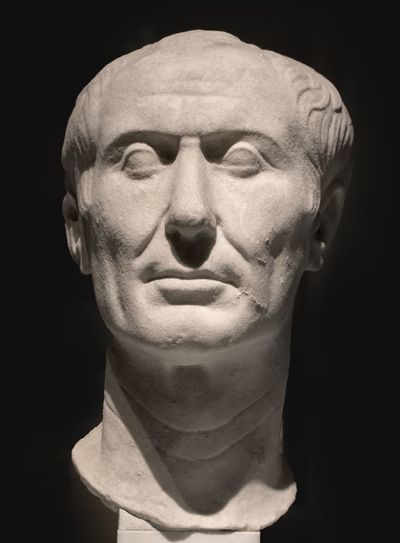
Julius Caesar
General · Ancient
83.3Total
Basic Information
Born
1292
-100
Died
1383
-44
Era
Medieval
Ancient
Nationality
Byzantine Empire
Roman Republic
Occupation
Emperor
General
Civilization
Western
Western
Score Comparison
Military (10%)
32.3
88.0
Political (20%)
72.0
78.0
Influence (20%)
73.6
85.0
Legacy (20%)
68.6
82.0
Leadership (15%)
81.0
82.0
Strategy (15%)
60.5
88.0
TOTAL
67.3
83.3
Rankings
🥇
Julius CaesarLeader
Mil: 88.0Pol: 78.0Inf: 85.0
83.3
🥈
John VI Kantakouzenos
Mil: 32.3Pol: 72.0Inf: 73.6
67.3
+16.0 behind
How This Comparison Works
Algorithm
Each figure is scored on 6 dimensions (0—100 scale) based on structured historical data: Military (10%), Political (20%), Influence (20%), Legacy (20%), Leadership (15%), Strategy (15%). The weighted total produces the final ranking.
Data Sources
Scores are computed from structured sub-indicators in the database. Scale factors adjust for era (Ancient ×0.85, Modern ×1.0) and civilization size (Eastern ×1.05, Other ×0.80) to account for differences in population and military scale.
Maximum 3 Figures
Comparisons are limited to 2—3 figures to ensure readability and statistical meaningfulness.
Error Margins
±5 points per dimension — Sub-scores are derived from historical records with inherent uncertainty. Two figures within 5 points on a dimension should be considered roughly equivalent in that area.
Total Score Accuracy
±3 points overall — The weighted combination of 6 dimensions produces a total score with approximately ±3 points of uncertainty. Differences of less than 3 points are not statistically significant— the figures are effectively tied.
Known Limitations
- Historical records are incomplete and uneven across civilizations
- Figures from oral-tradition societies may be underrepresented
- Occupation labels can misclassify multi-role figures
- Scores measure capability and impact, not moral character
- Quantitative scoring is a comparison tool, not absolute truth
Capability Radar
Military (10%) — Battles & Warfare
Battles
45
95
Win Rate
40
92
Expansion
20
97
Political (20%) — Governance & Reform
Reform
35
90
Diplomacy
50
85
Economy
30
82
Influence (20%) — Cultural & Global Reach
Cultural
55
88
Global
40
94
Legacy (20%) — Historical Impact
Historical
60
95
Longevity
50
96
Leadership (15%) — Power & Stability
Tenure
60
75
Stability
20
60
Strategy (15%) — Tactics & Innovation
Strategy
55
94
Tactics
50
96
Reform
30
88
Analysis will be generated on first visit.
Scores and timeline are available below. The page will refresh automatically when ready.
John VI Kantakouzenos — Complete Timeline
1341 AD
Support for the Hesychast movementCultural
John VI Kantakouzenos supported the Hesychast movement in the Orthodox Church, which emphasized contemplative prayer and divine light. He convened councils that affirmed Hesychast theology, leading to the condemnation of its opponents and shaping Orthodox spirituality.
HesychasmOrthodox TheologyReligious Controversy
Impact: nationalconstructive
1346 AD
Ottoman alliance and marriage of his daughter to Orhan IPolitical Action◆ Major
John VI Kantakouzenos allied with the Ottoman Sultan Orhan I, marrying his daughter Theodora to Orhan. The alliance provided Ottoman military support in the civil war but allowed the Ottomans to establish a foothold in Europe, including the capture of Gallipoli in 1354.
Ottoman AllianceMarriage DiplomacyEuropean Expansion
Impact: regionaldestructive
1347 AD
Coronation as emperor after civil warPolitical Action◆ Major
John VI Kantakouzenos was crowned emperor after winning a six-year civil war against the regency of John V Palaiologos. His victory was achieved with Ottoman support, which set a precedent for Ottoman interference in Byzantine affairs.
Civil WarCoronationOttoman Alliance
Impact: national
1354 AD
Abdication and retirement to a monasteryPolitical Action◆ Major
John VI Kantakouzenos abdicated the throne after John V Palaiologos recaptured Constantinople with Genoese support. He retired to a monastery, taking the monastic name Joasaph, where he wrote a history of his times, the 'Historiai', a key source for 14th-century Byzantium.
AbdicationMonastic LifeHistoriography
Impact: national
1360 AD
Writing of the 'Historiai'Cultural◆ Major
John VI Kantakouzenos wrote the 'Historiai', a detailed historical account of the Byzantine Empire from 1320 to 1356. The work is a primary source for the period, covering the civil wars, Ottoman expansion, and religious controversies, though it is biased in favor of the author.
HistoriographyPrimary SourceByzantine History
Impact: regional
Similar Comparisons
Comments & Discussion
No comments yet. Be the first to share your thoughts!