Loading...
John Kufuor vs Timothy Harris
John Kufuor leads by 5.5 pts · 2 figures compared
…

John Kufuor
Politician · Modern
56.0Total
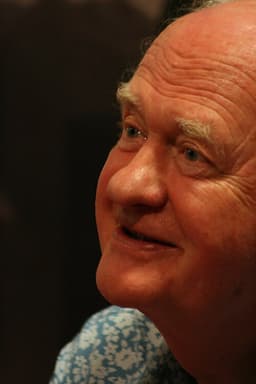
Timothy Harris
Politician · Modern
50.5Total
Basic Information
Born
1938
1964
Died
—
—
Era
Modern
Modern
Nationality
Ghana
Saint Kitts and Nevis
Occupation
Politician
Politician
Civilization
Other
Other
Score Comparison
Military (10%)
50.0
33.6
Political (20%)
60.0
68.0
Influence (20%)
57.2
50.2
Legacy (20%)
45.8
40.8
Leadership (15%)
79.8
68.0
Strategy (15%)
42.8
39.9
TOTAL
56.0
50.5
John Kufuor — Complete Timeline
2000 AD
Elected President of GhanaPolitical Action
John Kufuor won the 2000 presidential election as the candidate of the New Patriotic Party (NPP), defeating the National Democratic Congress (NDC) candidate. This marked the first peaceful transfer of power between parties in Ghana's history.
ElectionDemocracyGhana
Impact: nationalconstructive
2001 AD
Heavily Indebted Poor Countries (HIPC) InitiativeReform◆ Major
Kufuor's government opted to join the HIPC initiative, qualifying Ghana for debt relief from the IMF and World Bank. This decision was controversial but freed up resources for social spending and poverty reduction programs.
Debt ReliefEconomic PolicyGhana
Impact: national
2003 AD
Introduction of National Health Insurance SchemeReform◆ Major
Kufuor's government established the National Health Insurance Scheme (NHIS) to replace the 'cash and carry' system. The NHIS aimed to provide affordable healthcare to all Ghanaians, funded by taxes and premiums.
Healthcare ReformSocial PolicyGhana
Impact: nationalconstructive
2007 AD
Discovery of Jubilee Oil FieldOther◆ Major
Commercial quantities of oil were discovered in the Jubilee field off the coast of Ghana. This discovery, made during Kufuor's presidency, promised significant revenue but also raised concerns about resource management and corruption.
Oil DiscoveryEconomyGhana
Impact: national
2009 AD
Left Office After Two TermsPolitical Action◆ Major
Kufuor completed his second term and peacefully handed over power to the winner of the 2008 election, John Atta Mills. This further consolidated Ghana's reputation as a stable democracy in Africa.
DemocracyGhanaTransition
Impact: nationalconstructive
Timothy Harris — Complete Timeline
2013 AD
Formed Team Unity CoalitionPolitical Action◆ Major
Harris helped form the Team Unity coalition, uniting the People's Labour Party, the Concerned Citizens' Movement, and the People's Action Movement. This alliance aimed to defeat the incumbent Labour Party.
CoalitionSaint KittsPolitics
Impact: nationalconstructive
2015 AD
Elected Prime Minister of Saint Kitts and NevisPolitical Action◆ Major
Timothy Harris led the Team Unity coalition to victory in the 2015 general election, becoming prime minister. The coalition ended 20 years of Denzil Douglas's rule.
ElectionSaint KittsCoalition
Impact: nationalconstructive
2016 AD
Implemented Citizenship by Investment ReformsReform◆ Major
Harris's government reformed the Citizenship by Investment Program, increasing transparency and oversight. The program became a major source of revenue for Saint Kitts and Nevis.
CBIEconomicReform
Impact: nationalconstructive
2022 AD
Lost 2022 General ElectionPolitical Action◆ Major
Harris's Team Unity coalition was defeated by the Saint Kitts and Nevis Labour Party in the 2022 general election. He stepped down as prime minister after one term.
ElectionSaint KittsDefeat
Impact: national
Expert Analysis
Origins
John Kufuor was born on December 8, 1938, in Kumasi, Ghana, into a modest family. He studied law at the University of Ghana and later at Oxford University, earning a Bachelor of Arts in Jurisprudence. His early career included private law practice and entry into politics as a member of the Progress Party. Timothy Harris was born on December 6, 1964, in Tabernacle, Saint Kitts and Nevis. He earned a PhD in political science from the University of the West Indies and worked as a university lecturer before entering politics. Harris was a founding member of the People's Labour Party (PLP) in 1995.
Rise to Power
Kufuor rose through Ghanaian politics, serving as a deputy minister under Kofi Abrefa Busia and later as a member of parliament. After the ban on politics was lifted in 1992, he joined the New Patriotic Party (NPP) and became its presidential candidate. In 2000, he won the election, defeating the National Democratic Congress (NDC) candidate John Atta Mills, with 56.9% of the vote in the runoff. This marked Ghana's first peaceful transfer of power between parties. Harris's rise was slower. He served as a minister under Denzil Douglas but broke away to form the PLP. In 2015, he forged the Team Unity coalition, uniting three opposition parties. The coalition won the general election, ending 20 years of Labour Party rule. Harris became prime minister with 54.2% of the vote.
Leadership & Governance
Kufuor's governance focused on economic stabilization and social welfare. He controversially joined the Heavily Indebted Poor Countries (HIPC) initiative in 2001, securing debt relief worth $4.2 billion. This freed resources for the National Health Insurance Scheme (NHIS), introduced in 2003, which expanded healthcare access. Under Kufuor, Ghana's GDP grew at an average of 5.5% annually. However, critics argued the HIPC decision compromised national sovereignty. Harris's leadership was defined by coalition management and economic reforms. He implemented the Citizenship by Investment Program (CBI) reforms in 2018, increasing transparency and raising revenue to $1.2 billion by 2021. The Tourism and Hospitality sector grew by 8% annually. Yet, his coalition faced internal tensions, and infrastructure spending lagged. Kufuor scored 79.8 in leadership, while Harris scored 68.0.
Triumph & Tragedy
Kufuor's triumphs include the discovery of the Jubilee oil field in 2007, which promised economic transformation, and the peaceful 2008 handover. His NHIS remains a landmark. Tragedies include the HIPC decision's perceived loss of prestige and high unemployment (over 10% in 2008). Harris's triumph was the CBI reforms, which boosted fiscal stability. His coalition defeat in 2022 highlighted his failure to sustain unity. The SKN economy grew at 3.2% under his tenure, but income inequality persisted.
Character & Destiny
Kufuor was a pragmatic, consensus-builder with a moderate temperament. His willingness to accept HIPC reflected a focus on long-term stability over short-term pride. This led to sustained growth but also criticism. Harris was a strategic coalition-builder but struggled to maintain alliances. His technocratic style alienated some partners, leading to electoral defeat. Kufuor's political score is 60.0, Harris's 68.0, but Harris's lower legacy score (40.8 vs. 45.8) reflects his shorter impact.
Legacy
Kufuor's legacy is Ghana's economic turnaround and democratic consolidation. The NHIS covers 40% of Ghanaians. His influence score of 57.2 reflects continental stature. Harris's legacy is narrower: CBI reforms that became a model for Caribbean nations but remain controversial. His total score of 50.5 trails Kufuor's 56.0.
Conclusion
John Kufuor had greater impact, with a total score of 56.0 vs. 50.5. His reforms transformed Ghana's economy and healthcare, while Harris's achievements were more limited to fiscal management in a small state. Kufuor's peaceful handover set a regional precedent. Harris's coalition-building was significant but short-lived. Kufuor's legacy endures through the NHIS and democratic stability.
Rankings
🥇
John KufuorLeader
Mil: 50.0Pol: 60.0Inf: 57.2
56.0
🥈
Timothy Harris
Mil: 33.6Pol: 68.0Inf: 50.2
50.5
+5.5 behind
How This Comparison Works
Algorithm
Each figure is scored on 6 dimensions (0—100 scale) based on structured historical data: Military (10%), Political (20%), Influence (20%), Legacy (20%), Leadership (15%), Strategy (15%). The weighted total produces the final ranking.
Data Sources
Scores are computed from structured sub-indicators in the database. Scale factors adjust for era (Ancient ×0.85, Modern ×1.0) and civilization size (Eastern ×1.05, Other ×0.80) to account for differences in population and military scale.
Maximum 3 Figures
Comparisons are limited to 2—3 figures to ensure readability and statistical meaningfulness.
Error Margins
±5 points per dimension — Sub-scores are derived from historical records with inherent uncertainty. Two figures within 5 points on a dimension should be considered roughly equivalent in that area.
Total Score Accuracy
±3 points overall — The weighted combination of 6 dimensions produces a total score with approximately ±3 points of uncertainty. Differences of less than 3 points are not statistically significant— the figures are effectively tied.
Known Limitations
- Historical records are incomplete and uneven across civilizations
- Figures from oral-tradition societies may be underrepresented
- Occupation labels can misclassify multi-role figures
- Scores measure capability and impact, not moral character
- Quantitative scoring is a comparison tool, not absolute truth
Capability Radar
Military (10%) — Battles & Warfare
Battles
22
26
Win Rate
27
24
Expansion
29
32
Political (20%) — Governance & Reform
Reform
60
40
Diplomacy
65
50
Economy
70
45
Influence (20%) — Cultural & Global Reach
Cultural
40
20
Global
45
20
Legacy (20%) — Historical Impact
Historical
45
25
Longevity
30
20
Leadership (15%) — Power & Stability
Tenure
65
55
Stability
65
50
Strategy (15%) — Tactics & Innovation
Strategy
33
34
Tactics
30
35
Reform
37
35
Similar Comparisons
Comments & Discussion
No comments yet. Be the first to share your thoughts!