Loading...
John III Doukas Vatatzes vs Julius Caesar
Julius Caesar leads by 20.2 pts · 2 figures compared
…
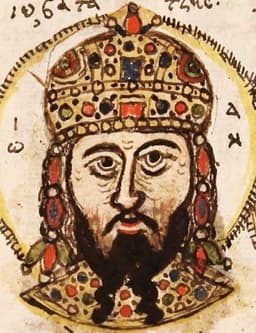
John III Doukas Vatatzes
Emperor · Medieval
62.6Total

Julius Caesar
General · Ancient
82.8Total
Basic Information
Born
1193
-100
Died
1254
-44
Era
Medieval
Ancient
Nationality
Nicaean Empire
Roman Republic
Occupation
Emperor
General
Civilization
Western
Western
Score Comparison
Military (10%)
63.3
88.0
Political (20%)
65.0
78.0
Influence (20%)
61.0
85.0
Legacy (20%)
56.0
82.0
Leadership (15%)
78.2
80.0
Strategy (15%)
55.0
85.0
TOTAL
62.6
82.8
John III Doukas Vatatzes — Complete Timeline
1230 AD
Economic and agricultural reformsReform◆ Major
John III implemented economic reforms that stabilized the Nicaean economy, including land redistribution, tax relief for peasants, and the promotion of agriculture. He also encouraged trade and industry, making the empire prosperous and self-sufficient, which funded military campaigns.
Economic ReformAgricultureProsperity
Impact: nationalconstructive
1240 AD
Reconquest of Thrace and Macedonia from the Latin EmpireWar◆ Major
John III led successful campaigns to recapture Thrace and Macedonia from the Latin Empire. These conquests expanded Nicaean territory into Europe and brought the empire closer to Constantinople, setting the stage for the eventual reconquest of the capital.
ReconquestLatin EmpireTerritorial Expansion
Impact: regionalconstructive
1244 AD
Alliance with the Holy Roman Empire through marriagePolitical Action
John III arranged the marriage of his son Theodore II to the daughter of Frederick II, Holy Roman Emperor. This alliance strengthened Nicaea's diplomatic position against the Latin Empire and the Papacy, and provided military support for campaigns in the Balkans.
DiplomacyMarriage AllianceHoly Roman Empire
Impact: regionalconstructive
1246 AD
Annexation of the Empire of ThessalonicaWar◆ Major
John III Doukas Vatatzes annexed the Empire of Thessalonica, a Byzantine successor state, after a military campaign. The annexation unified most of the former Byzantine territories in the Balkans under Nicaean rule, strengthening the empire's position against the Latin Empire and Bulgaria.
UnificationBalkan CampaignSuccessor States
Impact: regionalconstructive
1254 AD
Canonization as a saint by the Orthodox ChurchCultural
John III Doukas Vatatzes was canonized as a saint by the Orthodox Church after his death, due to his piety, charity, and defense of Orthodoxy. His feast day is celebrated on November 4, and he is venerated as a model of a just and righteous ruler.
CanonizationOrthodox ChurchReligious Legacy
Impact: nationalconstructive
Julius Caesar — Complete Timeline
58 BC
Gallic WarsWar◆ Major
Caesar, as proconsul of Gaul, launched a series of campaigns that conquered all of Gaul (modern France, Belgium, and parts of Switzerland). He fought numerous battles, including against the Helvetii, the Belgae, and the Gallic chieftain Vercingetorix. The wars brought immense wealth and a loyal army to Caesar.
Gallic WarsConquestRoman Expansion
Impact: regional
49 BC
Crossing the RubiconPolitical Action◆ Major
Caesar led Legio XIII across the Rubicon River into Italy, defying the Roman Senate's order to disband his army. This act triggered a civil war against Pompey and the Optimates, ultimately leading to Caesar's dictatorship and the end of the Roman Republic.
Roman Civil WarEnd of RepublicPower Struggle
Impact: global
48 BC
Battle of PharsalusWar◆ Major
Caesar's outnumbered army defeated the larger forces of Pompey the Great at Pharsalus in Greece. Caesar's tactical use of a reserve line to counter Pompey's cavalry charge proved decisive. Pompey fled to Egypt, where he was assassinated, leaving Caesar as the undisputed master of the Roman world.
Roman Civil WarBattleDecisive Victory
Impact: regional
44 BC
Appointment as Dictator for LifePolitical Action◆ Major
The Roman Senate appointed Caesar dictator perpetuo (dictator for life), granting him unprecedented personal power. This move concentrated military, legislative, and judicial authority in one person, effectively ending the Roman Republic's traditional system of checks and balances and alarming many senators.
DictatorshipEnd of RepublicPower Consolidation
Impact: regionaldestructive
Assassination on the Ides of MarchPolitical Action◆ Major
A group of Roman senators, led by Marcus Junius Brutus and Gaius Cassius Longinus, stabbed Caesar to death at a meeting of the Senate in the Theatre of Pompey. The assassination was intended to restore the Republic, but instead triggered another civil war that led to the rise of the Roman Empire.
AssassinationRoman PoliticsEnd of Republic
Impact: globaldestructive
Expert Analysis
Origins
John III Doukas Vatatzes (1192–1254) was born into a Byzantine aristocratic family in the aftermath of the Fourth Crusade's sack of Constantinople (1204). His father, Basileios Vatatzes, was a general, and his mother was a Doukas. John received a traditional education in military and administrative skills, growing up in the Nicaean Empire, a Byzantine successor state. His early life was shaped by the struggle to reclaim Constantinople from the Latin Empire.
Julius Caesar (100–44 BCE) was born into the patrician Julian family in Rome, though his family was not wealthy. His father died when he was 16, and he was raised by his mother, Aurelia. Caesar received a Greek education in rhetoric and philosophy. He fled Rome during Sulla's proscriptions, serving in the military in Asia and Cilicia, which gave him early exposure to warfare and politics.
Rise to Power
John III ascended the throne in 1222 after the death of his predecessor, Theodore I Laskaris, who had chosen him as successor over Theodore's own sons. John consolidated power by defeating the Latin Empire at the Battle of Poimanenon (1224), securing Nicaean control over northwestern Anatolia. He then annexed the Empire of Thessalonica (1242) after a military campaign, unifying most of the Byzantine successor states under his rule. His alliance with Frederick II, Holy Roman Emperor, through the marriage of his son Theodore II to Frederick's daughter, strengthened Nicaea's diplomatic position.
Caesar's rise began with his election as Pontifex Maximus (63 BCE) and his alliance with Pompey and Crassus in the First Triumvirate (60 BCE). His conquest of Gaul (58–50 BCE) made him immensely popular and wealthy. When the Senate ordered him to disband his army, he crossed the Rubicon River (49 BCE) with Legio XIII, triggering a civil war. He defeated Pompey at Pharsalus (48 BCE) and later secured control over Rome, becoming dictator for life in 44 BCE.
Leadership & Governance
John III governed the Nicaean Empire with a focus on economic recovery and social justice. He implemented land redistribution, granting land to peasants and soldiers, and reduced taxes to stimulate agriculture. He promoted trade and self-sufficiency, establishing state monopolies on salt and other goods. His leadership was marked by piety and charity, earning him the epithet 'the Merciful'. He also strengthened the Orthodox Church, building churches and monasteries.
Caesar's governance was revolutionary. He implemented land reforms to distribute land to veterans and the poor, reformed the calendar (Julian calendar), granted citizenship to many provincials, and initiated public works. He centralized power, reducing the Senate's authority, and introduced laws against corruption. However, his methods were autocratic, alienating the senatorial elite.
Triumph & Tragedy
John III's greatest success was the reconquest of Thrace and Macedonia from the Latin Empire, expanding Nicaean territory into Europe. His economic reforms stabilized the empire, and his piety led to his canonization as a saint. His tragedy: he never recaptured Constantinople, dying before the city was retaken by his successor Michael VIII in 1261. Also, his son Theodore II proved a less capable ruler.
Caesar's triumph: the conquest of Gaul, adding a vast territory to Rome, and his victory in the civil war that made him supreme ruler. His tragedy: his assassination on the Ides of March (44 BCE) by senators who feared his monarchy. His death plunged Rome into further civil wars, though it ultimately led to the end of the Republic and the rise of the Empire.
Character & Destiny
John III was described as wise, just, and pious. His character as a benevolent ruler and defender of Orthodoxy shaped his destiny: he was revered as a saint but lacked the ruthlessness to complete the reconquest. His focus on stability and welfare made him beloved but not a conqueror. Historians note that his military score (63.3) was lower than his political score (65.0), reflecting his preference for diplomacy over war.
Caesar was ambitious, charismatic, and calculating. His military genius (score 88.0) and political acumen (78.0) drove his rise. His destiny was tied to his ambition: he sought absolute power, which led to his assassination. His leadership score (80.0) reflects his ability to inspire loyalty, but his strategy score (85.0) indicates his tactical brilliance on the battlefield.
Legacy
John III's legacy is that of a saintly emperor who restored Byzantine power in exile. His economic and legal reforms influenced later Byzantine emperors. The Nicaean Empire, under his rule, became the foundation for the restoration of the Byzantine Empire. He is remembered in the Orthodox Church as a saint, with a feast day on November 4.
Caesar's legacy is immense. His conquests and reforms transformed Rome, and his name became synonymous with absolute power (e.g., 'Caesar' as a title). His writings, such as the Commentarii, are historical sources. The Julian calendar was used for centuries. His assassination marked the end of the Roman Republic. His influence score (85.0) and legacy score (82.0) reflect his enduring impact.
Conclusion
While John III Doukas Vatatzes was a capable ruler and saint, his impact was regional and temporary. Julius Caesar, with a total score of 82.8 to John's 62.6, had a far greater and more enduring impact on world history. Caesar's military conquests, political reforms, and role in the transition from Republic to Empire shaped Western civilization. John III's achievements were significant for the Byzantine recovery but did not alter the course of history on a comparable scale. Thus, Julius Caesar had greater impact.
Rankings
🥇
Julius CaesarLeader
Mil: 88.0Pol: 78.0Inf: 85.0
82.8
🥈
John III Doukas Vatatzes
Mil: 63.3Pol: 65.0Inf: 61.0
62.6
+20.2 behind
How This Comparison Works
Algorithm
Each figure is scored on 6 dimensions (0—100 scale) based on structured historical data: Military (10%), Political (20%), Influence (20%), Legacy (20%), Leadership (15%), Strategy (15%). The weighted total produces the final ranking.
Data Sources
Scores are computed from structured sub-indicators in the database. Scale factors adjust for era (Ancient ×0.85, Modern ×1.0) and civilization size (Eastern ×1.05, Other ×0.80) to account for differences in population and military scale.
Maximum 3 Figures
Comparisons are limited to 2—3 figures to ensure readability and statistical meaningfulness.
Error Margins
±5 points per dimension — Sub-scores are derived from historical records with inherent uncertainty. Two figures within 5 points on a dimension should be considered roughly equivalent in that area.
Total Score Accuracy
±3 points overall — The weighted combination of 6 dimensions produces a total score with approximately ±3 points of uncertainty. Differences of less than 3 points are not statistically significant— the figures are effectively tied.
Known Limitations
- Historical records are incomplete and uneven across civilizations
- Figures from oral-tradition societies may be underrepresented
- Occupation labels can misclassify multi-role figures
- Scores measure capability and impact, not moral character
- Quantitative scoring is a comparison tool, not absolute truth
Capability Radar
Military (10%) — Battles & Warfare
Battles
65
95
Win Rate
70
92
Expansion
65
97
Political (20%) — Governance & Reform
Reform
70
90
Diplomacy
72
85
Economy
78
82
Influence (20%) — Cultural & Global Reach
Cultural
60
88
Global
45
94
Legacy (20%) — Historical Impact
Historical
65
95
Longevity
55
96
Leadership (15%) — Power & Stability
Tenure
75
75
Stability
74
60
Strategy (15%) — Tactics & Innovation
Strategy
72
94
Tactics
68
96
Reform
60
88
Similar Comparisons
Comments & Discussion
No comments yet. Be the first to share your thoughts!