Loading...
John II of Portugal vs Julius Caesar
Julius Caesar leads by 19.1 pts · 2 figures compared
…
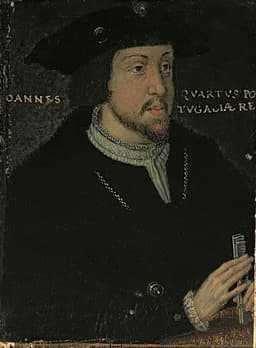
John II of Portugal
Emperor · Medieval
63.7Total

Julius Caesar
General · Ancient
82.8Total
Basic Information
Born
1455
-100
Died
1495
-44
Era
Medieval
Ancient
Nationality
Portugal
Roman Republic
Occupation
Emperor
General
Civilization
Western
Western
Score Comparison
Military (10%)
50.0
88.0
Political (20%)
72.0
78.0
Influence (20%)
65.0
85.0
Legacy (20%)
65.0
82.0
Leadership (15%)
66.0
80.0
Strategy (15%)
55.0
85.0
TOTAL
63.7
82.8
John II of Portugal — Complete Timeline
1483 AD
Suppression of the Portuguese nobilityPolitical Action◆ Major
John II executed the Duke of Braganza for conspiracy and later personally stabbed the Duke of Viseu to death. These actions crushed the power of the high nobility, centralizing royal authority and eliminating internal opposition to his policies.
Nobility PurgeCentralizationPolitical Violence
Impact: nationaldestructive
1484 AD
Rejection of Columbus's proposalPolitical Action
John II's committee of experts rejected Christopher Columbus's proposal for a westward voyage to Asia, judging the distance estimates to be inaccurate. This decision led Columbus to seek sponsorship from Spain, resulting in the Spanish discovery of the Americas.
Age of DiscoveryColumbusNavigation
Impact: global
1488 AD
Discovery of the Cape of Good HopeInvention
John II sponsored Bartolomeu Dias's expedition that rounded the southern tip of Africa, naming it the Cape of Good Hope. This proved that a sea route to the Indian Ocean was possible, opening the way for future voyages to India.
Age of DiscoveryNavigationExploration
Impact: globalconstructive
1494 AD
Treaty of TordesillasPolitical Action
John II negotiated the Treaty of Tordesillas with Spain, dividing the non-European world along a meridian 370 leagues west of the Cape Verde islands. This agreement secured Portuguese control over the route to India and later Brazil, shaping colonial boundaries for centuries.
TreatyColonial DivisionAge of Discovery
Impact: globalconstructive
1495 AD
Establishment of the Portuguese India ArmadaPolitical Action◆ Major
John II commissioned the construction of a fleet and the preparation of a voyage to India under Vasco da Gama, though he died before the expedition departed. His planning and support for exploration laid the foundation for Portugal's maritime empire in Asia.
Age of DiscoveryNavigationExploration
Impact: globalconstructive
Julius Caesar — Complete Timeline
58 BC
Gallic WarsWar◆ Major
Caesar, as proconsul of Gaul, launched a series of campaigns that conquered all of Gaul (modern France, Belgium, and parts of Switzerland). He fought numerous battles, including against the Helvetii, the Belgae, and the Gallic chieftain Vercingetorix. The wars brought immense wealth and a loyal army to Caesar.
Gallic WarsConquestRoman Expansion
Impact: regional
49 BC
Crossing the RubiconPolitical Action◆ Major
Caesar led Legio XIII across the Rubicon River into Italy, defying the Roman Senate's order to disband his army. This act triggered a civil war against Pompey and the Optimates, ultimately leading to Caesar's dictatorship and the end of the Roman Republic.
Roman Civil WarEnd of RepublicPower Struggle
Impact: global
48 BC
Battle of PharsalusWar◆ Major
Caesar's outnumbered army defeated the larger forces of Pompey the Great at Pharsalus in Greece. Caesar's tactical use of a reserve line to counter Pompey's cavalry charge proved decisive. Pompey fled to Egypt, where he was assassinated, leaving Caesar as the undisputed master of the Roman world.
Roman Civil WarBattleDecisive Victory
Impact: regional
44 BC
Appointment as Dictator for LifePolitical Action◆ Major
The Roman Senate appointed Caesar dictator perpetuo (dictator for life), granting him unprecedented personal power. This move concentrated military, legislative, and judicial authority in one person, effectively ending the Roman Republic's traditional system of checks and balances and alarming many senators.
DictatorshipEnd of RepublicPower Consolidation
Impact: regionaldestructive
Assassination on the Ides of MarchPolitical Action◆ Major
A group of Roman senators, led by Marcus Junius Brutus and Gaius Cassius Longinus, stabbed Caesar to death at a meeting of the Senate in the Theatre of Pompey. The assassination was intended to restore the Republic, but instead triggered another civil war that led to the rise of the Roman Empire.
AssassinationRoman PoliticsEnd of Republic
Impact: globaldestructive
Expert Analysis
Origins
John II of Portugal was born in 1455, the son of King Afonso V and Isabella of Coimbra. He was raised in the court, deeply involved in the affairs of state and the ongoing explorations along the African coast. His father's reign had seen the beginning of Portuguese maritime expansion, and John absorbed the strategic importance of trade routes and navigation. In contrast, Julius Caesar was born in 100 BCE into the patrician Julian family in Rome. His early life was marked by the political turmoil of the late Republic; he was captured by pirates as a young man and later studied rhetoric and military tactics. Caesar's family claimed descent from the goddess Venus, but they were not among the wealthiest, which shaped his ambition.
Rise to Power
John II ascended to the throne in 1481 after his father's abdication. He immediately faced a powerful and rebellious nobility. In 1483, he executed the Duke of Braganza for conspiracy, and in 1484 he personally stabbed the Duke of Viseu to death, crushing the aristocracy. This consolidation of power allowed him to focus on exploration. He sponsored Bartolomeu Dias's expedition that rounded the Cape of Good Hope in 1488, proving a sea route to Asia. However, his committee rejected Columbus's proposal, which later benefited Spain. Caesar's rise was through military and political cunning. He served as quaestor, aedile, and praetor, and formed the First Triumvirate with Pompey and Crassus in 60 BCE. His consulship in 59 BCE saw him pass land reforms, and he then secured command in Gaul. From 58 to 50 BCE, he conquered Gaul, amassing wealth and a loyal army. The Senate, fearing his power, ordered him to disband; instead, he crossed the Rubicon in 49 BCE, sparking civil war.
Leadership & Governance
John II ruled as an absolutist monarch, centralizing power and reducing the influence of the nobility. He reorganized the Portuguese administration, improved tax collection, and promoted maritime exploration. His leadership style was calculating and ruthless, as seen in his suppression of the nobility. He also negotiated the Treaty of Tordesillas in 1494, which divided the New World between Portugal and Spain. Caesar, as dictator, implemented reforms including the Julian calendar, land distribution to veterans, and debt relief. He centralized authority but maintained the facade of the Republic. His leadership was charismatic and strategic, but his accumulation of power alienated the Senate, leading to his assassination. In terms of scores, John II scored 73.6 in political leadership, while Caesar scored 78.0, reflecting their different contexts.
Triumph & Tragedy
John II's greatest triumph was the discovery of the Cape of Good Hope by Dias, opening the sea route to India. He also solidified Portugal's maritime empire through the Treaty of Tordesillas. His tragedy was his rejection of Columbus, which led to Spain's discovery of the Americas. He also died before Vasco da Gama's voyage to India departed in 1497. Caesar's triumphs include the conquest of Gaul, which expanded Roman territory, and his victory in the civil war, which ended the Republic. His military score of 88.0 reflects his genius. However, his tragedy was his assassination on the Ides of March in 44 BCE, plunging Rome into another civil war. His reforms were partially undone, though the Empire emerged.
Character & Destiny
John II was known as the "Perfect Prince" for his calculated and decisive actions. He was pragmatic, ruthless, and focused on long-term goals. His character shaped his destiny: by eliminating internal threats, he secured his rule and advanced exploration. Caesar was ambitious, charismatic, and willing to take risks. His crossing of the Rubicon was a gamble that paid off, but his arrogance and disregard for republican norms led to his downfall. Historians note that Caesar's clemency toward enemies may have emboldened his assassins. John II's caution in exploration contrasted with Caesar's boldness in war.
Legacy
John II's legacy is foundational to the Portuguese Age of Discovery. His sponsorship of Dias and the Treaty of Tordesillas shaped global colonization. He scored 80.0 in legacy, reflecting his enduring impact. Caesar's legacy is immense: he transformed Rome from a republic to an empire, and his name became synonymous with dictatorship. His military tactics are still studied, and his reforms influenced Western governance. He scored 82.0 in legacy. However, Caesar's impact was more immediate and widespread, as he directly shaped the course of Western history.
Conclusion
Julius Caesar had a greater impact than John II of Portugal. With a total score of 82.8 compared to John's 68.8, Caesar's military conquests and political reforms reshaped the ancient world and set the stage for the Roman Empire. John II's contributions to exploration were significant, but they were part of a broader Portuguese effort and did not fundamentally alter the global order in the same way. Caesar's legacy of centralized power and military innovation has echoed through history, while John II's achievements were more regionally confined. Thus, Caesar stands as the more influential figure.
Rankings
🥇
Julius CaesarLeader
Mil: 88.0Pol: 78.0Inf: 85.0
82.8
🥈
John II of Portugal
Mil: 50.0Pol: 72.0Inf: 65.0
63.7
+19.1 behind
How This Comparison Works
Algorithm
Each figure is scored on 6 dimensions (0—100 scale) based on structured historical data: Military (10%), Political (20%), Influence (20%), Legacy (20%), Leadership (15%), Strategy (15%). The weighted total produces the final ranking.
Data Sources
Scores are computed from structured sub-indicators in the database. Scale factors adjust for era (Ancient ×0.85, Modern ×1.0) and civilization size (Eastern ×1.05, Other ×0.80) to account for differences in population and military scale.
Maximum 3 Figures
Comparisons are limited to 2—3 figures to ensure readability and statistical meaningfulness.
Error Margins
±5 points per dimension — Sub-scores are derived from historical records with inherent uncertainty. Two figures within 5 points on a dimension should be considered roughly equivalent in that area.
Total Score Accuracy
±3 points overall — The weighted combination of 6 dimensions produces a total score with approximately ±3 points of uncertainty. Differences of less than 3 points are not statistically significant— the figures are effectively tied.
Known Limitations
- Historical records are incomplete and uneven across civilizations
- Figures from oral-tradition societies may be underrepresented
- Occupation labels can misclassify multi-role figures
- Scores measure capability and impact, not moral character
- Quantitative scoring is a comparison tool, not absolute truth
Capability Radar
Military (10%) — Battles & Warfare
Battles
45
95
Win Rate
50
92
Expansion
65
97
Political (20%) — Governance & Reform
Reform
75
90
Diplomacy
80
85
Economy
85
82
Influence (20%) — Cultural & Global Reach
Cultural
70
88
Global
75
94
Legacy (20%) — Historical Impact
Historical
85
95
Longevity
80
96
Leadership (15%) — Power & Stability
Tenure
70
75
Stability
65
60
Strategy (15%) — Tactics & Innovation
Strategy
70
94
Tactics
55
96
Reform
60
88
Similar Comparisons
Comments & Discussion
No comments yet. Be the first to share your thoughts!