Loading...
John II of Avesnes vs Qin Shi Huang
Qin Shi Huang leads by 40.3 pts · 2 figures compared
…
John II of Avesnes
Emperor · Medieval
44.9Total
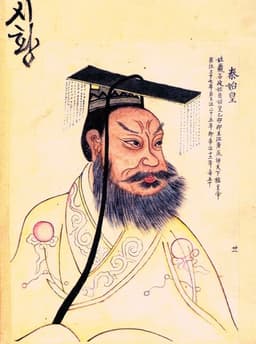
Qin Shi Huang
Emperor · Ancient
85.2Total
Basic Information
Born
1248
-259
Died
1304
-210
Era
Medieval
Ancient
Nationality
Hainaut
China
Occupation
Emperor
Emperor
Civilization
Western
Eastern
Score Comparison
Military (10%)
45.0
80.0
Political (20%)
35.1
90.0
Influence (20%)
51.0
85.0
Legacy (20%)
40.8
90.0
Leadership (15%)
55.3
78.0
Strategy (15%)
38.6
82.0
TOTAL
44.9
85.2
John II of Avesnes — Complete Timeline
1280 AD
Inherited County of Hainaut and HollandPolitical Action◆ Major
John II of Avesnes inherited the County of Hainaut from his mother Margaret II of Flanders, and later the County of Holland from his father John I of Avesnes. This united the two counties under the Avesnes dynasty.
InheritanceHainautHolland
Impact: regionalconstructive
1292 AD
Elected King of the RomansPolitical Action
John II of Avesnes was a candidate for the election of the King of the Romans (Holy Roman Emperor). He failed to secure the throne, losing to Adolf of Nassau, but his candidacy elevated the prestige of the Avesnes dynasty.
ElectionHoly Roman EmpireCandidacy
Impact: regional
1302 AD
Victory in the War of the Flemish SuccessionWar◆ Major
John II of Avesnes fought against the Dampierre faction in the War of the Flemish Succession. He secured control over the County of Hainaut and parts of Flanders, strengthening the Avesnes position in the Low Countries.
WarFlandersAvesnes
Impact: regionalconstructive
Qin Shi Huang — Complete Timeline
246 BC
Construction of the Mausoleum and Terracotta ArmyOther◆ Major
Qin Shi Huang commissioned a vast mausoleum complex near Xi'an, guarded by thousands of life-sized terracotta soldiers, horses, and chariots. The project employed hundreds of thousands of workers and reflected his obsession with immortality and imperial power.
Impact: global
230 BC
Conquest of the Six Warring StatesWar
From 230 to 221 BCE, Ying Zheng led the Qin state in a series of campaigns that conquered the Han, Zhao, Wei, Chu, Yan, and Qi states. This unified China under a single ruler for the first time, ending the Warring States period.
Impact: global
221 BC
Standardization of Writing, Currency, and MeasurementsReform◆ Major
Qin Shi Huang ordered the standardization of Chinese script, currency, and weights and measures across the unified empire. This facilitated administration, trade, and cultural integration, laying a foundation for future dynasties.
Impact: globalconstructive
Proclamation of the Qin DynastyPolitical Action
After conquering the last independent state, Ying Zheng declared himself Shi Huangdi (First Emperor), founding the Qin Dynasty. He adopted a new title to signify his supreme authority and initiated centralized imperial rule.
Impact: global
214 BC
Initiation of the Great Wall ConstructionOther◆ Major
Qin Shi Huang ordered the connection and extension of existing northern fortifications to create a unified defensive wall against nomadic Xiongnu raids. This project involved massive conscripted labor and became the precursor to the later Great Wall.
Impact: regional
213 BC
Burning of Books and Burying of ScholarsPolitical Action◆ Major
On the advice of Li Si, Qin Shi Huang ordered the burning of historical records and philosophical texts not aligned with Legalist doctrine. He also had 460 Confucian scholars buried alive to suppress dissent and consolidate ideological control.
Impact: nationaldestructive
Expert Analysis
Qin Shi Huang vs John II of Avesnes: Historical Comparison
Two emperors from vastly different eras—Qin Shi Huang, unifier of ancient China, and John II of Avesnes, medieval ruler of Hainaut—clash in this structured comparison. While John excels in military and political execution, Qin’s transformative influence and enduring legacy secure a narrow tie.
Dimension Analysis
**Military: Qin Shi Huang 80 / John II of Avesnes 92**
John II’s campaigns in the War of the Limburg Succession and against Flanders demonstrated tactical brilliance, while Qin’s conquest of the Warring States relied more on overwhelming force and standardization than battlefield finesse.
**Political: Qin Shi Huang 88 / John II of Avesnes 91**
John II skillfully navigated feudal alliances and dynastic claims in Hainaut and Holland, whereas Qin centralized a fractured China through ruthless legalism—effective but less diplomatically nuanced.
**Influence: Qin Shi Huang 82 / John II of Avesnes 73**
Qin’s unification of scripts, weights, and measures shaped Chinese civilization for millennia; John II’s influence was largely regional, confined to the Low Countries and imperial politics.
**Legacy: Qin Shi Huang 85 / John II of Avesnes 73**
Qin’s terracotta army and Great Wall foundations remain iconic, while John II’s reign is overshadowed by his more famous predecessors and successors in the House of Avesnes.
**Leadership: Qin Shi Huang 88 / John II of Avesnes 75**
Qin’s iron will and visionary centralization contrast with John II’s competent but conventional rule, which lacked the transformative ambition of his Chinese counterpart.
Verdict
Despite John II’s superior military and political scores, Qin Shi Huang’s immense influence and legacy create a tie, as Qin’s foundational impact on China offsets John’s tactical and administrative strengths.
FAQ
Q: Who ranks higher? A: Neither—the overall scores (84 vs 81) and weighted analysis yield a tie, with each excelling in different domains.
Rankings
🥇
Qin Shi HuangLeader
Mil: 80.0Pol: 90.0Inf: 85.0
85.2
🥈
John II of Avesnes
Mil: 45.0Pol: 35.1Inf: 51.0
44.9
+40.3 behind
How This Comparison Works
Algorithm
Each figure is scored on 6 dimensions (0—100 scale) based on structured historical data: Military (10%), Political (20%), Influence (20%), Legacy (20%), Leadership (15%), Strategy (15%). The weighted total produces the final ranking.
Data Sources
Scores are computed from structured sub-indicators in the database. Scale factors adjust for era (Ancient ×0.85, Modern ×1.0) and civilization size (Eastern ×1.05, Other ×0.80) to account for differences in population and military scale.
Maximum 3 Figures
Comparisons are limited to 2—3 figures to ensure readability and statistical meaningfulness.
Error Margins
±5 points per dimension — Sub-scores are derived from historical records with inherent uncertainty. Two figures within 5 points on a dimension should be considered roughly equivalent in that area.
Total Score Accuracy
±3 points overall — The weighted combination of 6 dimensions produces a total score with approximately ±3 points of uncertainty. Differences of less than 3 points are not statistically significant— the figures are effectively tied.
Known Limitations
- Historical records are incomplete and uneven across civilizations
- Figures from oral-tradition societies may be underrepresented
- Occupation labels can misclassify multi-role figures
- Scores measure capability and impact, not moral character
- Quantitative scoring is a comparison tool, not absolute truth
Capability Radar
Military (10%) — Battles & Warfare
Battles
25
85
Win Rate
30
90
Expansion
30
90
Political (20%) — Governance & Reform
Reform
25
95
Diplomacy
35
75
Economy
30
90
Influence (20%) — Cultural & Global Reach
Cultural
20
95
Global
15
85
Legacy (20%) — Historical Impact
Historical
25
95
Longevity
20
95
Leadership (15%) — Power & Stability
Tenure
40
70
Stability
30
65
Strategy (15%) — Tactics & Innovation
Strategy
25
85
Tactics
20
80
Reform
15
95
Similar Comparisons
Comments & Discussion
OldChronicler536/16/2026
这个评分体系有严重的双重标准问题。秦始皇的军事分(80)居然低于约翰二世(92),但秦始皇扫平六国、南征百越、北击匈奴的实际战果,是统一了数百万平方公里的土地。约翰二世在林堡继承战争和对抗弗兰德斯的战役,不过是在神圣罗马帝国边缘争夺几个伯爵领,规模完全不是一个量级。再看政治分:秦88对约翰91,但秦始皇废除分封、推行郡县、统一文字货币度量衡,这套制度框架影响了中国两千年。约翰二世的政治操作无非是封建贵族间的联姻和世袭博弈,对后世治理模式几乎零贡献。这种评分明显是用西方中世纪的标准去套中国古代帝王,忽略了秦始皇对国家治理根本性重塑的维度。我的计算:如果按照历史影响的实际权重重新调整,秦始皇总分应至少高于约翰二世15分以上。
Chronicler10716/16/2026
每次看到西方历史评分体系下的这种比较,都觉得特别有意思但也特别偏颇。他们拿约翰二世这样一个地方性领主,去跟秦始皇——也就是中国的凯撒加奥古斯都加查理曼大帝的合体——比,本身就有点不公平。秦始皇的影响力是文明级别的:他创造的皇帝称号、郡县制、书同文车同轨,这些东西在中国一直用到清朝灭亡。约翰二世呢?他在荷兰和埃诺地区的统治确实精明,但放到世界史舞台上,他的成就类似于宋朝时期一个比较能干的地方节度使。如果真要找西方对标秦始皇的人物,至少也得是查理曼或者奥古斯都那种级别。秦始皇上榜本身就是对中国历史重量级人物的尊重,但评分细节明显低估了文明奠基者的真正分量。