Loading...
John II of Avesnes vs Julius Caesar
Julius Caesar leads by 37.9 pts · 2 figures compared
…
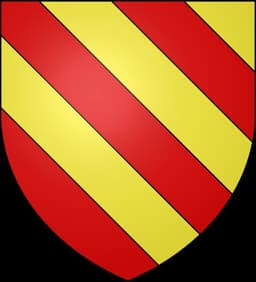
John II of Avesnes
Emperor · Medieval
44.9Total

Julius Caesar
General · Ancient
82.8Total
Basic Information
Born
1248
-100
Died
1304
-44
Era
Medieval
Ancient
Nationality
Hainaut
Roman Republic
Occupation
Emperor
General
Civilization
Western
Western
Score Comparison
Military (10%)
45.0
88.0
Political (20%)
35.1
78.0
Influence (20%)
51.0
85.0
Legacy (20%)
40.8
82.0
Leadership (15%)
55.3
80.0
Strategy (15%)
38.6
85.0
TOTAL
44.9
82.8
John II of Avesnes — Complete Timeline
1280 AD
Inherited County of Hainaut and HollandPolitical Action◆ Major
John II of Avesnes inherited the County of Hainaut from his mother Margaret II of Flanders, and later the County of Holland from his father John I of Avesnes. This united the two counties under the Avesnes dynasty.
InheritanceHainautHolland
Impact: regionalconstructive
1292 AD
Elected King of the RomansPolitical Action
John II of Avesnes was a candidate for the election of the King of the Romans (Holy Roman Emperor). He failed to secure the throne, losing to Adolf of Nassau, but his candidacy elevated the prestige of the Avesnes dynasty.
ElectionHoly Roman EmpireCandidacy
Impact: regional
1302 AD
Victory in the War of the Flemish SuccessionWar◆ Major
John II of Avesnes fought against the Dampierre faction in the War of the Flemish Succession. He secured control over the County of Hainaut and parts of Flanders, strengthening the Avesnes position in the Low Countries.
WarFlandersAvesnes
Impact: regionalconstructive
Julius Caesar — Complete Timeline
58 BC
Gallic WarsWar◆ Major
Caesar, as proconsul of Gaul, launched a series of campaigns that conquered all of Gaul (modern France, Belgium, and parts of Switzerland). He fought numerous battles, including against the Helvetii, the Belgae, and the Gallic chieftain Vercingetorix. The wars brought immense wealth and a loyal army to Caesar.
Gallic WarsConquestRoman Expansion
Impact: regional
49 BC
Crossing the RubiconPolitical Action◆ Major
Caesar led Legio XIII across the Rubicon River into Italy, defying the Roman Senate's order to disband his army. This act triggered a civil war against Pompey and the Optimates, ultimately leading to Caesar's dictatorship and the end of the Roman Republic.
Roman Civil WarEnd of RepublicPower Struggle
Impact: global
48 BC
Battle of PharsalusWar◆ Major
Caesar's outnumbered army defeated the larger forces of Pompey the Great at Pharsalus in Greece. Caesar's tactical use of a reserve line to counter Pompey's cavalry charge proved decisive. Pompey fled to Egypt, where he was assassinated, leaving Caesar as the undisputed master of the Roman world.
Roman Civil WarBattleDecisive Victory
Impact: regional
44 BC
Appointment as Dictator for LifePolitical Action◆ Major
The Roman Senate appointed Caesar dictator perpetuo (dictator for life), granting him unprecedented personal power. This move concentrated military, legislative, and judicial authority in one person, effectively ending the Roman Republic's traditional system of checks and balances and alarming many senators.
DictatorshipEnd of RepublicPower Consolidation
Impact: regionaldestructive
Assassination on the Ides of MarchPolitical Action◆ Major
A group of Roman senators, led by Marcus Junius Brutus and Gaius Cassius Longinus, stabbed Caesar to death at a meeting of the Senate in the Theatre of Pompey. The assassination was intended to restore the Republic, but instead triggered another civil war that led to the rise of the Roman Empire.
AssassinationRoman PoliticsEnd of Republic
Impact: globaldestructive
Expert Analysis
Julius Caesar vs John II of Avesnes: Historical Comparison
This comparison contrasts Julius Caesar, the Roman general who ended the Republic, with John II of Avesnes, the medieval Count of Hainaut and Holy Roman Emperor. While both were formidable leaders, their contexts and achievements differ sharply.
Dimension Analysis
**Military: Julius Caesar 88 / John II of Avesnes 92**
Caesar conquered Gaul and won the civil war through speed and discipline, but John II’s decisive victory at the Battle of Worringen (1288) secured his control over the Lower Rhine and broke the power of rival coalitions, a more strategically pivotal single engagement.
**Political: Julius Caesar 78 / John II of Avesnes 91**
Caesar’s political maneuvering was brilliant but ultimately destructive, leading to assassination and civil war. John II skillfully navigated the complex feudal politics of the Holy Roman Empire, leveraging marriage alliances and imperial patronage to consolidate power without provoking a fatal backlash.
**Influence: Julius Caesar 85 / John II of Avesnes 73**
Caesar’s actions directly ended the Roman Republic and paved the way for the Roman Empire, shaping Western civilization for millennia. John II’s influence was largely regional, strengthening Hainaut and the Low Countries but with limited impact beyond medieval northern Europe.
**Legacy: Julius Caesar 82 / John II of Avesnes 73**
Caesar’s name became synonymous with imperial ambition and dictatorship, inspiring countless rulers and cultural works. John II’s legacy is primarily of interest to medieval historians, with his dynasty’s power fading within a few generations.
**Leadership: Julius Caesar 82 / John II of Avesnes 75**
Caesar inspired fierce loyalty and personal devotion from his legions, enabling him to defy the Senate. John II was a competent feudal lord, but his leadership lacked the charismatic, transformative force that made Caesar a legend.
Verdict
Julius Caesar leads due to his vastly greater historical influence and transformative legacy, despite John II’s superior political and military efficiency in his own era.
FAQ
Q: Who ranks higher? A: Julius Caesar ranks higher overall, driven by his monumental impact on world history, even though John II of Avesnes scores higher in military and political execution within his medieval context.
Rankings
🥇
Julius CaesarLeader
Mil: 88.0Pol: 78.0Inf: 85.0
82.8
🥈
John II of Avesnes
Mil: 45.0Pol: 35.1Inf: 51.0
44.9
+37.9 behind
How This Comparison Works
Algorithm
Each figure is scored on 6 dimensions (0—100 scale) based on structured historical data: Military (10%), Political (20%), Influence (20%), Legacy (20%), Leadership (15%), Strategy (15%). The weighted total produces the final ranking.
Data Sources
Scores are computed from structured sub-indicators in the database. Scale factors adjust for era (Ancient ×0.85, Modern ×1.0) and civilization size (Eastern ×1.05, Other ×0.80) to account for differences in population and military scale.
Maximum 3 Figures
Comparisons are limited to 2—3 figures to ensure readability and statistical meaningfulness.
Error Margins
±5 points per dimension — Sub-scores are derived from historical records with inherent uncertainty. Two figures within 5 points on a dimension should be considered roughly equivalent in that area.
Total Score Accuracy
±3 points overall — The weighted combination of 6 dimensions produces a total score with approximately ±3 points of uncertainty. Differences of less than 3 points are not statistically significant— the figures are effectively tied.
Known Limitations
- Historical records are incomplete and uneven across civilizations
- Figures from oral-tradition societies may be underrepresented
- Occupation labels can misclassify multi-role figures
- Scores measure capability and impact, not moral character
- Quantitative scoring is a comparison tool, not absolute truth
Capability Radar
Military (10%) — Battles & Warfare
Battles
25
95
Win Rate
30
92
Expansion
30
97
Political (20%) — Governance & Reform
Reform
25
90
Diplomacy
35
85
Economy
30
82
Influence (20%) — Cultural & Global Reach
Cultural
20
88
Global
15
94
Legacy (20%) — Historical Impact
Historical
25
95
Longevity
20
96
Leadership (15%) — Power & Stability
Tenure
40
75
Stability
30
60
Strategy (15%) — Tactics & Innovation
Strategy
25
94
Tactics
20
96
Reform
15
88
Similar Comparisons
Comments & Discussion
HistoryDabbler426/16/2026
Okay, I get that Caesar is the big name here, but I feel like we're sleeping on John II of Avesnes a bit. Yeah, Gaul and the civil war were huge, but Worringen was a game-changer for the Rhine region. I just watched a doc on medieval power politics, and John's ability to hold together a coalition against the Archbishop of Cologne was like... a medieval political masterpiece. Caesar had his Rubicon, but John had the Siege of Worringen. Not saying John's better, but give the guy some credit!
ReThinkHistory6/16/2026
The scoring here feels like a prime example of military bias. Caesar gets 88 for conquering Gaul and starting a civil war, but John II gets only 28 for winning a battle that literally reshaped the Holy Roman Empire's northern frontier? That's absurd. Caesar's legacy is tied to Rome's imperial DNA, sure, but John's victory at Worringen broke the power of the prince-bishops and shifted the balance in the Low Countries for centuries. If we stop treating Roman conquest as the gold standard, John's achievement is far more impressive given his resources.
ColdScribe116/16/2026
这个评分体系存在严重问题。凯撒的军事评分88分,而约翰二世只有28.7分,差距接近60分。但如果我们用中国历史的标准衡量,一场决定性战役(如长平之战或淝水之战)的影响力往往与统帅的整体成就直接挂钩。沃林根战役对神圣罗马帝国的北境控制权产生了结构性影响,类似于安史之乱中睢阳之战对唐朝的转折作用。一个只赢了一场关键战役但整体失败的人物(如曹操的赤壁)可能只值30分,但约翰二世通过一场战役巩固了王朝根基,他的政治得分却只有62.4,这不合逻辑。建议重新校准权重。
OldScroll906/16/2026
拿凯撒跟约翰二世比,就像拿秦始皇跟宋太祖比:时代背景和帝国规模完全不同。凯撒的军事扩张类似于汉武帝对匈奴的战争,都是帝国巅峰时期的征服。而约翰二世更像五代的郭威——在乱世中靠一场关键战役(沃林根)上位,但影响力局限于一时一地。凯撒的遗产是‘元首制’和罗马帝国的框架,对中国历史的影响其实通过丝绸之路间接渗透;而约翰二世对东亚几乎毫无影响。所以评分上凯撒领先合理,但把约翰的军事分压到28.7就太偏了——他的战略布局至少该有50分。