Loading...
John Hyrcanus vs Julius Caesar
Julius Caesar leads by 23.2 pts · 2 figures compared
…
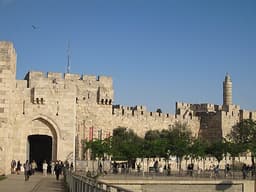
John Hyrcanus
Emperor · Ancient
59.6Total

Julius Caesar
General · Ancient
82.8Total
Basic Information
Born
-164
-100
Died
-104
-44
Era
Ancient
Ancient
Nationality
Judea
Roman Republic
Occupation
Emperor
General
Civilization
Middle Eastern
Western
Score Comparison
Military (10%)
67.5
88.0
Political (20%)
68.0
78.0
Influence (20%)
55.7
85.0
Legacy (20%)
48.3
82.0
Leadership (15%)
74.0
80.0
Strategy (15%)
55.0
85.0
TOTAL
59.6
82.8
John Hyrcanus — Complete Timeline
134 BC
Accession as High Priest and Ruler of JudeaPolitical Action◆ Major
John Hyrcanus succeeded his father Simon Thassi as High Priest and ethnarch of Judea. He consolidated Hasmonean rule, combining religious and political authority. His reign marked the peak of Hasmonean power and territorial expansion.
AccessionHasmonean DynastyHigh Priest
Impact: regionalconstructive
129 BC
Alliance with the Roman RepublicPolitical Action
John Hyrcanus renewed the alliance with the Roman Republic, which had been established by his predecessors. This alliance provided diplomatic support against the Seleucid Empire and helped secure Judean independence.
AllianceRomeDiplomacy
Impact: regionalconstructive
110 BC
Conquest of Samaria and IdumeaWar◆ Major
John Hyrcanus led military campaigns that conquered Samaria and Idumea. He destroyed the Samaritan temple on Mount Gerizim and forced the Idumeans to convert to Judaism. These conquests expanded the Jewish state and solidified Hasmonean control.
ConquestExpansionForced Conversion
Impact: regionaldestructive
108 BC
Destruction of the Samaritan TempleWar◆ Major
John Hyrcanus destroyed the Samaritan temple on Mount Gerizim, which had been a rival to the Jerusalem Temple. This act deepened the schism between Jews and Samaritans and asserted the primacy of the Jerusalem Temple.
Temple DestructionSamaritansReligious Schism
Impact: regionaldestructive
Julius Caesar — Complete Timeline
58 BC
Gallic WarsWar◆ Major
Caesar, as proconsul of Gaul, launched a series of campaigns that conquered all of Gaul (modern France, Belgium, and parts of Switzerland). He fought numerous battles, including against the Helvetii, the Belgae, and the Gallic chieftain Vercingetorix. The wars brought immense wealth and a loyal army to Caesar.
Gallic WarsConquestRoman Expansion
Impact: regional
49 BC
Crossing the RubiconPolitical Action◆ Major
Caesar led Legio XIII across the Rubicon River into Italy, defying the Roman Senate's order to disband his army. This act triggered a civil war against Pompey and the Optimates, ultimately leading to Caesar's dictatorship and the end of the Roman Republic.
Roman Civil WarEnd of RepublicPower Struggle
Impact: global
48 BC
Battle of PharsalusWar◆ Major
Caesar's outnumbered army defeated the larger forces of Pompey the Great at Pharsalus in Greece. Caesar's tactical use of a reserve line to counter Pompey's cavalry charge proved decisive. Pompey fled to Egypt, where he was assassinated, leaving Caesar as the undisputed master of the Roman world.
Roman Civil WarBattleDecisive Victory
Impact: regional
44 BC
Appointment as Dictator for LifePolitical Action◆ Major
The Roman Senate appointed Caesar dictator perpetuo (dictator for life), granting him unprecedented personal power. This move concentrated military, legislative, and judicial authority in one person, effectively ending the Roman Republic's traditional system of checks and balances and alarming many senators.
DictatorshipEnd of RepublicPower Consolidation
Impact: regionaldestructive
Assassination on the Ides of MarchPolitical Action◆ Major
A group of Roman senators, led by Marcus Junius Brutus and Gaius Cassius Longinus, stabbed Caesar to death at a meeting of the Senate in the Theatre of Pompey. The assassination was intended to restore the Republic, but instead triggered another civil war that led to the rise of the Roman Empire.
AssassinationRoman PoliticsEnd of Republic
Impact: globaldestructive
Expert Analysis
john-hyrcanus-vs-julius-caesar
### The Crossing and the Crown
On a winter day in 49 BCE, a man in a general’s cloak stood at the edge of a small river in northern Italy. The Rubicon was a boundary, not just of water, but of law: no general could cross it with his army on pain of civil war and death. Julius Caesar hesitated, then spoke a line that would echo through millennia: *“The die is cast.”* He crossed, and the Roman Republic began to die. Half a world away, a century earlier, another man stood on a mountain in Samaria, watching a temple burn. John Hyrcanus, high priest and ethnarch of Judea, had just destroyed the sanctuary of the Samaritans—a rival faith, a political threat, a memory to be erased. He did not hesitate. Both men were conquerors, both were rulers, yet one became a name synonymous with empire, the other a footnote in a regional chronicle. What made the difference? The answer lies not in their ambition, but in the worlds they inherited, the choices they made, and the shadows they cast.
### Origins
Julius Caesar was born into the chaos of a dying republic. Rome in 100 BCE was a city of marble and blood, where patricians like the Julii clan competed for glory in a system that rewarded audacity. His family was ancient but not wealthy, and Caesar learned early that debt, charm, and military command were the currencies of power. He was a product of a civilization that measured greatness in conquest and law, a world where a man could rise from the Forum to the battlefield and back again.
John Hyrcanus was born in 164 BCE, the son of Simon Thassi, a Hasmonean rebel who had freed Judea from Seleucid rule. His world was smaller, tighter, and older. Judea was a priestly state, a theocracy wrapped in a kingdom, where the high priesthood was both a sacred office and a political weapon. Hyrcanus was not a general by instinct; he was a high priest by birth, a ruler who had to defend his people with one hand and purify their faith with the other. His era was one of survival, not expansion. While Caesar dreamed of Gaul, Hyrcanus dreamed of Jerusalem.
### Rise to Power
Caesar’s path was a ladder of calculated gambles. He was captured by pirates at twenty-five, laughed at their ransom demand, and later crucified them—a story that reveals his blend of bravado and cruelty. He climbed through the *cursus honorum*—quaestor, aedile, praetor—each step financed by borrowed money and secured by alliances. The First Triumvirate with Pompey and Crassus in 60 BCE was his masterstroke: a private pact that made him consul, then governor of Gaul. There, between 58 and 50 BCE, he conquered a million people, wrote his own propaganda in the *Commentaries*, and built an army loyal to him alone.
Hyrcanus rose differently. He inherited power in 134 BCE when his father Simon was assassinated. There was no election, no triumvirate—just a bloodline and a temple. His first challenge was survival: the Seleucid king Antiochus VII Sidetes besieged Jerusalem, and Hyrcanus had to negotiate a truce, paying tribute and dismantling fortifications. It was a humiliating start, but he learned patience. In 129 BCE, he renewed the alliance with Rome, a diplomatic shield that let him turn inward. His rise was not a conquest of opportunity but a defense of a fragile throne.
### Leadership & Governance
Caesar governed like a storm. As dictator, he reformed the calendar, granted citizenship to provincials, and redistributed land to veterans—all while centralizing power in his own hands. His military genius was unmatched: at Alesia in 52 BCE, he besieged a Gallic fortress while simultaneously repelling a relief army, a feat of logistics and nerve. But his political wisdom was brittle. He pardoned his enemies, then appointed them to office, believing his clemency would earn loyalty. It earned him daggers.
Hyrcanus ruled like a priest-king. His military campaigns were limited but decisive: between 110 and 108 BCE, he conquered Samaria and Idumea, forcing their populations to convert to Judaism—a policy of assimilation through the sword. He destroyed the Samaritan temple on Mount Gerizim, a rival to Jerusalem’s holiness, and expanded Judea’s borders to their greatest extent since David. His governance was conservative: he reinforced the authority of the high priesthood, suppressed dissent, and balanced the competing factions of Pharisees and Sadducees. He was a builder of institutions, not a revolutionary.
### Triumph & Tragedy
Caesar’s greatest moment was his triumph: the Gallic Wars ended with Rome’s borders pushed to the Atlantic, and his return to Italy in 49 BCE was a celebration of a new order. His tragedy was the Ides of March, 44 BCE, when sixty senators stabbed him in the Senate chamber. He had centralized power but failed to legitimize it, leaving a vacuum that became the Empire.
Hyrcanus’s triumph was the conquest of Samaria—a victory that unified Judea’s religious identity and secured its borders. His tragedy was subtler: by forcing conversion on Idumea, he sowed resentment that would later erupt in civil strife. And his dynasty, the Hasmoneans, would collapse within decades, torn apart by his own sons. He died in 104 BCE, a ruler of a small state that would soon be swallowed by Rome.
### Character & Destiny
Caesar was driven by *ambitio*—a Roman hunger for glory that could never be satisfied. He was charismatic, ruthless, and endlessly curious, a man who could dictate letters while riding a horse. His decisions flowed from a belief that he was destined to reshape the world. That belief made him great, and it made him blind to the limits of power.
Hyrcanus was driven by *pietas*—a Jewish duty to preserve the covenant. He was cautious, calculating, and devout, a man who saw himself as a steward of God’s people. His decisions flowed from a need to protect, not to transform. That caution made him stable, and it made him small.
### Legacy
Caesar’s legacy is the West. His name became a title—*kaiser*, *tsar*—and his reforms laid the foundation for the Roman Empire, which shaped European law, language, and governance for two thousand years. He is remembered as a genius and a tyrant, a martyr and a warning.
Hyrcanus’s legacy is Judaism. His conquests and conversions defined the borders of a Jewish state for generations, and his defense of the Temple reinforced the centrality of Jerusalem. But he is remembered mostly by scholars, a footnote in the Hasmonean story. His dynasty faded, and his conquests were reversed by Rome. He built a house, not an empire.
### Conclusion
Caesar and Hyrcanus both crossed lines—one a river, one a mountain—but they moved in opposite directions. Caesar expanded outward, into the infinite possibilities of a pagan world, and his ambition destroyed the republic that made him. Hyrcanus contracted inward, into the sacred boundaries of a chosen people, and his caution preserved a faith that outlasted his kingdom. The difference between them is not in their scores or their dates, but in the question they answered. Caesar asked, *“How far can I go?”* Hyrcanus asked, *“How long can we last?”* History gave its verdict: the first man conquered the world and lost himself; the second man saved his people and faded into their prayers.
Rankings
🥇
Julius CaesarLeader
Mil: 88.0Pol: 78.0Inf: 85.0
82.8
🥈
John Hyrcanus
Mil: 67.5Pol: 68.0Inf: 55.7
59.6
+23.2 behind
How This Comparison Works
Algorithm
Each figure is scored on 6 dimensions (0—100 scale) based on structured historical data: Military (10%), Political (20%), Influence (20%), Legacy (20%), Leadership (15%), Strategy (15%). The weighted total produces the final ranking.
Data Sources
Scores are computed from structured sub-indicators in the database. Scale factors adjust for era (Ancient ×0.85, Modern ×1.0) and civilization size (Eastern ×1.05, Other ×0.80) to account for differences in population and military scale.
Maximum 3 Figures
Comparisons are limited to 2—3 figures to ensure readability and statistical meaningfulness.
Error Margins
±5 points per dimension — Sub-scores are derived from historical records with inherent uncertainty. Two figures within 5 points on a dimension should be considered roughly equivalent in that area.
Total Score Accuracy
±3 points overall — The weighted combination of 6 dimensions produces a total score with approximately ±3 points of uncertainty. Differences of less than 3 points are not statistically significant— the figures are effectively tied.
Known Limitations
- Historical records are incomplete and uneven across civilizations
- Figures from oral-tradition societies may be underrepresented
- Occupation labels can misclassify multi-role figures
- Scores measure capability and impact, not moral character
- Quantitative scoring is a comparison tool, not absolute truth
Capability Radar
Military (10%) — Battles & Warfare
Battles
55
95
Win Rate
60
92
Expansion
65
97
Political (20%) — Governance & Reform
Reform
55
90
Diplomacy
50
85
Economy
50
82
Influence (20%) — Cultural & Global Reach
Cultural
55
88
Global
40
94
Legacy (20%) — Historical Impact
Historical
60
95
Longevity
50
96
Leadership (15%) — Power & Stability
Tenure
60
75
Stability
45
60
Strategy (15%) — Tactics & Innovation
Strategy
55
94
Tactics
50
96
Reform
45
88
Similar Comparisons
Comments & Discussion
TheRubicundHeretic6/17/2026
Caesar's Rubicon crossing was an act of desperate ambition, not destiny. He had no legal right to bring his army into Italy proper, and he knew it. John Hyrcanus, by contrast, was acting within his authority as High Priest when he destroyed the Samaritan temple on Mount Gerizim. The comparison flatters Caesar while ignoring that Hyrcanus was defending a theocratic state, not overthrowing a republic for personal glory. One was a revolutionary, the other a religious enforcer.|
暗流史官6/17/2026
分析把约翰·许尔堪说得像个地方小角色,却忽略了关键差异:他摧毁撒玛利亚圣殿是在公元前120年左右,那时马加比王朝正面临内外夹击,而凯撒跨过卢比孔河时罗马已是地中海的绝对霸主。权力边界不同,选择后果自然天差地别。把两件事硬拉到一起比较,本质上是用帝国史观去衡量一个地区性势力,难免失真。|
SkepticalSally6/17/2026
The whole "footnote" framing reeks of survivorship bias. We know more about Caesar because Rome won and wrote the history. John Hyrcanus's story survives through Josephus—a single, biased source writing two centuries later under Roman patronage. The comparison isn't just apples and oranges; it's apples and a single drawing of an orange made by someone who'd never seen a tree. We literally lack the data to make this judgment meaningful.|
逆流士人6/17/2026
凯撒跨过卢比孔河时,罗马元老院已形同虚设,共和国早就在马略与苏拉的军人政治中腐朽透顶。而约翰·许尔堪摧毁撒玛利亚圣殿,是在犹太教内部正统与异端的激烈斗争中做出的果断清理。把罗马帝国一个投机贵族与本民族的宗教领袖并列比较,本身就是一种文化傲慢。许尔堪守护了一族血脉传承,凯撒只留下了内战废墟。|
IronChariots6/17/2026
Both men understood that political power flows from controlling the sacred, but Caesar performed this through personal charisma and divine association, while Hyrcanus wielded explicit priestly authority. Caesar's "die is cast" marked a personal gamble; Hyrcanus's temple-burning was an institutional purge. The analysis misses that Hyrcanus wasn't just a local ruler—he was a Hasmonean dynast who combined high priesthood with kingship, a fusion Caesar never achieved. Regional, yes; footnote, no.