Loading...
This comparison has not been analyzed yet.
One-time AI generation (~1 minute). Scores and timeline are already available below.
Joaquim Nabuco vs R. B. Bennett
Joaquim Nabuco leads by 9.9 pts · 2 figures compared
…

Joaquim Nabuco
Politician · Modern
57.0Total
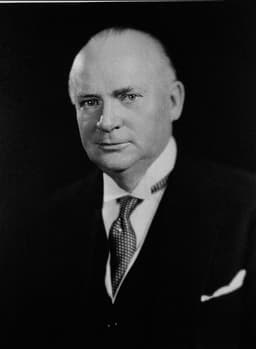
R. B. Bennett
Politician · Modern
47.1Total
Basic Information
Born
1849
1870
Died
1910
1947
Era
Modern
Modern
Nationality
Brazil
Canada
Occupation
Politician
Politician
Civilization
Western
Western
Score Comparison
Military (10%)
50.0
48.9
Political (20%)
68.0
42.3
Influence (20%)
55.0
51.0
Legacy (20%)
56.0
41.7
Leadership (15%)
65.0
55.3
Strategy (15%)
43.1
44.3
TOTAL
57.0
47.1
Joaquim Nabuco — Complete Timeline
1878 AD
Elected to the Brazilian Chamber of DeputiesPolitical Action
Joaquim Nabuco was elected to the Brazilian Chamber of Deputies in 1878. He used his position to advocate for the abolition of slavery, becoming a leading voice in the abolitionist movement.
AbolitionismLegislatureActivism
Impact: nationalprogressive
1883 AD
Published 'O Abolicionismo'Cultural◆ Major
Nabuco published 'O Abolicionismo' (Abolitionism), a seminal work that systematically argued for the immediate end of slavery in Brazil. The book became a foundational text for the abolitionist movement and influenced public opinion.
AbolitionismLiteratureIntellectual
Impact: nationalprogressive
1888 AD
Played Key Role in the Abolition of SlaveryPolitical Action
Nabuco was a central figure in the campaign that led to the Lei
AbolitionLei ÁureaHuman rights
Impact: globalprogressive
1905 AD
Appointed Brazilian Ambassador to the United StatesPolitical Action
Nabuco was appointed Brazil's first ambassador to the United States in 1905. He worked to strengthen diplomatic and economic ties between the two countries, representing Brazil at the Pan-American conferences.
DiplomacyAmbassadorInternational relations
Impact: nationalconstructive
R. B. Bennett — Complete Timeline
1930 AD
Elected Prime Minister of CanadaPolitical Action◆ Major
Bennett was elected Prime Minister of Canada as the leader of the Conservative Party, defeating Mackenzie King. His election came at the onset of the Great Depression, and he promised to end the economic crisis with bold action.
Canadian PoliticsElectionGreat Depression
Impact: national
1932 AD
Hosted the Imperial Economic Conference in OttawaPolitical Action◆ Major
Bennett hosted the Imperial Economic Conference in Ottawa, which resulted in a system of imperial preference tariffs. The agreements aimed to boost trade within the British Empire but had limited success in mitigating the Depression.
Canadian PoliticsTradeImperial Relations
Impact: nationalconstructive
1934 AD
Created the Bank of CanadaReform◆ Major
Bennett's government established the Bank of Canada as a central bank to regulate monetary policy and stabilize the financial system. The bank was initially privately owned but was nationalized in 1938.
Canadian PoliticsEconomic ReformBanking
Impact: nationalconstructive
1935 AD
Introduced the 'Bennett New Deal'Reform◆ Major
Bennett introduced a series of progressive reforms modeled on Franklin D. Roosevelt's New Deal, including unemployment insurance, minimum wage laws, and regulation of working hours. The reforms were largely blocked by the courts as unconstitutional and failed to revive the economy.
Canadian PoliticsEconomic ReformGreat Depression
Impact: nationalconstructive
Defeated in the 1935 Federal ElectionPolitical Action◆ Major
Bennett's Conservative government was decisively defeated in the 1935 federal election by Mackenzie King's Liberals. The defeat was largely due to the failure of his policies to alleviate the Great Depression and widespread public discontent.
Canadian PoliticsElectionDefeat
Impact: nationaltragic
This comparison has not been analyzed yet.
One-time AI generation (~1 minute). Scores and timeline are already available below.
Rankings
🥇
Joaquim NabucoLeader
Mil: 50.0Pol: 68.0Inf: 55.0
57.0
🥈
R. B. Bennett
Mil: 48.9Pol: 42.3Inf: 51.0
47.1
+9.9 behind
How This Comparison Works
Algorithm
Each figure is scored on 6 dimensions (0—100 scale) based on structured historical data: Military (10%), Political (20%), Influence (20%), Legacy (20%), Leadership (15%), Strategy (15%). The weighted total produces the final ranking.
Data Sources
Scores are computed from structured sub-indicators in the database. Scale factors adjust for era (Ancient ×0.85, Modern ×1.0) and civilization size (Eastern ×1.05, Other ×0.80) to account for differences in population and military scale.
Maximum 3 Figures
Comparisons are limited to 2—3 figures to ensure readability and statistical meaningfulness.
Error Margins
±5 points per dimension — Sub-scores are derived from historical records with inherent uncertainty. Two figures within 5 points on a dimension should be considered roughly equivalent in that area.
Total Score Accuracy
±3 points overall — The weighted combination of 6 dimensions produces a total score with approximately ±3 points of uncertainty. Differences of less than 3 points are not statistically significant— the figures are effectively tied.
Known Limitations
- Historical records are incomplete and uneven across civilizations
- Figures from oral-tradition societies may be underrepresented
- Occupation labels can misclassify multi-role figures
- Scores measure capability and impact, not moral character
- Quantitative scoring is a comparison tool, not absolute truth
Capability Radar
Military (10%) — Battles & Warfare
Battles
27
27
Win Rate
31
34
Expansion
35
37
Political (20%) — Governance & Reform
Reform
70
40
Diplomacy
65
35
Economy
30
25
Influence (20%) — Cultural & Global Reach
Cultural
60
15
Global
55
20
Legacy (20%) — Historical Impact
Historical
65
30
Longevity
55
20
Leadership (15%) — Power & Stability
Tenure
40
30
Stability
40
20
Strategy (15%) — Tactics & Innovation
Strategy
39
39
Tactics
40
43
Reform
46
46
Similar Comparisons
Comments & Discussion
No comments yet. Be the first to share your thoughts!