Loading...
Analysis will be generated on first visit.
Scores and timeline are available below. The page will refresh automatically when ready.
Jinheung of Silla vs Julius Caesar
Julius Caesar leads by 15.8 pts · 2 figures compared
…

Jinheung of Silla
Emperor · Ancient
67.5Total
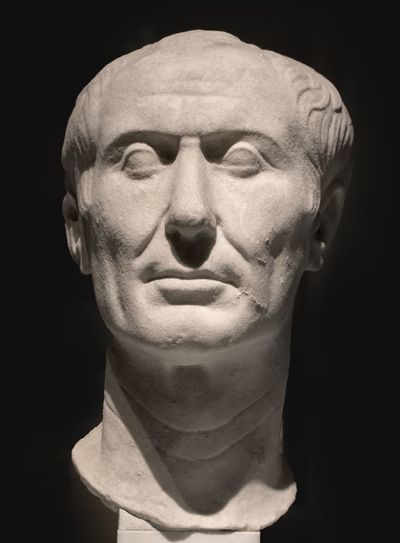
Julius Caesar
General · Ancient
83.3Total
Basic Information
Born
-526
-100
Died
—
-44
Era
Ancient
Ancient
Nationality
Korea
Roman Republic
Occupation
Emperor
General
Civilization
Eastern
Western
Score Comparison
Military (10%)
61.8
88.0
Political (20%)
69.3
78.0
Influence (20%)
72.7
85.0
Legacy (20%)
66.7
82.0
Leadership (15%)
74.3
82.0
Strategy (15%)
56.4
88.0
TOTAL
67.5
83.3
Rankings
🥇
Julius CaesarLeader
Mil: 88.0Pol: 78.0Inf: 85.0
83.3
🥈
Jinheung of Silla
Mil: 61.8Pol: 69.3Inf: 72.7
67.5
+15.8 behind
How This Comparison Works
Algorithm
Each figure is scored on 6 dimensions (0—100 scale) based on structured historical data: Military (10%), Political (20%), Influence (20%), Legacy (20%), Leadership (15%), Strategy (15%). The weighted total produces the final ranking.
Data Sources
Scores are computed from structured sub-indicators in the database. Scale factors adjust for era (Ancient ×0.85, Modern ×1.0) and civilization size (Eastern ×1.05, Other ×0.80) to account for differences in population and military scale.
Maximum 3 Figures
Comparisons are limited to 2—3 figures to ensure readability and statistical meaningfulness.
Error Margins
±5 points per dimension — Sub-scores are derived from historical records with inherent uncertainty. Two figures within 5 points on a dimension should be considered roughly equivalent in that area.
Total Score Accuracy
±3 points overall — The weighted combination of 6 dimensions produces a total score with approximately ±3 points of uncertainty. Differences of less than 3 points are not statistically significant— the figures are effectively tied.
Known Limitations
- Historical records are incomplete and uneven across civilizations
- Figures from oral-tradition societies may be underrepresented
- Occupation labels can misclassify multi-role figures
- Scores measure capability and impact, not moral character
- Quantitative scoring is a comparison tool, not absolute truth
Capability Radar
Military (10%) — Battles & Warfare
Battles
55
95
Win Rate
60
92
Expansion
65
97
Political (20%) — Governance & Reform
Reform
60
90
Diplomacy
55
85
Economy
50
82
Influence (20%) — Cultural & Global Reach
Cultural
65
88
Global
30
94
Legacy (20%) — Historical Impact
Historical
60
95
Longevity
55
96
Leadership (15%) — Power & Stability
Tenure
70
75
Stability
60
60
Strategy (15%) — Tactics & Innovation
Strategy
65
94
Tactics
50
96
Reform
70
88
Analysis will be generated on first visit.
Scores and timeline are available below. The page will refresh automatically when ready.
Jinheung of Silla — Complete Timeline
540 AD
Formalization of the Hwarang systemReform
King Jinheung institutionalized the Hwarang, an elite youth corps that combined military training with cultural and spiritual education. The Hwarang became a key instrument for Silla's military expansion and political unification, producing many of the kingdom's greatest generals and statesmen.
MilitaryHwarangSilla
Impact: regionalconstructive
550 AD
Establishment of the Silla-China alliancePolitical Action
Jinheung established formal diplomatic and military ties with the Northern Qi dynasty of China. This alliance provided Silla with Chinese military support and cultural influence, strengthening its position against Baekje and Goguryeo in the struggle for Korean unification.
DiplomacyAllianceSilla
Impact: regionalconstructive
553 AD
Conquest of the Han River basinWar◆ Major
Jinheung led Silla forces to capture the strategic Han River basin from Baekje. This victory gave Silla direct access to the Yellow Sea and trade routes with China, providing economic resources and diplomatic advantages that were crucial for later unification.
Territorial ExpansionBaekjeSilla
Impact: regionaldestructive
Construction of Hwangnyongsa TempleCultural◆ Major
Jinheung initiated the construction of Hwangnyongsa Temple in Gyeongju, one of the largest Buddhist temples in East Asia. The temple symbolized Silla's devotion to Buddhism and its royal patronage, becoming a major religious and cultural center for the kingdom.
TempleBuddhismSilla
Impact: nationalconstructive
562 AD
Destruction of DaegayaWar◆ Major
Jinheung's forces conquered the Gaya confederacy state of Daegaya, absorbing its territory into Silla. This eliminated a rival power in the southern Korean Peninsula and further consolidated Silla's dominance, paving the way for the eventual unification of the Three Kingdoms.
ConquestGayaSilla
Impact: regionaldestructive
Similar Comparisons
Comments & Discussion
No comments yet. Be the first to share your thoughts!