Loading...
Jebe vs Qin Shi Huang
Qin Shi Huang leads by 24.2 pts · 2 figures compared
…

Jebe
General · Medieval
61.0Total
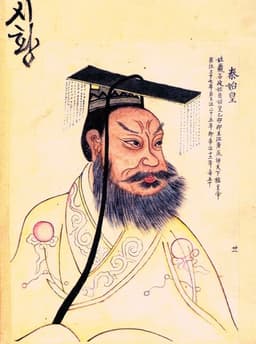
Qin Shi Huang
Emperor · Ancient
85.2Total
Basic Information
Born
1180
-259
Died
1225
-210
Era
Medieval
Ancient
Nationality
Mongol Empire
China
Occupation
General
Emperor
Civilization
Eastern
Eastern
Score Comparison
Military (10%)
88.5
80.0
Political (20%)
42.3
90.0
Influence (20%)
58.3
85.0
Legacy (20%)
56.0
90.0
Leadership (15%)
61.1
78.0
Strategy (15%)
80.4
82.0
TOTAL
61.0
85.2
Jebe — Complete Timeline
1220 AD
The Great Raid (with Subutai)War◆ Major
Jebe and Subutai led a 20,000-man Mongol army on a multi-year reconnaissance raid through the Caucasus and into the Pontic steppes. They defeated the Cumans and a coalition of Rus' princes at the Battle of the Kalka River in 1223.
CaucasusKalka RiverRus'
Impact: regional
Pursuit of the Khwarezm ShahWar
Jebe led a detachment of 10,000 men to pursue Muhammad II of Khwarezm across Persia. He chased the fleeing shah to the Caspian Sea, where Muhammad died on an island. The pursuit demonstrated Mongol strategic mobility and intelligence gathering.
KhwarezmMuhammad IIPursuit
Impact: regional
1222 AD
Defeat of the KipchaksWar
During the Great Raid, Jebe defeated the Kipchak (Cuman) confederation in the Caucasus. The victory broke the power of the Kipchaks in the region and forced them to flee westward, where they later allied with the Rus' against the Mongols.
KipchaksCaucasusCumans
Impact: regional
1223 AD
Battle of the Kalka RiverWar◆ Major
Jebe and Subutai's Mongol army defeated a coalition of Rus' principalities and Cumans at the Kalka River. The victory was a major demonstration of Mongol military capability against European forces, though the Mongols did not follow up immediately.
Rus'CumansKalka River
Impact: regional
Qin Shi Huang — Complete Timeline
246 BC
Construction of the Mausoleum and Terracotta ArmyOther◆ Major
Qin Shi Huang commissioned a vast mausoleum complex near Xi'an, guarded by thousands of life-sized terracotta soldiers, horses, and chariots. The project employed hundreds of thousands of workers and reflected his obsession with immortality and imperial power.
Impact: global
230 BC
Conquest of the Six Warring StatesWar
From 230 to 221 BCE, Ying Zheng led the Qin state in a series of campaigns that conquered the Han, Zhao, Wei, Chu, Yan, and Qi states. This unified China under a single ruler for the first time, ending the Warring States period.
Impact: global
221 BC
Standardization of Writing, Currency, and MeasurementsReform◆ Major
Qin Shi Huang ordered the standardization of Chinese script, currency, and weights and measures across the unified empire. This facilitated administration, trade, and cultural integration, laying a foundation for future dynasties.
Impact: globalconstructive
Proclamation of the Qin DynastyPolitical Action
After conquering the last independent state, Ying Zheng declared himself Shi Huangdi (First Emperor), founding the Qin Dynasty. He adopted a new title to signify his supreme authority and initiated centralized imperial rule.
Impact: global
214 BC
Initiation of the Great Wall ConstructionOther◆ Major
Qin Shi Huang ordered the connection and extension of existing northern fortifications to create a unified defensive wall against nomadic Xiongnu raids. This project involved massive conscripted labor and became the precursor to the later Great Wall.
Impact: regional
213 BC
Burning of Books and Burying of ScholarsPolitical Action◆ Major
On the advice of Li Si, Qin Shi Huang ordered the burning of historical records and philosophical texts not aligned with Legalist doctrine. He also had 460 Confucian scholars buried alive to suppress dissent and consolidate ideological control.
Impact: nationaldestructive
Expert Analysis
jebe-vs-qin-shi-huang
# The Arrow and the Dragon: Two Paths to Immortality
On a spring morning in 221 BC, a king in his late thirties stood atop a chariot in the plains of central China, watching his armies march in formation. He had just conquered the last independent state, ending centuries of war. He declared himself *Shi Huangdi*—the First Emperor—and set about remaking the world in his image. Fourteen hundred years later, on a dusty road in Persia, a Mongol general named Jebe—"the Arrow"—rode with a detachment of ten thousand horsemen, chasing a fleeing sultan across a continent. He had no throne to claim, no empire to found. He carried only his bow, his loyalty, and a reputation that would echo through the ages.
What drives one man to build a civilization, and another to ride through it like a passing storm? The answer lies not in their victories alone, but in the worlds that shaped them.
Origins
Ying Zheng was born in 259 BC into a royal house that had already spent centuries clawing for dominance. The Warring States period had taught China that survival meant total control. His father was a king, his mother a concubine, and his childhood was a web of court intrigue and assassination plots. By the time he ascended the throne at thirteen, he understood that power was not inherited—it was seized.
Jebe was born around 1180 on the Mongolian steppe, into a world where loyalty was fluid and identity meant little beyond your clan. Originally a soldier of the Tayichiud tribe, he entered history by shooting Genghis Khan's horse from under him during a battle. When captured, he did not beg for mercy. He confessed to the shot and offered his bow. Genghis, seeing both skill and honesty, took him into service. Jebe's origin was not a throne but a single arrow—and that arrow became his name.
Rise to Power
Qin Shi Huang's rise was methodical, patient, and absolute. From 230 to 221 BC, he unleashed a series of campaigns that swallowed the six rival states one by one: Han, Zhao, Wei, Chu, Yan, and finally Qi. Each conquest was a masterpiece of logistics and strategy, but also of psychological warfare. He understood that to rule, he had to erase the past. When the last king surrendered, Ying Zheng did not simply add a title. He invented one: *Shi Huangdi*, the First Emperor, implying a dynasty that would last ten thousand generations.
Jebe's rise was swifter, and far more personal. He became Genghis Khan's trusted general, leading vanguards in the conquest of the Jin dynasty and the Khwarezmian Empire. His defining moment came in 1220, when Genghis sent him with a mere ten thousand men to pursue Muhammad II of Khwarezm across Persia. The sultan fled like a hunted animal, and Jebe chased him to the shores of the Caspian Sea, where Muhammad died on a small island, broken and alone. It was not a conquest of states—it was a hunt.
Leadership & Governance
Here the two men diverge completely. Qin Shi Huang governed. He standardized writing, currency, and weights and measures across his new empire. He ordered the connection of northern fortifications into what would become the Great Wall. He commissioned a vast mausoleum guarded by thousands of life-sized terracotta soldiers, a statement that even death would not diminish his authority. His political score of 88 reflects a man who understood that armies win wars, but systems win peace.
Yet his governance had a dark side. In 213 BC, on the advice of his chancellor Li Si, he ordered the burning of historical records and philosophical texts not aligned with Legalist doctrine. Scholars who resisted were buried alive. He sought to control not just territory, but memory itself.
Jebe governed nothing. His military score of 88.2 and strategy score of 85.9 mark him as a brilliant commander, but his political score of 51.4 reveals the truth: he was a weapon, not a ruler. After the pursuit of Muhammad, Jebe joined forces with Subutai for the Great Raid of 1220–1224. With twenty thousand men, they swept through the Caucasus, defeated the Kipchak confederation in 1222, and crushed a coalition of Rus' princes at the Kalka River in 1223. They did not occupy, tax, or administer. They raided, terrified, and moved on.
Triumph & Tragedy
Qin Shi Huang's greatest triumph was unification itself. He created China as a political entity, and his standardization of script and currency allowed that entity to function. His tragedy came from the same source: his obsession with control and immortality. He searched for elixirs of eternal life, consumed mercury pills, and died in 210 BC at age forty-nine, possibly poisoned by his own quest. His dynasty collapsed within four years of his death.
Jebe's triumph was the Great Raid itself—an epic of endurance, speed, and audacity that covered thousands of miles and shattered multiple kingdoms. His tragedy was that he never returned. In 1225, somewhere on the steppe, Jebe died—perhaps in battle, perhaps of illness. The records are silent. The Arrow was spent.
Character & Destiny
Qin Shi Huang was a builder, a controller, a man who believed that reality could be commanded. His personality—ruthless, visionary, paranoid—shaped every decision. He built walls to keep the world out, standardized writing to keep thought in line, and filled his tomb with an army to command in the afterlife.
Jebe was a rider, a hunter, a man who accepted that he was part of a larger force. His personality—loyal, fearless, adaptable—made him invaluable to Genghis Khan. He did not seek to build anything permanent. He sought to serve, to fight, and to be remembered as the one who never missed.
Legacy
Qin Shi Huang's legacy is everywhere in China. The Great Wall, the unified script, the very idea of a single Chinese empire—all trace back to him. His terracotta army draws millions of visitors. His name is synonymous with both greatness and tyranny. His legacy score of 85 speaks to a man whose influence is still measured in stone and steel.
Jebe's legacy is quieter but no less real. He is remembered in Mongolian folklore, in the epic tales of the Great Raid, and in the military history of the world's most successful empire. His legacy score of 67.4 reflects the fate of those who serve rather than rule: their names survive, but their monuments are made of stories, not stone.
Conclusion
Two men, two trajectories. One built a world and watched it crumble. One rode through a world and left it burning. Qin Shi Huang wanted to be remembered for ten thousand generations. Jebe wanted only to be known as the arrow that found its mark. In the end, both achieved their goals—and both remind us that immortality comes in many forms. Sometimes it is a tomb of terracotta. Sometimes it is a name whispered across a thousand miles of steppe.
Rankings
🥇
Qin Shi HuangLeader
Mil: 80.0Pol: 90.0Inf: 85.0
85.2
🥈
Jebe
Mil: 88.5Pol: 42.3Inf: 58.3
61.0
+24.2 behind
How This Comparison Works
Algorithm
Each figure is scored on 6 dimensions (0—100 scale) based on structured historical data: Military (10%), Political (20%), Influence (20%), Legacy (20%), Leadership (15%), Strategy (15%). The weighted total produces the final ranking.
Data Sources
Scores are computed from structured sub-indicators in the database. Scale factors adjust for era (Ancient ×0.85, Modern ×1.0) and civilization size (Eastern ×1.05, Other ×0.80) to account for differences in population and military scale.
Maximum 3 Figures
Comparisons are limited to 2—3 figures to ensure readability and statistical meaningfulness.
Error Margins
±5 points per dimension — Sub-scores are derived from historical records with inherent uncertainty. Two figures within 5 points on a dimension should be considered roughly equivalent in that area.
Total Score Accuracy
±3 points overall — The weighted combination of 6 dimensions produces a total score with approximately ±3 points of uncertainty. Differences of less than 3 points are not statistically significant— the figures are effectively tied.
Known Limitations
- Historical records are incomplete and uneven across civilizations
- Figures from oral-tradition societies may be underrepresented
- Occupation labels can misclassify multi-role figures
- Scores measure capability and impact, not moral character
- Quantitative scoring is a comparison tool, not absolute truth
Capability Radar
Military (10%) — Battles & Warfare
Battles
88
85
Win Rate
90
90
Expansion
85
90
Political (20%) — Governance & Reform
Reform
30
95
Diplomacy
65
75
Economy
35
90
Influence (20%) — Cultural & Global Reach
Cultural
55
95
Global
65
85
Legacy (20%) — Historical Impact
Historical
70
95
Longevity
60
95
Leadership (15%) — Power & Stability
Tenure
40
70
Stability
45
65
Strategy (15%) — Tactics & Innovation
Strategy
85
85
Tactics
92
80
Reform
70
95
Similar Comparisons
Comments & Discussion
Arrow's Shadow6/17/2026
Jebe’s genius was tactical, Qin’s was architectural. Jebe rode 10,000 miles with minimal supply lines, feigning retreat at the Indus to trap Jalal al-Din—brilliant, yes, but a spark. Qin standardized writing, weights, axles, and law across a unified China that endured two millennia. One built speed, the other built permanence. Jebe died on the road; Qin’s ghost rules through his terracotta silence. History remembers the builder, not the bolt.|
铁蹄书生6/17/2026
说Jebe是“箭”太客气了。他压根不是流寇,是成吉思汗的战略特攻队。1221年追花剌子模苏丹穿越兴都库什山,路线比现代GPS还刁钻。可你要对比他的机动性和嬴政的铁腕标准化?那不是一个量级。嬴政焚书坑儒、统一度量衡,把一个碎片化的世界粘成了瓷板,而Jebe只是在那块板上划一道浅痕。一个要统治,一个只追杀。|
Shield of Facts6/17/2026
Let’s slow down on the Jebe worship. He led 10,000 horsemen across Persia chasing a sultan who was already beaten. Impressive speed, yes, but his campaign didn't create a single stable institution. Qin Shi Huang unified writing, which directly enabled bureaucratic control of 30+ million people. Jebe’s legacy? A fable about a dead man on a horse. Give me the guy who etched laws into stone, not the one who shot arrows into dust.|
深宫疑云6/17/2026
你们都忘了嬴政的阴暗面有多具体。他母亲赵姬的情夫嫪毐发动叛乱,嬴政摔死两个弟弟,囚禁亲妈,手段狠得像复仇刺客。这不是冷血帝王,是PTSD幸存者。而Jebe呢?投降时只剩一匹马,成吉思汗看中他的忠诚。一个被背叛逼成暴君,一个被信任塑成忠犬。别吹什么“伟大”,说到底一个是被伤透的孩子,一个是找到主人的野马。|
Data Dissector6/17/2026
Look at the numbers: Qin’s census controlled over 30 million lives, standardized axle-width for 4,000 km of imperial roads, and built a wall network stretching 5,000 km. Jebe’s detachment? 10,000 men, zero infrastructure, zero census. One man engineered the largest continuous command economy of the ancient world; the other was essentially a very fast raiding party manager. Scale matters. Jebe was a terrifying special ops commander; Qin Shi Huang was a species-level event.|
墨守成规6/17/2026
你们太崇拜秦始皇了。他确实统一,但代价是把六国知识精英埋进土里,把“儒