Loading...
This comparison has not been analyzed yet.
One-time AI generation (~1 minute). Scores and timeline are already available below.
Jayaprakash Narayan vs Johnny Briceno
Jayaprakash Narayan leads by 12.3 pts · 2 figures compared
…
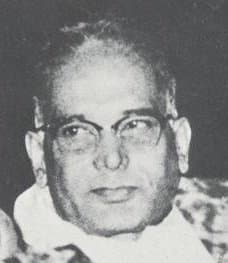
Jayaprakash Narayan
Politician · Modern
57.8Total

Johnny Briceno
Politician · Modern
45.5Total
Basic Information
Born
1902
1960
Died
1979
—
Era
Modern
Modern
Nationality
India
Belize
Occupation
Politician
Politician
Civilization
Indian
Other
Score Comparison
Military (10%)
37.9
18.1
Political (20%)
68.0
68.0
Influence (20%)
62.0
50.2
Legacy (20%)
54.0
40.0
Leadership (15%)
58.8
40.0
Strategy (15%)
60.0
49.5
TOTAL
57.8
45.5
Jayaprakash Narayan — Complete Timeline
1934 AD
Founded the Socialist PartyPolitical Action◆ Major
Narayan was a founding member of the Congress Socialist Party, a left-wing faction within the Indian National Congress. The party advocated for socialist policies and greater economic equality.
Socialist PartyLeft-WingEconomic Equality
Impact: nationalconstructive
1952 AD
Led the Bihar movement for land reformsPolitical Action◆ Major
Narayan led a movement in Bihar demanding land reforms and the abolition of the zamindari system. He organized peasants and pressured the government to implement land redistribution, though with limited success.
Land ReformsBiharPeasant Movement
Impact: regionalconstructive
1974 AD
Led the Total Revolution movementPolitical Action◆ Major
Narayan launched the 'Total Revolution' (Sampoorna Kranti) movement against the government of Prime Minister Indira Gandhi. He called for a complete overhaul of the political system, leading to widespread protests and the eventual imposition of the Emergency in 1975.
Total RevolutionEmergencyProtest
Impact: nationalconstructive
1975 AD
Imprisoned during the EmergencyPolitical Action◆ Major
Narayan was arrested and imprisoned during the Emergency imposed by Indira Gandhi. His imprisonment made him a symbol of resistance against authoritarian rule.
EmergencyImprisonmentResistance
Impact: nationaltragic
1977 AD
Mediated the formation of the Janata PartyPolitical Action◆ Major
Narayan played a key role in uniting opposition parties to form the Janata Party, which defeated Indira Gandhi's Congress in the 1977 general election. He declined to become Prime Minister, instead supporting Morarji Desai.
Janata Party1977 ElectionCoalition
Impact: nationalconstructive
Johnny Briceno — Complete Timeline
2020 AD
Elected Prime Minister of BelizePolitical Action◆ Major
Johnny Briceno led the People's United Party to a landslide victory in the 2020 general election, becoming prime minister. His government focused on economic recovery and anti-corruption measures.
ElectionBelizePUP
Impact: nationalconstructive
Navigated COVID-19 Pandemic ResponsePolitical Action◆ Major
Briceno's government implemented lockdowns, travel restrictions, and vaccination campaigns to manage the COVID-19 pandemic. Belize's tourism-dependent economy faced significant challenges.
COVID-19PandemicBelize
Impact: national
2021 AD
Implemented Anti-Corruption ReformsReform◆ Major
Briceno's government established a commission of inquiry into corruption and passed legislation to strengthen accountability. These measures aimed to restore public trust in government.
Anti-CorruptionReformBelize
Impact: nationalprogressive
2022 AD
Pursued Climate Change InitiativesPolitical Action◆ Major
Briceno advocated for climate action at international forums, including COP27. Belize committed to reducing emissions and protecting its barrier reef, a key economic and ecological asset.
Climate ChangeEnvironmentBelize
Impact: globalprogressive
This comparison has not been analyzed yet.
One-time AI generation (~1 minute). Scores and timeline are already available below.
Rankings
🥇
Jayaprakash NarayanLeader
Mil: 37.9Pol: 68.0Inf: 62.0
57.8
🥈
Johnny Briceno
Mil: 18.1Pol: 68.0Inf: 50.2
45.5
+12.3 behind
How This Comparison Works
Algorithm
Each figure is scored on 6 dimensions (0—100 scale) based on structured historical data: Military (10%), Political (20%), Influence (20%), Legacy (20%), Leadership (15%), Strategy (15%). The weighted total produces the final ranking.
Data Sources
Scores are computed from structured sub-indicators in the database. Scale factors adjust for era (Ancient ×0.85, Modern ×1.0) and civilization size (Eastern ×1.05, Other ×0.80) to account for differences in population and military scale.
Maximum 3 Figures
Comparisons are limited to 2—3 figures to ensure readability and statistical meaningfulness.
Error Margins
±5 points per dimension — Sub-scores are derived from historical records with inherent uncertainty. Two figures within 5 points on a dimension should be considered roughly equivalent in that area.
Total Score Accuracy
±3 points overall — The weighted combination of 6 dimensions produces a total score with approximately ±3 points of uncertainty. Differences of less than 3 points are not statistically significant— the figures are effectively tied.
Known Limitations
- Historical records are incomplete and uneven across civilizations
- Figures from oral-tradition societies may be underrepresented
- Occupation labels can misclassify multi-role figures
- Scores measure capability and impact, not moral character
- Quantitative scoring is a comparison tool, not absolute truth
Capability Radar
Military (10%) — Battles & Warfare
Battles
46
26
Win Rate
47
30
Expansion
48
30
Political (20%) — Governance & Reform
Reform
75
45
Diplomacy
60
55
Economy
20
50
Influence (20%) — Cultural & Global Reach
Cultural
55
20
Global
55
20
Legacy (20%) — Historical Impact
Historical
65
25
Longevity
50
15
Leadership (15%) — Power & Stability
Tenure
30
50
Stability
25
45
Strategy (15%) — Tactics & Innovation
Strategy
53
35
Tactics
55
38
Reform
57
42
Similar Comparisons
Comments & Discussion
No comments yet. Be the first to share your thoughts!