Loading...
Analysis will be generated on first visit.
Scores and timeline are available below. The page will refresh automatically when ready.
Jayachamaraja Wadiyar vs Julius Caesar
Julius Caesar leads by 17.4 pts · 2 figures compared
…

Jayachamaraja Wadiyar
Emperor · Modern
65.9Total
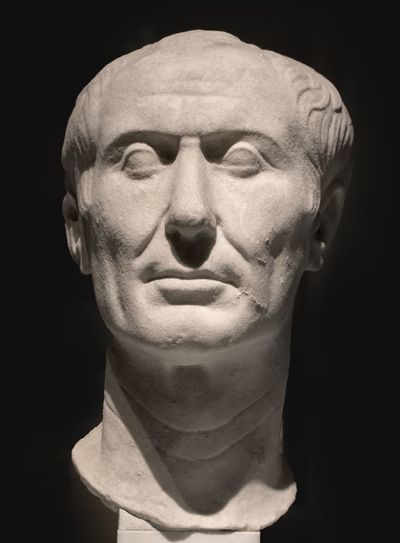
Julius Caesar
General · Ancient
83.3Total
Basic Information
Born
1919
-100
Died
1974
-44
Era
Modern
Ancient
Nationality
India
Roman Republic
Occupation
Emperor
General
Civilization
Indian
Western
Score Comparison
Military (10%)
38.1
88.0
Political (20%)
73.9
78.0
Influence (20%)
74.2
85.0
Legacy (20%)
58.1
82.0
Leadership (15%)
75.9
82.0
Strategy (15%)
63.4
88.0
TOTAL
65.9
83.3
Rankings
🥇
Julius CaesarLeader
Mil: 88.0Pol: 78.0Inf: 85.0
83.3
🥈
Jayachamaraja Wadiyar
Mil: 38.1Pol: 73.9Inf: 74.2
65.9
+17.4 behind
How This Comparison Works
Algorithm
Each figure is scored on 6 dimensions (0—100 scale) based on structured historical data: Military (10%), Political (20%), Influence (20%), Legacy (20%), Leadership (15%), Strategy (15%). The weighted total produces the final ranking.
Data Sources
Scores are computed from structured sub-indicators in the database. Scale factors adjust for era (Ancient ×0.85, Modern ×1.0) and civilization size (Eastern ×1.05, Other ×0.80) to account for differences in population and military scale.
Maximum 3 Figures
Comparisons are limited to 2—3 figures to ensure readability and statistical meaningfulness.
Error Margins
±5 points per dimension — Sub-scores are derived from historical records with inherent uncertainty. Two figures within 5 points on a dimension should be considered roughly equivalent in that area.
Total Score Accuracy
±3 points overall — The weighted combination of 6 dimensions produces a total score with approximately ±3 points of uncertainty. Differences of less than 3 points are not statistically significant— the figures are effectively tied.
Known Limitations
- Historical records are incomplete and uneven across civilizations
- Figures from oral-tradition societies may be underrepresented
- Occupation labels can misclassify multi-role figures
- Scores measure capability and impact, not moral character
- Quantitative scoring is a comparison tool, not absolute truth
Capability Radar
Military (10%) — Battles & Warfare
Battles
32
95
Win Rate
30
92
Expansion
34
97
Political (20%) — Governance & Reform
Reform
40
90
Diplomacy
35
85
Economy
30
82
Influence (20%) — Cultural & Global Reach
Cultural
50
88
Global
20
94
Legacy (20%) — Historical Impact
Historical
40
95
Longevity
30
96
Leadership (15%) — Power & Stability
Tenure
30
75
Stability
25
60
Strategy (15%) — Tactics & Innovation
Strategy
39
94
Tactics
39
96
Reform
44
88
Analysis will be generated on first visit.
Scores and timeline are available below. The page will refresh automatically when ready.
Jayachamaraja Wadiyar — Complete Timeline
1940 AD
Accession as Maharaja of MysorePolitical Action◆ Major
Jayachamaraja Wadiyar succeeded his father Krishnaraja Wadiyar IV as Maharaja of the princely state of Mysore. He inherited a well-administered and progressive state known for its industrial and educational development.
SuccessionPrincely StateMysore
Impact: regional
1947 AD
Signed Instrument of Accession to IndiaPolitical Action
Jayachamaraja Wadiyar signed the Instrument of Accession, integrating Mysore into the Dominion of India. This decision, made during the partition, ensured Mysore became part of the Indian Union.
AccessionPartitionIndian Union
Impact: nationalconstructive
1956 AD
Appointment as Governor of Mysore StatePolitical Action◆ Major
Jayachamaraja Wadiyar was appointed Governor of the reorganized Mysore State (later Karnataka) by the Indian government. He served as the constitutional head of the state until 1964, transitioning from ruler to ceremonial governor.
GovernorMysore StateTransition
Impact: regionalconstructive
1958 AD
Publication of 'The Philosophy of the Upanishads'Cultural
Jayachamaraja Wadiyar published 'The Philosophy of the Upanishads', a scholarly work on Hindu philosophy. This reflected his deep interest in Vedanta and his role as a philosopher-king.
PhilosophyUpanishadsScholarship
Impact: nationalconstructive
1966 AD
Election as President of the International Music CouncilCultural◆ Major
Jayachamaraja Wadiyar was elected President of the International Music Council, a UNESCO-affiliated organization. This recognized his expertise as a noted musician and composer, particularly in Carnatic music.
MusicUNESCOInternational Recognition
Impact: globalconstructive
1970 AD
Composition of 'Sri Chamarajendra' and Other WorksCultural
Jayachamaraja Wadiyar composed several Carnatic music kritis (songs) under the pen name 'Sri Chamarajendra'. His compositions are performed in classical music concerts, contributing to the Carnatic repertoire.
Carnatic MusicCompositionKritis
Impact: regionalconstructive
Similar Comparisons
Comments & Discussion
No comments yet. Be the first to share your thoughts!