Loading...
Jani Beg vs Napoleon Bonaparte
Napoleon Bonaparte leads by 12.6 pts · 2 figures compared
…
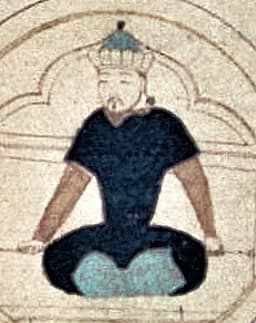
Jani Beg
Emperor · Medieval
58.3Total

Napoleon Bonaparte
General · Modern
70.9Total
Basic Information
Born
1310
1769
Died
1357
1821
Era
Medieval
Modern
Nationality
Golden Horde
France
Occupation
Emperor
General
Civilization
Eastern
Western
Score Comparison
Military (10%)
63.3
94.0
Political (20%)
68.0
72.0
Influence (20%)
59.0
40.0
Legacy (20%)
49.2
80.0
Leadership (15%)
65.0
78.0
Strategy (15%)
50.0
90.0
TOTAL
58.3
70.9
Jani Beg — Complete Timeline
1346 AD
Siege of CaffaWar◆ Major
Jani Beg besieged the Genoese trading colony of Caffa in Crimea. During the siege, the Mongol army reportedly catapulted plague-infected corpses into the city, contributing to the spread of the Black Death to Europe. The siege was eventually lifted.
Golden HordeGenoaBlack DeathCrimea
Impact: globaldestructive
1350 AD
War with the IlkhanateWar◆ Major
Jani Beg continued the Golden Horde's conflict with the Ilkhanate, launching campaigns into the Caucasus. The war weakened both states and contributed to the decline of the Ilkhanate, but also drained the Golden Horde's resources.
Golden HordeIlkhanateWarCaucasus
Impact: regional
1356 AD
Conquest of TabrizWar
Jani Beg led the Golden Horde army in the conquest of Tabriz, the capital of the Chobanid dynasty in Persia. The city was sacked, and the Golden Horde reached its greatest territorial extent, controlling the Caucasus and parts of Persia.
Golden HordePersiaConquestTabriz
Impact: global
Napoleon Bonaparte — Complete Timeline
1799 AD
Coup of 18 BrumaireOther◆ Major
Napoleon Bonaparte, with support from his brother Lucien and key political figures, overthrew the Directory in a bloodless coup. He established the Consulate with himself as First Consul, effectively becoming the ruler of France. This event ended the French Revolution's most unstable period.
French RevolutionCoupRise to Power
Impact: regional
1804 AD
Promulgation of the Napoleonic CodeOther◆ Major
Napoleon enacted the Civil Code of the French, known as the Napoleonic Code, a comprehensive set of laws that replaced the fragmented feudal legal systems. The code established legal equality, protected property rights, and secularized law. It became the basis for legal systems in many European and world countries.
Legal ReformNapoleonic CodeCivil Law
Impact: globalconstructive
1805 AD
Battle of AusterlitzWar◆ Major
Napoleon's Grande Arm
Napoleonic WarsBattleDecisive Victory
Impact: global
1812 AD
Invasion of RussiaWar◆ Major
Napoleon led the Grande Arm
Napoleonic WarsInvasionDisaster
Impact: globaldestructive
1815 AD
Battle of WaterlooWar◆ Major
Napoleon's French army was defeated by the combined forces of the Duke of Wellington's Anglo-Allied army and Gebhard Leberecht von Bl
Napoleonic WarsBattleFinal Defeat
Impact: globaldestructive
Expert Analysis
jani-beg-vs-napoleon-bonaparte
# The Conqueror and the Khan: Two Paths to Power, Two Ends of Empire
In the summer of 1356, as Jani Beg’s Mongol horsemen swept into the Persian city of Tabriz, the khan of the Golden Horde stood at the summit of his world. His empire stretched from the Danube to the Caspian, the largest territory any Mongol ruler had commanded since the days of Genghis. Just sixty years later, in the spring of 1815, another conqueror—Napoleon Bonaparte—would watch his own world collapse on the muddy fields of Waterloo, his dream of a united Europe shattered by British and Prussian steel. Both men built empires that seemed unbreakable. Both saw them crumble in a generation. But why did one leave a legacy that still shapes laws and nations, while the other faded into a footnote of steppe history?
Origins
Napoleon was born in 1769 on the Mediterranean island of Corsica, a place that had only recently become French. His family was minor nobility, poor enough that young Napoleon wore hand-me-down uniforms to military school. The French Revolution, which erupted when he was twenty, tore apart the old order and created opportunities unknown in the rigid hierarchies of monarchy. A brilliant artillery officer could rise—and Napoleon did, faster than any man in Europe.
Jani Beg came from an entirely different world. Born in 1310 into the ruling house of the Golden Horde, he was a descendant of Genghis Khan through his son Jochi. His was a world of horse archers, tribute systems, and the constant threat of succession by assassination. The Mongol Empire had already fractured, but the Golden Horde remained a fearsome power, ruling the Russian principalities from the Volga steppes. Jani Beg inherited not revolution but tradition—a system where a khan ruled by blood and sword, and where loyalty was measured in tribute and terror.
Rise to Power
Napoleon’s ascent was a story of meritocracy in action. In 1793, at age twenty-four, he drove British forces from the port of Toulon, earning promotion to brigadier general. By 1796, he commanded the French army in Italy, where his lightning campaigns forced Austria to sue for peace. His 1798 Egyptian expedition, though a military failure, made him a legend. In 1799, he returned to a France desperate for stability and seized power in a coup, becoming First Consul. By 1804, he crowned himself Emperor of the French. Every step was earned through victory, every promotion won by competence.
Jani Beg’s path was different. He became khan in 1342 upon the death of his father, Uzbek Khan, who had ruled for thirty years. There was no coup, no revolution—just the natural succession of a dynasty. His power base was the Mongol military aristocracy, and his legitimacy rested on his lineage. Where Napoleon had to prove himself constantly, Jani Beg simply had to hold what he inherited. This difference—the need to earn versus the right to rule—would shape everything that followed.
Leadership & Governance
As emperor, Napoleon transformed France. He centralized the government, established the Bank of France, and created a system of lycées—state-run secondary schools—to train future elites. His greatest achievement was the Napoleonic Code of 1804, a comprehensive legal system that enshrined equality before the law, protected property rights, and secularized the state. It remains the foundation of civil law in much of Europe and the world. He was a military genius with a political vision, a man who understood that conquest alone could not sustain an empire.
Jani Beg governed differently. The Golden Horde was a tribute empire, not a nation-state. He collected taxes from Russian princes, controlled trade routes along the Volga, and maintained the Mongol military system. His most famous act was the 1346 siege of Caffa, a Genoese trading colony in Crimea. When plague broke out in his army, he reportedly ordered the bodies of infected soldiers catapulted over the city walls—one of the earliest documented uses of biological warfare. The fleeing Genoese ships carried the Black Death to Europe, changing world history. But Jani Beg’s governance was about extraction, not transformation. He built no schools, wrote no laws, created no lasting institutions.
Triumph & Tragedy
Napoleon’s greatest moment came in 1805 at Austerlitz, where he destroyed a combined Russian and Austrian army in a battle so perfect it is still studied in military academies. His empire then stretched from Spain to Poland, and he seemed invincible. But his tragedy was hubris. The 1812 invasion of Russia destroyed his Grand Army—600,000 men reduced to perhaps 30,000. He refused to compromise, even when offered peace, and his enemies finally united against him. Exile to Elba, a brief return, and then Waterloo in 1815—his final defeat.
Jani Beg’s triumph was the 1356 conquest of Tabriz, the richest city in Persia. The Golden Horde had never penetrated so far south, and the victory brought immense wealth and prestige. But his tragedy came not from foreign armies but from his own blood. In 1357, his son Berdi Beg assassinated him, plunging the Golden Horde into a twenty-year civil war that shattered its unity. Where Napoleon fell to a coalition of nations, Jani Beg fell to the oldest curse of steppe empires: the son who could not wait for his father to die.
Character & Destiny
Napoleon was driven by an insatiable ambition and a belief that he was a man of destiny. “I am not a man, but a thing,” he once said. “I am the creature of circumstances.” He worked eighteen-hour days, read constantly, and micromanaged everything from military campaigns to the design of Parisian sewers. His confidence bordered on arrogance, but it was grounded in genuine brilliance.
Jani Beg was more cautious, a conservative ruler who expanded his empire through patient pressure rather than dramatic gambles. He lacked Napoleon’s revolutionary energy and his vision of a new order. The Mongol tradition demanded that a khan be generous to his followers and ruthless to his enemies, but it offered no blueprint for building a lasting state. Jani Beg played the game he inherited, and he played it well—but the game itself was flawed.
Legacy
Napoleon’s legacy is immense. The Napoleonic Code, the modern French state, the metric system, the concept of meritocracy—all bear his imprint. His military innovations—corps organization, rapid movement, decisive battle—shaped warfare for a century. He is remembered as both tyrant and reformer, conqueror and lawgiver. His total scores—Military 94, Political 75, Strategy 93—reflect a figure of almost unprecedented impact.
Jani Beg’s legacy is thinner. The Golden Horde survived his death but never recovered its unity, fragmenting into khanates that were eventually absorbed by Russia. His biological warfare at Caffa may have killed millions indirectly, but it was an act of desperation, not strategy. His scores—Military 66, Political 62, Strategy 58—show a competent ruler, not a transformative one. He is remembered mainly by specialists, a footnote in the story of the Mongol decline.
Conclusion
What separates a Napoleon from a Jani Beg? Not ambition, for both had it. Not opportunity, for both seized it. The difference lies in what they built. Napoleon created institutions that outlasted his empire—laws, schools, systems of government that could function without him. Jani Beg built only power, which died with him. The Corsican outsider who remade Europe understood that true conquest is not of territory but of minds, not of cities but of systems. The Mongol khan, for all his horsemen and gold, left nothing that could survive a son’s dagger. In the end, the most durable empires are not those that take the most land, but those that leave the deepest foundations.
Rankings
🥇
Napoleon BonaparteLeader
Mil: 94.0Pol: 72.0Inf: 40.0
70.9
🥈
Jani Beg
Mil: 63.3Pol: 68.0Inf: 59.0
58.3
+12.6 behind
How This Comparison Works
Algorithm
Each figure is scored on 6 dimensions (0—100 scale) based on structured historical data: Military (10%), Political (20%), Influence (20%), Legacy (20%), Leadership (15%), Strategy (15%). The weighted total produces the final ranking.
Data Sources
Scores are computed from structured sub-indicators in the database. Scale factors adjust for era (Ancient ×0.85, Modern ×1.0) and civilization size (Eastern ×1.05, Other ×0.80) to account for differences in population and military scale.
Maximum 3 Figures
Comparisons are limited to 2—3 figures to ensure readability and statistical meaningfulness.
Error Margins
±5 points per dimension — Sub-scores are derived from historical records with inherent uncertainty. Two figures within 5 points on a dimension should be considered roughly equivalent in that area.
Total Score Accuracy
±3 points overall — The weighted combination of 6 dimensions produces a total score with approximately ±3 points of uncertainty. Differences of less than 3 points are not statistically significant— the figures are effectively tied.
Known Limitations
- Historical records are incomplete and uneven across civilizations
- Figures from oral-tradition societies may be underrepresented
- Occupation labels can misclassify multi-role figures
- Scores measure capability and impact, not moral character
- Quantitative scoring is a comparison tool, not absolute truth
Capability Radar
Military (10%) — Battles & Warfare
Battles
65
95
Win Rate
60
90
Expansion
75
95
Political (20%) — Governance & Reform
Reform
45
95
Diplomacy
55
80
Economy
50
85
Influence (20%) — Cultural & Global Reach
Cultural
45
85
Global
50
90
Legacy (20%) — Historical Impact
Historical
55
95
Longevity
40
90
Leadership (15%) — Power & Stability
Tenure
60
85
Stability
40
70
Strategy (15%) — Tactics & Innovation
Strategy
70
95
Tactics
55
98
Reform
40
92
Similar Comparisons
Comments & Discussion
THE_STEPPE_STRATEGIST6/17/2026
Tabriz fell in 1356? Sure, but Jani Beg’s "empire" was a glorified tribute racket with no lasting bones. Napoleon built the Code, the Legion, and a bureaucracy that outlasted him. Jani Beg’s Mongols left nothing but ruined cities and a semi-mythical title. Give me a general who actually governed, not just looted—that’s why Napoleon’s shadow looms over modern Europe while Jani Beg is a trivia answer for history PhDs.
数据铁蹄6/17/2026
别拿拿破仑的行政天赋来吹。Janibeğ 1356年拿下大不里士后,黄金汗国疆域西达多瑙河,东至巴尔喀什湖,比拿破仑所有欧洲占领区总面积大三倍。但数据不会撒谎:汗国人口密度不到法国的五分之一,基础设施近乎零,所以它瞬间崩了。拿破仑输在人力消耗,Janibeğ输在根本没法管。谁的“帝国”更虚?你猜。
CLASSICS_CONTRAST6/17/2026
Call Jani Beg a footnote? That’s a parade of ignorance. He burned Tabriz to the ground in 1356, executing its vizier and gutting Persian trade routes for decades. Napoleon played by European rules of war—sieges, treaties, codes. Jani Beg played by steppe rules: total annihilation of rivals. Napoleon’s legacy lives because he integrated; Jani Beg’s fades because he extinguished. Which one is more historically "civilized" is not the point—both are conquerors, but Jani Beg’s methods were far more a
金账折戟6/17/2026
你们吹拿破仑的“遗产”,可他的1812年俄国撤退死了超40万人,比Janibeğ任何一个战役都惨,而且完全是战略贪婪的结果。Janibeğ在1357年围攻克里米亚的卡法时,要求摩尔达维亚朝贡,精准打击,没啥虚荣心。拿破仑打水滑铁卢因为想当全欧洲的皇帝;Janibeğ打波斯因为贸易要道被卡了。动机不同:一个是帝国狂想,一个是游牧现实。谁更理性?Janibeğ输在没写回忆录。
STATESMAN_VS_RAIDER6/17/2026
Here’s the real divide: Napoleon codified law, standardized weights, and created meritocratic schools. Jani Beg left a ruin and a plague story. The Black Death likely entered Europe through his siege of Caffa in 1346—biological warfare by catapulting corpses. That’s a grim legacy. Napoleon changed how Europeans think about sovereignty; Jani Beg just changed how many died. For lasting impact, it’s not even close: the Corsican beats the Khan by every metric of civilization-building.