Loading...
Jani Beg vs Julius Caesar
Julius Caesar leads by 24.5 pts · 2 figures compared
…
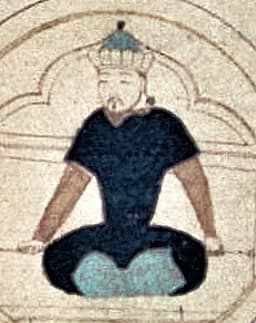
Jani Beg
Emperor · Medieval
58.3Total

Julius Caesar
General · Ancient
82.8Total
Basic Information
Born
1310
-100
Died
1357
-44
Era
Medieval
Ancient
Nationality
Golden Horde
Roman Republic
Occupation
Emperor
General
Civilization
Eastern
Western
Score Comparison
Military (10%)
63.3
88.0
Political (20%)
68.0
78.0
Influence (20%)
59.0
85.0
Legacy (20%)
49.2
82.0
Leadership (15%)
65.0
80.0
Strategy (15%)
50.0
85.0
TOTAL
58.3
82.8
Jani Beg — Complete Timeline
1346 AD
Siege of CaffaWar◆ Major
Jani Beg besieged the Genoese trading colony of Caffa in Crimea. During the siege, the Mongol army reportedly catapulted plague-infected corpses into the city, contributing to the spread of the Black Death to Europe. The siege was eventually lifted.
Golden HordeGenoaBlack DeathCrimea
Impact: globaldestructive
1350 AD
War with the IlkhanateWar◆ Major
Jani Beg continued the Golden Horde's conflict with the Ilkhanate, launching campaigns into the Caucasus. The war weakened both states and contributed to the decline of the Ilkhanate, but also drained the Golden Horde's resources.
Golden HordeIlkhanateWarCaucasus
Impact: regional
1356 AD
Conquest of TabrizWar
Jani Beg led the Golden Horde army in the conquest of Tabriz, the capital of the Chobanid dynasty in Persia. The city was sacked, and the Golden Horde reached its greatest territorial extent, controlling the Caucasus and parts of Persia.
Golden HordePersiaConquestTabriz
Impact: global
Julius Caesar — Complete Timeline
58 BC
Gallic WarsWar◆ Major
Caesar, as proconsul of Gaul, launched a series of campaigns that conquered all of Gaul (modern France, Belgium, and parts of Switzerland). He fought numerous battles, including against the Helvetii, the Belgae, and the Gallic chieftain Vercingetorix. The wars brought immense wealth and a loyal army to Caesar.
Gallic WarsConquestRoman Expansion
Impact: regional
49 BC
Crossing the RubiconPolitical Action◆ Major
Caesar led Legio XIII across the Rubicon River into Italy, defying the Roman Senate's order to disband his army. This act triggered a civil war against Pompey and the Optimates, ultimately leading to Caesar's dictatorship and the end of the Roman Republic.
Roman Civil WarEnd of RepublicPower Struggle
Impact: global
48 BC
Battle of PharsalusWar◆ Major
Caesar's outnumbered army defeated the larger forces of Pompey the Great at Pharsalus in Greece. Caesar's tactical use of a reserve line to counter Pompey's cavalry charge proved decisive. Pompey fled to Egypt, where he was assassinated, leaving Caesar as the undisputed master of the Roman world.
Roman Civil WarBattleDecisive Victory
Impact: regional
44 BC
Appointment as Dictator for LifePolitical Action◆ Major
The Roman Senate appointed Caesar dictator perpetuo (dictator for life), granting him unprecedented personal power. This move concentrated military, legislative, and judicial authority in one person, effectively ending the Roman Republic's traditional system of checks and balances and alarming many senators.
DictatorshipEnd of RepublicPower Consolidation
Impact: regionaldestructive
Assassination on the Ides of MarchPolitical Action◆ Major
A group of Roman senators, led by Marcus Junius Brutus and Gaius Cassius Longinus, stabbed Caesar to death at a meeting of the Senate in the Theatre of Pompey. The assassination was intended to restore the Republic, but instead triggered another civil war that led to the rise of the Roman Empire.
AssassinationRoman PoliticsEnd of Republic
Impact: globaldestructive
Expert Analysis
jani-beg-vs-julius-caesar
# The Conqueror's Shadow
In the summer of 1346, as Jani Beg's Mongol army encircled the Genoese trading colony of Caffa on the Crimean coast, a strange and terrible weapon was being prepared. Catapults hurled not stones but corpses—plague-ridden bodies of the dead—over the city walls. It would become history's first recorded instance of biological warfare, and it would change the world in ways the khan could never have imagined. Half a world away and fourteen centuries earlier, another general had stood before a river in northern Italy, wrestling with a decision that would reshape civilization itself. Gaius Julius Caesar, poised to cross the Rubicon with his legion, understood that some lines, once crossed, can never be uncrossed. Both men stood at the precipice of destiny. One would forge an empire; the other would watch his crumble within a generation. What made the difference?
Origins
Julius Caesar was born into the patrician class of Rome in 100 BCE, but his family's glory had long faded. The Rome of his youth was a republic in crisis—corrupt senators, landless veterans, and slave revolts tearing at the social fabric. Caesar absorbed the lessons of his era: that power came not from birth but from ambition, that the old rules were breaking, and that a man willing to break them could rise higher than any noble. He learned rhetoric in Rhodes, studied military tactics in Asia Minor, and watched his uncle Marius and rival Sulla fight for control of Rome itself. The Republic was dying, and Caesar would be its midwife.
Jani Beg was born in 1310 into a world of steppe empires and Silk Road wealth. The Golden Horde, founded by Genghis Khan's grandson Batu, ruled the Russian principalities and the northern Silk Road from its capital at Sarai. Jani Beg inherited not a republic but an absolute monarchy, not a crisis of institutions but a crisis of succession. His father, Özbeg Khan, had Islamized the Horde and built a stable state, but stability on the steppe was always fragile. Jani Beg learned that power flowed from the sword and the treasury, not from law or senate—and that a khan who lost either would not live long.
Rise to Power
Caesar's path was a masterclass in political patience. He climbed the Roman ladder step by step: military tribune, quaestor, aedile, pontifex maximus. He borrowed fortunes to fund games and temples, winning the love of the Roman mob. He formed the First Triumvirate with Pompey and Crassus, then secured the governorship of Gaul. In eight brutal campaigns from 58 to 50 BCE, he conquered a territory larger than Italy itself, trained the most loyal army in history, and wrote his own propaganda in elegant Latin. When the Senate ordered him to disband his legions, he chose war instead.
Jani Beg's rise was simpler and more brutal. His father died in 1341, and Jani Beg seized the throne by killing his brothers—standard practice among Mongol khans. He had no need to campaign for popularity or forge coalitions with rivals; he was the ruler, and his word was law. But this very ease of ascent contained a fatal weakness: Jani Beg had never learned to persuade, only to command. He had never built institutions, only personal loyalty. And personal loyalty, as he would discover, dies with the man.
Leadership & Governance
Caesar governed as he conquered: with speed, clarity, and a willingness to break precedent. As dictator, he reformed the calendar, granted citizenship to provincials, launched public works projects, and planned a codification of Roman law. He pardoned former enemies and elevated talented men regardless of birth. His military genius lay in speed and logistics—he once marched his army forty miles in a day, surprising his enemies. He wrote his own commentaries to shape his legacy, understanding that history belonged to those who told it.
Jani Beg governed as a traditional Mongol khan, ruling through tribal chieftains and tax collectors. His greatest achievement was the territorial peak of the Golden Horde, stretching from the Danube to the Caucasus. In 1356, he captured Tabriz, the jewel of Persia, briefly uniting the western Silk Road under one rule. But his military strategy was reactive, not innovative—he besieged cities and raided borders, but never reformed his army or administration. The plague that his own catapults had spread from Caffa would devastate the Horde's population and economy, a blow from which it never recovered.
Triumph & Tragedy
Caesar's greatest triumph was his own survival and success: crossing the Rubicon in 49 BCE, defeating Pompey at Pharsalus, and returning to Rome as its undisputed master. He celebrated four triumphs in a single month and was appointed dictator for life. But his tragedy was that he could not finish what he started. On the Ides of March in 44 BCE, sixty senators stabbed him to death in the Senate chamber. He fell at the base of Pompey's statue, bleeding out on the floor of the Republic he had killed.
Jani Beg's triumph was the conquest of Tabriz in 1356, a victory that made him master of Persia's richest city. But his tragedy came swiftly: in 1357, his own son Berdi Beg assassinated him and seized the throne. Within a year, the Golden Horde plunged into a civil war that would last two decades, shattering its unity and opening the door for the rise of Moscow. Jani Beg's greatest victory became his dynasty's death sentence.
Character & Destiny
Caesar was driven by an insatiable hunger for glory and a cold, calculating intelligence. He gambled constantly—crossing the Rubicon, fighting at Pharsalus, pardoning his enemies—but each gamble was backed by careful preparation. He understood that power required popularity, that reform required ruthlessness, and that a leader who could not forgive was a leader who could not build. His assassination was not a failure of character but of timing: he moved too fast for a society that was not ready to change.
Jani Beg was driven by the logic of steppe politics: secure power, expand territory, reward loyalty, eliminate rivals. He never sought to transform his empire, only to extend it. He never wrote his own story, leaving his legacy to chroniclers who saw him as just another khan. His assassination by his own son was the natural end of a system where power was personal, not institutional. In such a world, every son is a potential usurper, and every victory plants the seeds of the next betrayal.
Legacy
Caesar's legacy is the Roman Empire itself. His adopted heir Octavian became Augustus, the first emperor. His calendar lasted 1,600 years. His name became synonymous with imperial power—Kaiser, Tsar, Caesar. His writings are still studied in military academies and literature classes. He transformed Western civilization not just by conquering it, but by giving it a new political vocabulary.
Jani Beg's legacy is more ambiguous. He is remembered, if at all, as the khan whose siege of Caffa may have unleashed the Black Death on Europe. The plague that his army catapulted over the walls would kill a third of Europe's population within five years, reshaping the continent's economy, religion, and social structure. But Jani Beg himself did not cause this—he was simply a man who used the weapons available to him, unaware of their power. His Golden Horde collapsed into chaos, and his name faded into obscurity.
Conclusion
Two men, two worlds, two destinies. Caesar built a civilization that still echoes in our laws, our languages, and our political institutions. Jani Beg built an empire that vanished like dust on the steppe. The difference was not talent or ambition—both were brilliant, both were ruthless. The difference was that Caesar understood that power must be institutionalized, not just seized. He wrote laws, reformed calendars, and trained successors. Jani Beg ruled through fear and loyalty, and when he died, both died with him. In the end, the conqueror who builds schools and courts outlasts the conqueror who builds only graves. The Ides of March took Caesar's life, but his ideas survived. The assassins' daggers that killed Jani Beg took everything.
Rankings
🥇
Julius CaesarLeader
Mil: 88.0Pol: 78.0Inf: 85.0
82.8
🥈
Jani Beg
Mil: 63.3Pol: 68.0Inf: 59.0
58.3
+24.5 behind
How This Comparison Works
Algorithm
Each figure is scored on 6 dimensions (0—100 scale) based on structured historical data: Military (10%), Political (20%), Influence (20%), Legacy (20%), Leadership (15%), Strategy (15%). The weighted total produces the final ranking.
Data Sources
Scores are computed from structured sub-indicators in the database. Scale factors adjust for era (Ancient ×0.85, Modern ×1.0) and civilization size (Eastern ×1.05, Other ×0.80) to account for differences in population and military scale.
Maximum 3 Figures
Comparisons are limited to 2—3 figures to ensure readability and statistical meaningfulness.
Error Margins
±5 points per dimension — Sub-scores are derived from historical records with inherent uncertainty. Two figures within 5 points on a dimension should be considered roughly equivalent in that area.
Total Score Accuracy
±3 points overall — The weighted combination of 6 dimensions produces a total score with approximately ±3 points of uncertainty. Differences of less than 3 points are not statistically significant— the figures are effectively tied.
Known Limitations
- Historical records are incomplete and uneven across civilizations
- Figures from oral-tradition societies may be underrepresented
- Occupation labels can misclassify multi-role figures
- Scores measure capability and impact, not moral character
- Quantitative scoring is a comparison tool, not absolute truth
Capability Radar
Military (10%) — Battles & Warfare
Battles
65
95
Win Rate
60
92
Expansion
75
97
Political (20%) — Governance & Reform
Reform
45
90
Diplomacy
55
85
Economy
50
82
Influence (20%) — Cultural & Global Reach
Cultural
45
88
Global
50
94
Legacy (20%) — Historical Impact
Historical
55
95
Longevity
40
96
Leadership (15%) — Power & Stability
Tenure
60
75
Stability
40
60
Strategy (15%) — Tactics & Innovation
Strategy
70
94
Tactics
55
96
Reform
40
88
Similar Comparisons
Comments & Discussion
ScythedChariot6/17/2026
As a military historian, I’m disgusted by this false equivalence. Jani Beg’s corpse-hurling at Caffa was tactical desperation from a siege that was already failing—the Mongols had lost half their army to plague before they resorted to bioweapons. Caesar crossing the Rubicon was strategic genius: he’d calculated every legion’s loyalty, every senator’s spine. One man gambled with corpses; the other gambled with a republic. Jani Beg’s “achievement” is a disease cloud that killed his own supply line
瘟疫骑士6/17/2026
作为古典文献学者,我敢说拿拔都与凯撒比较纯粹是时代错置的胡扯。Janibeg是一名金帐汗国的成吉思汗后裔,他的权力合法性来自血统和蒙古传统,而凯撒的崛起靠的是打破罗马共和国的元老院制度。前者用尸体投石机是因为草原战争不讲究攻城术;后者跨过卢比孔河则是精密策划的宪法危机。把这两个人并列,就像把马奶酒和葡萄酒混在一个杯子里——难看又难喝。要讲历史,请先尊重语境。
SkepticalScribbler6/17/2026
Hold on—biological warfare at Caffa? The evidence is one witness, Gabriele de’ Mussi, writing decades later with zero corroboration from Genoese or Mongol records. It’s a medieval urban legend dressed up as history. Meanwhile, Caesar crossing the Rubicon is documented by multiple contemporary sources (Suetonius, Plutarch, Appian). We’re comparing a probable myth with a proven pivot point. Jani Beg’s legacy is a footnote; Caesar’s is a multivolume library. Stop romanticizing the plague hucker—he
尘土评论家6/17/2026
作为修正主义批评者,我要戳破这个比较的虚荣泡沫。Janibeg的汗国确实在Caffa之后迅速瓦解,而凯撒的帝国撑了五百年——但这只是幸存者偏差。拔出都的失败不是因为战术差,而是因为黑死病把草原游牧经济的根基都挖空了:马匹死绝、部落分裂、商路停滞。凯撒的成功则得益于地中海农业经济的弹性。一个是病毒撞上了脆弱生态系统,另一个是天才利用了稳定资源。别拿环境灾难当个人失败的证明。
ForumFlaneur6/17/2026
History buff here, and I’m siding with the Mongol. Caesar’s Rubicon is overhyped—every Roman general with a grudge crossed some river; it was just better PR. Jani Beg’s Caffa siege, though? That’s the real