Loading...
This comparison has not been analyzed yet.
One-time AI generation (~1 minute). Scores and timeline are already available below.
Jang Song-thaek vs Robert Menzies
Robert Menzies leads by 26.4 pts · 2 figures compared
…

Jang Song-thaek
Politician · Modern
34.5Total
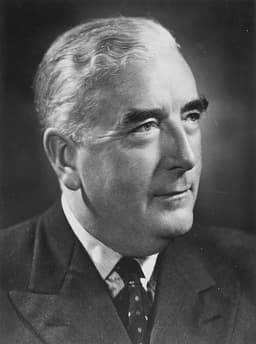
Robert Menzies
Politician · Modern
60.9Total
Basic Information
Born
1946
1894
Died
—
1978
Era
Modern
Modern
Nationality
North Korea
Australia
Occupation
Politician
Politician
Civilization
Eastern
Western
Score Comparison
Military (10%)
13.5
50.0
Political (20%)
25.0
68.8
Influence (20%)
45.5
62.0
Legacy (20%)
35.0
58.0
Leadership (15%)
38.1
75.0
Strategy (15%)
35.1
43.4
TOTAL
34.5
60.9
Jang Song-thaek — Complete Timeline
2010 AD
Appointment as Vice Chairman of the National Defense CommissionPolitical Action◆ Major
Jang Song-thaek was appointed Vice Chairman of the National Defense Commission, making him one of the most powerful officials in North Korea. He oversaw economic reforms and relations with China.
GovernmentPowerEconomic Reform
Impact: national
2011 AD
Role in the Succession of Kim Jong-unPolitical Action◆ Major
Jang Song-thaek played a key role in the succession of Kim Jong-un after Kim Jong-il's death in 2011. He served as a regent-like figure, helping to stabilize the transition of power.
SuccessionPower TransitionRegency
Impact: national
2013 AD
Execution for FactionalismPolitical Action
Jang Song-thaek was executed in December 2013 on charges of factionalism, corruption, and attempting to overthrow the state. His execution was part of Kim Jong-un's purge of senior officials to consolidate power.
PurgeExecutionPower Consolidation
Impact: nationaltragic
Downfall and Public HumiliationPolitical Action◆ Major
Jang Song-thaek was publicly stripped of all positions and arrested at a Workers' Party meeting. He was later tried and executed, with state media broadcasting his confession and condemnation.
PurgePublic HumiliationTrial
Impact: nationaltragic
Robert Menzies — Complete Timeline
1939 AD
Became Prime Minister of Australia (First Term)Political Action◆ Major
Robert Menzies became Prime Minister of Australia for the first time on April 26, 1939, following the death of Joseph Lyons. He led the United Australia Party and took the country into World War II.
Prime MinisterWorld War IIFirst Term
Impact: national
1941 AD
Resigned as Prime Minister (First Term)Political Action◆ Major
Menzies resigned as Prime Minister on August 29, 1941, after losing the confidence of his party and facing criticism over his wartime leadership. He was succeeded by Arthur Fadden, and the government fell later that year.
ResignationWartime LeadershipPolitical Crisis
Impact: nationaldestructive
1949 AD
Became Prime Minister of Australia (Second Term)Political Action◆ Major
Menzies returned to power on December 19, 1949, leading the Liberal-Country Party coalition to victory in the federal election. He began the longest continuous prime ministership in Australian history, lasting until 1966.
Prime MinisterLiberal PartyLongest Serving
Impact: national
1950 AD
Expanded Immigration and Post-War DevelopmentReform◆ Major
Menzies' government oversaw a large-scale immigration program, attracting millions of European migrants to Australia. This policy, combined with economic growth and infrastructure projects, transformed Australian society and economy in the post-war period.
ImmigrationPost-WarEconomic Growth
Impact: nationalconstructive
Introduced the Menzies Government's Anti-Communist LegislationPolitical Action◆ Major
Menzies introduced the Communist Party Dissolution Act in 1950, seeking to ban the Communist Party of Australia. The act was declared unconstitutional by the High Court in 1951, leading to a failed referendum to change the constitution.
Anti-CommunismLegislationReferendum
Impact: nationaldestructive
This comparison has not been analyzed yet.
One-time AI generation (~1 minute). Scores and timeline are already available below.
Rankings
🥇
Robert MenziesLeader
Mil: 50.0Pol: 68.8Inf: 62.0
60.9
🥈
Jang Song-thaek
Mil: 13.5Pol: 25.0Inf: 45.5
34.5
+26.4 behind
How This Comparison Works
Algorithm
Each figure is scored on 6 dimensions (0—100 scale) based on structured historical data: Military (10%), Political (20%), Influence (20%), Legacy (20%), Leadership (15%), Strategy (15%). The weighted total produces the final ranking.
Data Sources
Scores are computed from structured sub-indicators in the database. Scale factors adjust for era (Ancient ×0.85, Modern ×1.0) and civilization size (Eastern ×1.05, Other ×0.80) to account for differences in population and military scale.
Maximum 3 Figures
Comparisons are limited to 2—3 figures to ensure readability and statistical meaningfulness.
Error Margins
±5 points per dimension — Sub-scores are derived from historical records with inherent uncertainty. Two figures within 5 points on a dimension should be considered roughly equivalent in that area.
Total Score Accuracy
±3 points overall — The weighted combination of 6 dimensions produces a total score with approximately ±3 points of uncertainty. Differences of less than 3 points are not statistically significant— the figures are effectively tied.
Known Limitations
- Historical records are incomplete and uneven across civilizations
- Figures from oral-tradition societies may be underrepresented
- Occupation labels can misclassify multi-role figures
- Scores measure capability and impact, not moral character
- Quantitative scoring is a comparison tool, not absolute truth
Capability Radar
Military (10%) — Battles & Warfare
Battles
14
28
Win Rate
16
31
Expansion
22
33
Political (20%) — Governance & Reform
Reform
15
70
Diplomacy
10
75
Economy
15
72
Influence (20%) — Cultural & Global Reach
Cultural
5
55
Global
5
55
Legacy (20%) — Historical Impact
Historical
5
65
Longevity
5
60
Leadership (15%) — Power & Stability
Tenure
20
85
Stability
5
80
Strategy (15%) — Tactics & Innovation
Strategy
25
40
Tactics
23
41
Reform
30
45
Similar Comparisons
Comments & Discussion
No comments yet. Be the first to share your thoughts!