Loading...
This comparison has not been analyzed yet.
One-time AI generation (~1 minute). Scores and timeline are already available below.
Janez Jansa vs Mike Douglas
Janez Jansa leads by 18.1 pts · 2 figures compared
…

Janez Jansa
Politician · Modern
54.2Total
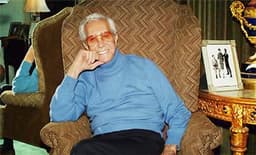
Mike Douglas
Politician · Modern
36.1Total
Basic Information
Born
1958
1940
Died
—
—
Era
Modern
Modern
Nationality
Slovenia
Dominica
Occupation
Politician
Politician
Civilization
Western
Other
Score Comparison
Military (10%)
50.0
28.5
Political (20%)
68.0
27.9
Influence (20%)
54.1
45.5
Legacy (20%)
44.2
35.0
Leadership (15%)
68.0
34.6
Strategy (15%)
41.8
37.3
TOTAL
54.2
36.1
Janez Jansa — Complete Timeline
2004 AD
Elected Prime Minister of SloveniaPolitical Action◆ Major
Jansa became Prime Minister after his party SDS won the elections. He led a center-right government focused on economic reforms and EU integration.
ElectionGovernmentSlovenia
Impact: nationalconstructive
2008 AD
Slovenia held the EU presidencyPolitical Action◆ Major
Under Jansa's leadership, Slovenia held the rotating presidency of the Council of the European Union, the first new member state to do so. This raised Slovenia's international profile.
EUPresidencyForeign Policy
Impact: regionalconstructive
2013 AD
Convicted of corruption in the Patria casePolitical Action◆ Major
Jansa was convicted of corruption related to a defense contract with Finnish company Patria, receiving a two-year prison sentence. He served six months before being released pending appeal.
CorruptionConvictionPatria
Impact: nationaldestructive
2020 AD
Elected Prime Minister againPolitical Action◆ Major
Jansa returned as Prime Minister after his party won the 2020 elections. His second term was marked by controversial policies, including restrictions on media and handling of the COVID-19 pandemic.
ElectionGovernmentCOVID-19
Impact: nationaldestructive
Mike Douglas — Complete Timeline
1995 AD
Election as Prime Minister of DominicaPolitical Action◆ Major
Mike Douglas (full name: Michael Douglas) became Prime Minister of Dominica on June 14, 1995, after his Dominica Labour Party won the general election. He served until February 3, 2000.
ElectionPrime MinisterDominica
Impact: nationalconstructive
2000 AD
Death in OfficeOther◆ Major
Mike Douglas died suddenly on February 3, 2000, just hours after losing the general election to Roosevelt Douglas. His death was attributed to a heart attack. He was the first Dominican prime minister to die in office.
Death in OfficeDominicaHeart Attack
Impact: nationaltragic
This comparison has not been analyzed yet.
One-time AI generation (~1 minute). Scores and timeline are already available below.
Rankings
🥇
Janez JansaLeader
Mil: 50.0Pol: 68.0Inf: 54.1
54.2
🥈
Mike Douglas
Mil: 28.5Pol: 27.9Inf: 45.5
36.1
+18.1 behind
How This Comparison Works
Algorithm
Each figure is scored on 6 dimensions (0—100 scale) based on structured historical data: Military (10%), Political (20%), Influence (20%), Legacy (20%), Leadership (15%), Strategy (15%). The weighted total produces the final ranking.
Data Sources
Scores are computed from structured sub-indicators in the database. Scale factors adjust for era (Ancient ×0.85, Modern ×1.0) and civilization size (Eastern ×1.05, Other ×0.80) to account for differences in population and military scale.
Maximum 3 Figures
Comparisons are limited to 2—3 figures to ensure readability and statistical meaningfulness.
Error Margins
±5 points per dimension — Sub-scores are derived from historical records with inherent uncertainty. Two figures within 5 points on a dimension should be considered roughly equivalent in that area.
Total Score Accuracy
±3 points overall — The weighted combination of 6 dimensions produces a total score with approximately ±3 points of uncertainty. Differences of less than 3 points are not statistically significant— the figures are effectively tied.
Known Limitations
- Historical records are incomplete and uneven across civilizations
- Figures from oral-tradition societies may be underrepresented
- Occupation labels can misclassify multi-role figures
- Scores measure capability and impact, not moral character
- Quantitative scoring is a comparison tool, not absolute truth
Capability Radar
Military (10%) — Battles & Warfare
Battles
28
21
Win Rate
30
25
Expansion
33
27
Political (20%) — Governance & Reform
Reform
55
10
Diplomacy
60
10
Economy
50
10
Influence (20%) — Cultural & Global Reach
Cultural
30
5
Global
35
5
Legacy (20%) — Historical Impact
Historical
35
5
Longevity
30
5
Leadership (15%) — Power & Stability
Tenure
65
10
Stability
40
10
Strategy (15%) — Tactics & Innovation
Strategy
39
34
Tactics
40
36
Reform
41
40
Similar Comparisons
Comments & Discussion
No comments yet. Be the first to share your thoughts!