Loading...
This comparison has not been analyzed yet.
One-time AI generation (~1 minute). Scores and timeline are already available below.
Janez Drnovsek vs Najib Razak
Janez Drnovsek leads by 12.4 pts · 2 figures compared
…

Janez Drnovsek
Politician · Modern
55.7Total
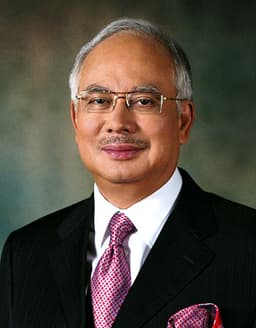
Najib Razak
Politician · Modern
43.3Total
Basic Information
Born
1950
1953
Died
—
—
Era
Modern
Modern
Nationality
Slovenia
Malaysia
Occupation
Politician
Politician
Civilization
Western
Eastern
Score Comparison
Military (10%)
49.9
12.5
Political (20%)
59.3
40.8
Influence (20%)
56.4
52.5
Legacy (20%)
45.8
40.8
Leadership (15%)
80.0
65.7
Strategy (15%)
42.4
27.5
TOTAL
55.7
43.3
Janez Drnovsek — Complete Timeline
1992 AD
Elected Prime Minister of SloveniaPolitical Action◆ Major
Drnovsek became Prime Minister of Slovenia, leading the country through its transition from Yugoslav republic to independent state. He oversaw economic reforms and EU integration.
IndependenceGovernmentSlovenia
Impact: nationalconstructive
2002 AD
Elected President of SloveniaPolitical Action◆ Major
Drnovsek was elected President, serving until 2007. His presidency focused on humanitarian issues and environmentalism, but he faced criticism for his unconventional style.
PresidencyHumanitarianismSlovenia
Impact: nationalconstructive
2004 AD
Slovenia joined the European UnionPolitical Action
Under Drnovsek's leadership as Prime Minister, Slovenia joined the European Union in 2004, a key milestone in its post-communist integration. He had been a strong advocate for EU membership.
EUIntegrationForeign Policy
Impact: regionalconstructive
2007 AD
Slovenia adopted the euroPolitical Action◆ Major
During Drnovsek's presidency, Slovenia adopted the euro as its currency, becoming the first former Yugoslav republic to do so. This symbolized its successful economic transition.
EuroEconomyIntegration
Impact: nationalconstructive
Najib Razak — Complete Timeline
2009 AD
Appointed Prime Minister of MalaysiaPolitical Action◆ Major
Najib Razak was appointed Prime Minister of Malaysia, succeeding Abdullah Ahmad Badawi. He led the Barisan Nasional coalition and implemented various economic and social policies.
GovernmentLeadershipMalaysia
Impact: national
2015 AD
1MDB Scandal EmergencePolitical Action
The 1MDB scandal, involving massive embezzlement and money laundering from Malaysia's state investment fund, came to light. Najib was implicated in receiving funds and faced international investigations.
CorruptionScandalFinance
Impact: globaldestructive
2018 AD
Lost General ElectionPolitical Action
Najib's Barisan Nasional coalition lost the 2018 Malaysian general election to the Pakatan Harapan coalition, ending 61 years of uninterrupted rule. This was a major political defeat.
ElectionDefeatPolitical Change
Impact: national
Arrested and Charged for 1MDBPolitical Action◆ Major
Najib was arrested by the Malaysian Anti-Corruption Commission and charged with multiple counts of abuse of power, money laundering, and criminal breach of trust related to the 1MDB scandal.
ArrestCorruptionJustice
Impact: national
2020 AD
Convicted and Imprisoned for 1MDBPolitical Action
Najib was convicted on seven charges related to the 1MDB scandal, including abuse of power, money laundering, and criminal breach of trust. He was sentenced to 12 years in prison and fined RM210 million.
ConvictionImprisonmentCorruption
Impact: global
This comparison has not been analyzed yet.
One-time AI generation (~1 minute). Scores and timeline are already available below.
Rankings
🥇
Janez DrnovsekLeader
Mil: 49.9Pol: 59.3Inf: 56.4
55.7
🥈
Najib Razak
Mil: 12.5Pol: 40.8Inf: 52.5
43.3
+12.4 behind
How This Comparison Works
Algorithm
Each figure is scored on 6 dimensions (0—100 scale) based on structured historical data: Military (10%), Political (20%), Influence (20%), Legacy (20%), Leadership (15%), Strategy (15%). The weighted total produces the final ranking.
Data Sources
Scores are computed from structured sub-indicators in the database. Scale factors adjust for era (Ancient ×0.85, Modern ×1.0) and civilization size (Eastern ×1.05, Other ×0.80) to account for differences in population and military scale.
Maximum 3 Figures
Comparisons are limited to 2—3 figures to ensure readability and statistical meaningfulness.
Error Margins
±5 points per dimension — Sub-scores are derived from historical records with inherent uncertainty. Two figures within 5 points on a dimension should be considered roughly equivalent in that area.
Total Score Accuracy
±3 points overall — The weighted combination of 6 dimensions produces a total score with approximately ±3 points of uncertainty. Differences of less than 3 points are not statistically significant— the figures are effectively tied.
Known Limitations
- Historical records are incomplete and uneven across civilizations
- Figures from oral-tradition societies may be underrepresented
- Occupation labels can misclassify multi-role figures
- Scores measure capability and impact, not moral character
- Quantitative scoring is a comparison tool, not absolute truth
Capability Radar
Military (10%) — Battles & Warfare
Battles
29
12
Win Rate
31
18
Expansion
35
23
Political (20%) — Governance & Reform
Reform
60
30
Diplomacy
70
40
Economy
65
25
Influence (20%) — Cultural & Global Reach
Cultural
30
20
Global
40
35
Legacy (20%) — Historical Impact
Historical
40
30
Longevity
35
15
Leadership (15%) — Power & Stability
Tenure
65
55
Stability
70
10
Strategy (15%) — Tactics & Innovation
Strategy
37
25
Tactics
43
28
Reform
43
27
Similar Comparisons
Comments & Discussion
No comments yet. Be the first to share your thoughts!