Loading...
James Douglas vs Julius Caesar
Julius Caesar leads by 30.7 pts · 2 figures compared
…
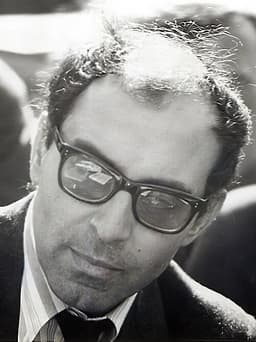
James Douglas
General · Medieval
52.1Total

Julius Caesar
General · Ancient
82.8Total
Basic Information
Born
1286
-100
Died
1330
-44
Era
Medieval
Ancient
Nationality
Scotland
Roman Republic
Occupation
General
General
Civilization
Western
Western
Score Comparison
Military (10%)
74.7
88.0
Political (20%)
30.8
78.0
Influence (20%)
54.1
85.0
Legacy (20%)
46.7
82.0
Leadership (15%)
54.2
80.0
Strategy (15%)
66.3
85.0
TOTAL
52.1
82.8
James Douglas — Complete Timeline
1314 AD
Capture of Roxburgh CastleWar◆ Major
Douglas led a daring night assault on Roxburgh Castle, scaling the walls with rope ladders. The capture of this key English-held fortress was a major victory for Robert the Bruce during the Scottish Wars of Independence.
SiegeCastleScottish Independence
Impact: national
Battle of BannockburnWar
Douglas commanded a division of the Scottish army at Bannockburn, where Robert the Bruce defeated Edward II's English forces. His leadership contributed to the decisive Scottish victory that secured Scottish independence.
BattleScottish IndependenceVictory
Impact: national
1327 AD
Raid on WeardaleWar◆ Major
Douglas led a devastating raid into northern England, burning towns and villages in Weardale. The raid forced the English to negotiate the Treaty of Edinburgh
RaidWarfareTreaty
Impact: regional
1330 AD
Carrying the Heart of Robert the BruceWar◆ Major
Douglas carried the embalmed heart of Robert the Bruce on a crusade to Spain, fulfilling Bruce's dying wish. He died in battle against the Moors at Teba, throwing the heart forward before being killed.
CrusadeDeathChivalry
Impact: regionaltragic
Julius Caesar — Complete Timeline
58 BC
Gallic WarsWar◆ Major
Caesar, as proconsul of Gaul, launched a series of campaigns that conquered all of Gaul (modern France, Belgium, and parts of Switzerland). He fought numerous battles, including against the Helvetii, the Belgae, and the Gallic chieftain Vercingetorix. The wars brought immense wealth and a loyal army to Caesar.
Gallic WarsConquestRoman Expansion
Impact: regional
49 BC
Crossing the RubiconPolitical Action◆ Major
Caesar led Legio XIII across the Rubicon River into Italy, defying the Roman Senate's order to disband his army. This act triggered a civil war against Pompey and the Optimates, ultimately leading to Caesar's dictatorship and the end of the Roman Republic.
Roman Civil WarEnd of RepublicPower Struggle
Impact: global
48 BC
Battle of PharsalusWar◆ Major
Caesar's outnumbered army defeated the larger forces of Pompey the Great at Pharsalus in Greece. Caesar's tactical use of a reserve line to counter Pompey's cavalry charge proved decisive. Pompey fled to Egypt, where he was assassinated, leaving Caesar as the undisputed master of the Roman world.
Roman Civil WarBattleDecisive Victory
Impact: regional
44 BC
Appointment as Dictator for LifePolitical Action◆ Major
The Roman Senate appointed Caesar dictator perpetuo (dictator for life), granting him unprecedented personal power. This move concentrated military, legislative, and judicial authority in one person, effectively ending the Roman Republic's traditional system of checks and balances and alarming many senators.
DictatorshipEnd of RepublicPower Consolidation
Impact: regionaldestructive
Assassination on the Ides of MarchPolitical Action◆ Major
A group of Roman senators, led by Marcus Junius Brutus and Gaius Cassius Longinus, stabbed Caesar to death at a meeting of the Senate in the Theatre of Pompey. The assassination was intended to restore the Republic, but instead triggered another civil war that led to the rise of the Roman Empire.
AssassinationRoman PoliticsEnd of Republic
Impact: globaldestructive
Expert Analysis
james-douglas-vs-julius-caesar
The Dictator and the Knight
On a spring morning in 44 BCE, the most powerful man in the Roman world fell bleeding at the feet of his assassins. Julius Caesar, master of legions and lawgiver of the Republic, died with twenty-three dagger wounds beneath the statue of his defeated rival. Fourteen centuries later and a thousand miles north, another warrior met his end in a far different manner—James Douglas, the Black Douglas of Scotland, fell in battle against the Moors of Spain, his last act to hurl a silver casket containing the heart of his king into the enemy ranks and cry, "Lead on, brave heart, as thou wert ever wont!" The contrast between these two generals—one who remade the world and one who served a cause—raises a question that haunts history: What separates the man who transforms civilization from the man who merely fights for it?
Origins
Julius Caesar was born into the patrician Julian clan in 100 BCE, a family that claimed descent from the goddess Venus but had lost much of its political clout. The Rome of his youth was a violent, competitive arena where ambitious nobles clawed for power through military command, bribery, and alliance. Caesar learned early that survival required audacity. His uncle by marriage, Gaius Marius, had been a populist general who reformed the army; his other uncle, Sulla, was a dictator who purged his enemies. From these models, Caesar absorbed a brutal lesson: in the Republic, power flowed to those who seized it.
James Douglas was born around 1286 in Lanarkshire, Scotland, into a family that had lost everything. His father, William Douglas, had been captured and executed by the English during the Wars of Scottish Independence, and young James grew up in exile in France. Scotland of his youth was a subjugated kingdom, its king imprisoned, its nobles divided. Where Caesar inherited prestige and opportunity, Douglas inherited grievance and poverty. The difference in their starting points—one born to a crumbling aristocracy, the other to a crushed one—set the stage for vastly different ambitions.
Rise to Power
Caesar’s path was a masterclass in political calculation. He borrowed fortunes to buy popularity, won election as pontifex maximus at thirty-seven, and secured command of Gaul through the alliance of Pompey and Crassus. The conquest of Gaul (58–50 BCE) was not merely a military campaign; it was a personal power play. Caesar’s *Commentaries* present the war as defensive, but his true aim was to build a loyal army and a reputation that would overshadow the Senate. When the Senate ordered him to disband his legions, he crossed the Rubicon River into Italy in 49 BCE, igniting civil war. The die was cast.
Douglas rose through loyalty, not calculation. He joined Robert the Bruce, the fugitive Scottish king, in 1306, when Bruce’s cause seemed hopeless. Bruce’s own rise had been bloody—he murdered a rival in a church—but Douglas’s devotion was absolute. At the capture of Roxburgh Castle in 1314, Douglas led a night assault, his men scaling the walls with rope ladders while the English garrison slept. The victory was tactical, not strategic; it reclaimed a fortress, not a kingdom. But it earned Douglas a reputation for ferocity that made him the terror of the English border. His nickname, the Black Douglas, came from the dread he inspired—English mothers supposedly used his name to frighten children.
Leadership & Governance
Caesar governed as he conquered—with a blend of clemency and ruthlessness. After defeating Pompey, he pardoned his enemies, reformed the calendar, granted citizenship to provincials, and centralized taxation. His military genius lay in speed and logistics: he once marched his army fifty miles in a day to surprise a foe. Yet his political wisdom was flawed. He accepted the title of dictator for life and placed his image on coins, flaunting power that the Republic reserved for gods. The Senate, reduced to a rubber stamp, plotted his death. Caesar saw the conspiracy coming—he was warned—but he dismissed it. His arrogance, born of success, became his undoing.
Douglas never governed. He was a lieutenant, not a sovereign. At the Battle of Bannockburn in 1314, he commanded a division under Bruce, holding the Scottish left flank against English cavalry. His role was execution, not strategy. After Bruce’s death in 1329, Douglas was entrusted with the king’s heart to carry on crusade—a symbolic task, not a political one. His raid on Weardale in 1327, burning English villages to force peace, showed his tactical skill but also his limits. He could terrify a countryside, but he could not build a state.
Triumph & Tragedy
Caesar’s greatest triumph was his conquest of Gaul, which added a vast territory to the Roman sphere and made him the richest man in the Republic. His most devastating failure was his assassination, which plunged Rome into another civil war. He died at fifty-five, at the height of his power, undone by the very Senate he had sought to dominate. The tragedy was not just his death, but the collapse of the Republic he had tried to reform—and ultimately destroyed.
Douglas’s greatest moment came at Bannockburn, where he helped secure Scottish independence. His tragedy was his death in a foreign war, far from the land he had fought to free. At the Battle of Teba in 1330, Douglas charged into the Moorish lines carrying Bruce’s heart, and was surrounded and killed. His body was found lying over the silver casket. The heart was recovered and returned to Scotland, buried at Melrose Abbey. Douglas died as he lived—in service to a king, not to himself.
Character & Destiny
Caesar’s personality was a paradox: magnanimous to enemies, ruthless to rivals, charming to crowds, cold to equals. He believed in his own destiny, writing of himself in the third person, as if he were already a historical figure. That self-mythologizing drove him to cross the Rubicon, to refuse a crown, and to ignore the daggers. His character shaped his decisions, and his decisions shaped history.
Douglas’s character was simpler: loyalty, ferocity, and piety. He fought not for glory but for a cause—Scottish independence—and later for the soul of his king. He had no political ambition beyond service. That lack of ambition limited his historical footprint but gave his life a coherence that Caesar’s lacked. Caesar died betrayed by friends; Douglas died faithful to a promise.
Legacy
Caesar’s legacy is immeasurable. His name became a title—*Kaiser*, *Tsar*—and his reforms laid the foundation for the Roman Empire. His writings shaped Western military thought. Yet his legacy is also a warning: the man who saves the republic can also destroy it.
Douglas’s legacy is local but enduring. He is a national hero in Scotland, the archetype of the loyal knight. His story inspired Walter Scott and the “Braveheart” myth. But his scores—Military 66.6, Political 43.5, Influence 72.0—reflect a life of action, not transformation. He was a great soldier in a small kingdom.
Conclusion
The difference between Caesar and Douglas is not one of talent but of scale and ambition. Caesar lived in a civilization that could be remade; Douglas lived in a kingdom that could only be defended. Caesar sought to become the center of history; Douglas was content to serve its periphery. One changed the world; the other kept his corner of it alive. Both died violently, but one died a god and the other died a servant. History remembers both, but for different reasons—one as the man who built an empire, the other as the man who carried a heart.
Rankings
🥇
Julius CaesarLeader
Mil: 88.0Pol: 78.0Inf: 85.0
82.8
🥈
James Douglas
Mil: 74.7Pol: 30.8Inf: 54.1
52.1
+30.7 behind
How This Comparison Works
Algorithm
Each figure is scored on 6 dimensions (0—100 scale) based on structured historical data: Military (10%), Political (20%), Influence (20%), Legacy (20%), Leadership (15%), Strategy (15%). The weighted total produces the final ranking.
Data Sources
Scores are computed from structured sub-indicators in the database. Scale factors adjust for era (Ancient ×0.85, Modern ×1.0) and civilization size (Eastern ×1.05, Other ×0.80) to account for differences in population and military scale.
Maximum 3 Figures
Comparisons are limited to 2—3 figures to ensure readability and statistical meaningfulness.
Error Margins
±5 points per dimension — Sub-scores are derived from historical records with inherent uncertainty. Two figures within 5 points on a dimension should be considered roughly equivalent in that area.
Total Score Accuracy
±3 points overall — The weighted combination of 6 dimensions produces a total score with approximately ±3 points of uncertainty. Differences of less than 3 points are not statistically significant— the figures are effectively tied.
Known Limitations
- Historical records are incomplete and uneven across civilizations
- Figures from oral-tradition societies may be underrepresented
- Occupation labels can misclassify multi-role figures
- Scores measure capability and impact, not moral character
- Quantitative scoring is a comparison tool, not absolute truth
Capability Radar
Military (10%) — Battles & Warfare
Battles
65
95
Win Rate
70
92
Expansion
55
97
Political (20%) — Governance & Reform
Reform
20
90
Diplomacy
45
85
Economy
25
82
Influence (20%) — Cultural & Global Reach
Cultural
50
88
Global
35
94
Legacy (20%) — Historical Impact
Historical
55
95
Longevity
45
96
Leadership (15%) — Power & Stability
Tenure
40
75
Stability
35
60
Strategy (15%) — Tactics & Innovation
Strategy
75
94
Tactics
80
96
Reform
30
88
Similar Comparisons
Comments & Discussion
No comments yet. Be the first to share your thoughts!