Loading...
James Brooke vs Wilfrid Laurier
Wilfrid Laurier leads by 4.3 pts · 2 figures compared
…
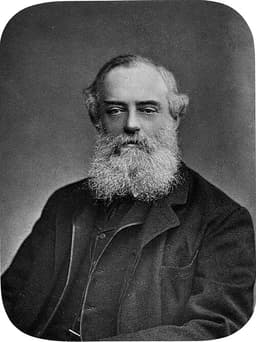
James Brooke
Politician · Modern
54.2Total

Wilfrid Laurier
Politician · Modern
58.5Total
Basic Information
Born
1803
1841
Died
1868
1919
Era
Modern
Modern
Nationality
Great Britain
Canada
Occupation
Politician
Politician
Civilization
Western
Western
Score Comparison
Military (10%)
38.3
50.0
Political (20%)
62.7
72.0
Influence (20%)
56.4
55.0
Legacy (20%)
49.2
52.0
Leadership (15%)
68.0
78.0
Strategy (15%)
43.3
42.9
TOTAL
54.2
58.5
James Brooke — Complete Timeline
1841 AD
Appointed Rajah of SarawakPolitical Action◆ Major
Brooke was granted the title of Rajah of Sarawak by the Sultan of Brunei on September 24, 1841, after helping suppress a rebellion. He established the White Rajah dynasty, ruling Sarawak as an independent kingdom under British protection.
ColonialismBorneoDynasty
Impact: regional
1843 AD
Suppression of Piracy in BorneoWar◆ Major
Brooke led naval campaigns against Dayak and Malay pirates along the Borneo coast from 1843 to 1849. With British naval support, he destroyed pirate strongholds, securing trade routes and consolidating his control over Sarawak.
PiracyBorneoNaval Campaign
Impact: regional
1846 AD
Cession of Labuan to BritainPolitical Action
Brooke negotiated the cession of the island of Labuan to the British Crown in 1846. The island became a British colony and coaling station, strengthening British naval presence in the South China Sea and enhancing Brooke's position.
ColonialismLabuanTreaty
Impact: regional
1847 AD
Appointed Governor of Labuan and Consul-GeneralPolitical Action
Brooke was appointed Governor of Labuan and British Consul-General for Borneo in 1847. This formalized his role as a British official while he remained Rajah of Sarawak, creating a dual authority that lasted until his death.
ColonialismBorneoAppointment
Impact: regional
Wilfrid Laurier — Complete Timeline
1896 AD
Became first francophone Prime Minister of CanadaPolitical Action
Laurier became the seventh Prime Minister of Canada and the first of French-Canadian heritage. His victory marked a shift in Canadian politics, as he led the Liberal Party to power and promoted national unity between English and French Canadians.
Government FormationFrench CanadaUnity
Impact: nationalconstructive
1905 AD
Oversaw creation of Alberta and SaskatchewanPolitical Action◆ Major
Laurier's government passed the Autonomy Acts, creating the provinces of Alberta and Saskatchewan from the Northwest Territories. This expanded the Canadian federation and promoted western settlement.
Provincial CreationExpansionWestern Canada
Impact: nationalconstructive
1910 AD
Established the Royal Canadian NavyPolitical Action◆ Major
Laurier's government passed the Naval Service Act, creating the Royal Canadian Navy. The decision was controversial, with nationalists opposing it as too imperialist and imperialists arguing it was insufficient to support Britain.
MilitaryNavyDefense
Impact: nationalconstructive
1911 AD
Lost 1911 election over reciprocity with the United StatesPolitical Action◆ Major
Laurier's government was defeated in the federal election after proposing a reciprocity (free trade) agreement with the United States. The issue divided the country, with Conservatives and some Liberals opposing closer economic ties with the U.S.
ElectionTradeReciprocity
Impact: national
Expert Analysis
Origins
James Brooke was born in 1803 in Benares, India, to a British civil servant father and a mother of Scottish descent. He was educated in England and joined the British East India Company's army, serving in the First Anglo-Burmese War. After being wounded, he resigned and inherited a substantial fortune from his father, which he used to purchase a schooner, the Royalist, to explore Southeast Asia. His early experiences in India and the military shaped his ambition for adventure and governance.
Wilfrid Laurier was born in 1841 in Saint-Lin, Canada East (now Quebec), to a French-Canadian farming family. He studied law at McGill University and was called to the bar in 1864. His early career as a lawyer and journalist exposed him to liberal political ideas. He was influenced by his father's support for the Patriotes and by his own reading of history and philosophy. Laurier's upbringing in a French-Canadian Catholic environment deeply influenced his political views on national unity.
Rise to Power
Brooke's rise began in 1839 when he sailed to the Malay Archipelago. In 1840, he arrived in Sarawak, where the Sultan of Brunei's uncle, Raja Muda Hashim, was struggling to suppress a rebellion. Brooke provided military aid, and in gratitude, Hashim granted him the title of Rajah of Sarawak in 1841. Over the next decade, Brooke consolidated power, suppressing piracy with British naval support (1843-1849) and negotiating the cession of Labuan to Britain in 1846, which earned him appointment as Governor of Labuan and Consul-General for Borneo in 1847. His rise was a mix of personal initiative and imperial backing.
Laurier rose through Canadian politics. He was elected to the Legislative Assembly of Quebec in 1871 and to the House of Commons in 1874. He became Minister of Inland Revenue in 1877 but lost his seat that year. He returned to Parliament in 1879 and became leader of the Liberal Party in 1887. His rise was marked by his eloquence and advocacy for French-English cooperation. In 1896, he became the first francophone Prime Minister of Canada, winning the election on the issue of Manitoba Schools Question, defending minority rights. His political score of 72.0 reflects his ability to navigate complex ethnic and religious divides.
Leadership & Governance
Brooke ruled Sarawak as a personal fiefdom. He established a centralized administration with English common law, but also incorporated local customs. He banned slavery and headhunting, and promoted trade. However, his governance was autocratic: he made all key decisions, and his rule relied on the loyalty of local chiefs and British naval support. His leadership score of 68.0 reflects effective but authoritarian control. He scored 38.3 in military, indicating limited direct military prowess despite anti-piracy campaigns.
Laurier governed as a consensus-builder. He promoted national unity, compromise, and gradual change. His government created the provinces of Alberta and Saskatchewan in 1905, established the Royal Canadian Navy in 1910, and pursued a policy of reciprocity with the United States. He believed in individual liberty and free trade, but his approach was often cautious. His leadership score of 78.0 is higher than Brooke's, reflecting his democratic and inclusive style. His political score of 72.0 also exceeds Brooke's 62.7.
Triumph & Tragedy
Brooke's greatest success was establishing a stable, independent kingdom in Sarawak that lasted a century. He effectively suppressed piracy and expanded trade. His greatest failure was his inability to gain full British support for annexation, and his rule faced criticism for harsh methods against pirates, with some accusing him of excessive violence. The 1857 Chinese rebellion in Sarawak nearly overthrew him, exposing the fragility of his regime. He scored 49.2 in legacy, reflecting limited long-term impact beyond his dynasty.
Laurier's triumphs include overseeing the creation of two provinces and the Royal Canadian Navy, which strengthened Canada's autonomy. He also successfully managed French-English relations. His greatest failure was losing the 1911 election over reciprocity with the US, which divided his party and the country. He also failed to prevent the rise of conscription during World War I, which deeply hurt his legacy among French Canadians. His legacy score of 52.0 slightly exceeds Brooke's.
Character & Destiny
Brooke was adventurous, ambitious, and paternalistic. He saw himself as a civilizing force and ruled with a sense of noblesse oblige. His character led him to take risks, such as intervening in Sarawak's rebellion, which succeeded but also created enemies. He was stubborn and often clashed with British officials who questioned his methods. His destiny was tied to his personal rule; without a strong successor, the dynasty eventually declined.
Laurier was charismatic, diplomatic, and principled. Known as "the Great Conciliator," he sought harmony between French and English, Catholics and Protestants. His character made him effective in peacetime but indecisive in crises, such as the Boer War and naval debate. His destiny was to lead Canada through a period of growth but also to face the limits of compromise. His influence score of 55.0 is slightly below Brooke's 56.4, but his total score of 58.5 tops Brooke's 54.2.
Legacy
Brooke's legacy is the White Rajah dynasty, which ruled Sarawak until 1946. His model of personal rule influenced later colonial administrators. However, his impact is geographically limited. He scored 49.2 in legacy, reflecting a niche historical footprint.
Laurier's legacy is more substantial: he is remembered as one of Canada's greatest prime ministers, a symbol of national unity. The Laurier Era (1896-1911) is seen as a golden age of Canadian prosperity and autonomy. His policies on immigration, trade, and naval defense shaped modern Canada. He scored 52.0 in legacy, reflecting broader and more enduring influence.
Conclusion
While James Brooke created a unique personal kingdom, his impact was localized and his autocratic methods less influential than Laurier's democratic governance. Wilfrid Laurier, with a higher total score of 58.5 compared to Brooke's 54.2, had greater impact on a larger scale, shaping a nation that continues to exist. His leadership score of 78.0 versus Brooke's 68.0, and political score of 72.0 versus 62.7, demonstrate his superior governance in a modern, diverse state. Therefore, Laurier had the greater historical impact.
Rankings
🥇
Wilfrid LaurierLeader
Mil: 50.0Pol: 72.0Inf: 55.0
58.5
🥈
James Brooke
Mil: 38.3Pol: 62.7Inf: 56.4
54.2
+4.3 behind
How This Comparison Works
Algorithm
Each figure is scored on 6 dimensions (0—100 scale) based on structured historical data: Military (10%), Political (20%), Influence (20%), Legacy (20%), Leadership (15%), Strategy (15%). The weighted total produces the final ranking.
Data Sources
Scores are computed from structured sub-indicators in the database. Scale factors adjust for era (Ancient ×0.85, Modern ×1.0) and civilization size (Eastern ×1.05, Other ×0.80) to account for differences in population and military scale.
Maximum 3 Figures
Comparisons are limited to 2—3 figures to ensure readability and statistical meaningfulness.
Error Margins
±5 points per dimension — Sub-scores are derived from historical records with inherent uncertainty. Two figures within 5 points on a dimension should be considered roughly equivalent in that area.
Total Score Accuracy
±3 points overall — The weighted combination of 6 dimensions produces a total score with approximately ±3 points of uncertainty. Differences of less than 3 points are not statistically significant— the figures are effectively tied.
Known Limitations
- Historical records are incomplete and uneven across civilizations
- Figures from oral-tradition societies may be underrepresented
- Occupation labels can misclassify multi-role figures
- Scores measure capability and impact, not moral character
- Quantitative scoring is a comparison tool, not absolute truth
Capability Radar
Military (10%) — Battles & Warfare
Battles
35
29
Win Rate
40
33
Expansion
55
32
Political (20%) — Governance & Reform
Reform
55
75
Diplomacy
65
80
Economy
50
70
Influence (20%) — Cultural & Global Reach
Cultural
40
65
Global
40
55
Legacy (20%) — Historical Impact
Historical
50
70
Longevity
45
60
Leadership (15%) — Power & Stability
Tenure
60
85
Stability
45
75
Strategy (15%) — Tactics & Innovation
Strategy
50
39
Tactics
45
42
Reform
30
43
Similar Comparisons
Comments & Discussion
No comments yet. Be the first to share your thoughts!