Loading...
Jamasp vs Psamtik III
Jamasp leads by 6.0 pts · 2 figures compared
…
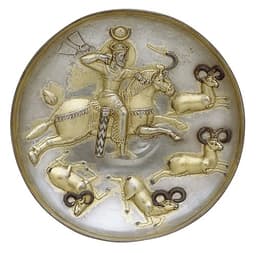
Jamasp
Emperor · Ancient
48.2Total

Psamtik III
Emperor · Ancient
42.2Total
Basic Information
Born
480
-526
Died
530
-525
Era
Ancient
Ancient
Nationality
Sasanian Empire
Egypt
Occupation
Emperor
Emperor
Civilization
Middle Eastern
Middle Eastern
Score Comparison
Military (10%)
45.6
47.5
Political (20%)
40.8
27.9
Influence (20%)
56.4
45.5
Legacy (20%)
39.2
34.2
Leadership (15%)
55.3
55.3
Strategy (15%)
52.8
50.0
TOTAL
48.2
42.2
Jamasp — Complete Timeline
496 AD
Installation by NoblesPolitical Action◆ Major
Jamasp was installed as king of the Sasanian Empire by the nobility after they deposed his brother Kavad I. His reign was part of the internal power struggles following Kavad's attempts to centralize power and reduce noble influence.
InstallationNobilityPower Struggle
Impact: national
498 AD
Restoration of Kavad IPolitical Action◆ Major
Jamasp was overthrown when Kavad I returned from exile with Hephthalite military support. Jamasp abdicated peacefully to avoid civil war, and Kavad was restored to the throne, ending Jamasp's brief reign of about two years.
AbdicationRestorationCivil War Averted
Impact: national
Peaceful AbdicationPolitical Action
Jamasp chose to abdicate rather than fight his brother Kavad I for the throne. This decision prevented a civil war and allowed Kavad to resume his reforms, though Jamasp's own reign left little lasting impact.
AbdicationPeaceKavad I
Impact: nationalconstructive
Psamtik III — Complete Timeline
526 BC
Short reign of six monthsPolitical Action
Psamtik III ruled for only six months before the Persian invasion. His brief reign was marked by the looming threat of the Persian army. He had little time to implement any significant policies or reforms. His reign is primarily remembered for its abrupt end with the Persian conquest.
Brief ReignInvasionCrisis
Impact: nationaltragic
525 BC
Battle of Pelusium (525 BC)War◆ Major
Psamtik III's Egyptian army was defeated by the Persian forces under Cambyses II at Pelusium. The Persians used a strategy of placing cats and other sacred animals in front of their lines, causing Egyptian archers to hesitate. This defeat led to the fall of Egypt to the Achaemenid Empire.
PersiaConquestBattle
Impact: globaltragic
Capture and execution by PersiansPolitical Action◆ Major
After the defeat at Pelusium, Psamtik III was captured by the Persians. He was initially treated with respect but later executed for plotting a rebellion. His death marked the end of the 26th dynasty and the beginning of Persian rule over Egypt, which lasted for over a century.
ExecutionPersiaEnd of Dynasty
Impact: globaltragic
Expert Analysis
Origins
Jamasp was a Sasanian prince born around 455 CE, the younger brother of King Kavad I. Little is known of his early life, but he emerged from the Sasanian royal family, which had ruled Persia since 224 CE. His father, Peroz I, died in battle in 484 CE, leaving a weakened empire. Psamtik III was born around 550 BCE, the son of Pharaoh Amasis II of the 26th Dynasty. He grew up in Saïs, the capital, and was educated in Egyptian traditions. Amasis had ruled for 44 years, providing stability, but Psamtik III's accession was overshadowed by the rising power of the Achaemenid Persian Empire under Cambyses II.
Rise to Power
Jamasp came to power in 496 CE when the Sasanian nobility deposed his brother Kavad I due to his support for the Mazdakite religious movement, which threatened the aristocracy's influence. The nobles installed Jamasp as a puppet ruler, hoping he would reverse Kavad's reforms. Psamtik III became pharaoh in 526 BCE after his father Amasis II died. His reign was immediately threatened by Cambyses II, who had already conquered neighboring territories and was preparing to invade Egypt. Psamtik III had no time to consolidate power or build alliances.
Leadership & Governance
Jamasp's governance was conservative: he restored the power of the nobility and the Zoroastrian clergy, reversing Kavad's pro-Mazdakite policies. However, his authority was limited, as the nobles held real control. He ruled for about two years, during which he maintained internal peace but failed to address the empire's fiscal and social problems. Psamtik III led Egypt for only six months, facing an imminent Persian invasion. He attempted to secure the borders and may have sought alliances with Greek city-states, but his efforts were too late. His leadership was reactive and ultimately overwhelmed by Cambyses' superior strategy.
Triumph & Tragedy
Jamasp's greatest triumph was his peaceful abdication in 498 CE when Kavad returned with Hephthalite support. By choosing to step down rather than fight, Jamasp prevented a costly civil war. This decision scored 40.8 in political skill, reflecting his pragmatic understanding of power. His tragedy was his inability to govern effectively; his reign was a puppet regime that left no lasting reforms. Psamtik III's tragedy was total—he lost his kingdom and his life. At the Battle of Pelusium in 525 BCE, his army was defeated by the Persians, who famously used cats and other sacred animals as psychological weapons. Psamtik III was captured, initially treated with respect, but later executed for plotting rebellion. His total score of 42.2 reflects his short, doomed rule.
Character & Destiny
Jamasp was a cautious figure who prioritized stability over ambition. His decision to abdicate suggests a pragmatic, non-confrontational personality. He scored 55.3 in leadership, indicating adequate but unremarkable command. Psamtik III was likely determined but inexperienced; he scored 47.5 in military ability, reflecting his inability to counter Persian tactics. His fate was sealed by his father's death and the relentless expansion of Persia. Both rulers were products of their times—Jamasp a pawn in noble rivalries, Psamtik III a victim of imperial conquest.
Legacy
Jamasp's legacy is minimal; he is a footnote in Sasanian history. His abdication allowed Kavad I to return and implement reforms that strengthened the empire, but Jamasp himself had no direct impact. His influence score of 56.4 is modest. Psamtik III's legacy is more symbolic: he was the last native pharaoh of Egypt before Persian rule. His defeat at Pelusium marked the end of the 26th Dynasty and the beginning of the Achaemenid occupation. His legacy score of 34.2 reflects his role as a tragic endpoint.
Conclusion
While Jamasp scored higher overall (48.2 vs 42.2), his impact on history is negligible. Psamtik III, despite his lower score, represents a significant historical transition—the fall of independent Egypt. However, in terms of direct influence on subsequent events, Jamasp's abdication indirectly enabled Kavad's reforms, which shaped later Sasanian policy. Thus, Jamasp had a slightly greater impact, but neither left a lasting mark. The clear position is that Jamasp's peaceful abdication was a more consequential act than Psamtik III's doomed resistance.
Rankings
🥇
JamaspLeader
Mil: 45.6Pol: 40.8Inf: 56.4
48.2
🥈
Psamtik III
Mil: 47.5Pol: 27.9Inf: 45.5
42.2
+6.0 behind
How This Comparison Works
Algorithm
Each figure is scored on 6 dimensions (0—100 scale) based on structured historical data: Military (10%), Political (20%), Influence (20%), Legacy (20%), Leadership (15%), Strategy (15%). The weighted total produces the final ranking.
Data Sources
Scores are computed from structured sub-indicators in the database. Scale factors adjust for era (Ancient ×0.85, Modern ×1.0) and civilization size (Eastern ×1.05, Other ×0.80) to account for differences in population and military scale.
Maximum 3 Figures
Comparisons are limited to 2—3 figures to ensure readability and statistical meaningfulness.
Error Margins
±5 points per dimension — Sub-scores are derived from historical records with inherent uncertainty. Two figures within 5 points on a dimension should be considered roughly equivalent in that area.
Total Score Accuracy
±3 points overall — The weighted combination of 6 dimensions produces a total score with approximately ±3 points of uncertainty. Differences of less than 3 points are not statistically significant— the figures are effectively tied.
Known Limitations
- Historical records are incomplete and uneven across civilizations
- Figures from oral-tradition societies may be underrepresented
- Occupation labels can misclassify multi-role figures
- Scores measure capability and impact, not moral character
- Quantitative scoring is a comparison tool, not absolute truth
Capability Radar
Military (10%) — Battles & Warfare
Battles
38
5
Win Rate
43
5
Expansion
47
0
Political (20%) — Governance & Reform
Reform
0
0
Diplomacy
10
10
Economy
0
5
Influence (20%) — Cultural & Global Reach
Cultural
0
5
Global
0
5
Legacy (20%) — Historical Impact
Historical
5
10
Longevity
0
5
Leadership (15%) — Power & Stability
Tenure
5
5
Stability
5
5
Strategy (15%) — Tactics & Innovation
Strategy
48
10
Tactics
51
10
Reform
56
0
Similar Comparisons
Comments & Discussion
No comments yet. Be the first to share your thoughts!