Loading...
Iyasu I vs Napoleon Bonaparte
Napoleon Bonaparte leads by 9.5 pts · 2 figures compared
…
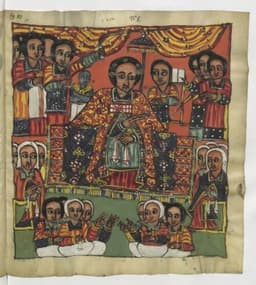
Iyasu I
Emperor · Modern
61.4Total

Napoleon Bonaparte
General · Modern
70.9Total
Basic Information
Born
1654
1769
Died
1706
1821
Era
Modern
Modern
Nationality
Ethiopia
France
Occupation
Emperor
General
Civilization
Other
Western
Score Comparison
Military (10%)
50.0
94.0
Political (20%)
78.0
72.0
Influence (20%)
59.0
40.0
Legacy (20%)
52.0
80.0
Leadership (15%)
78.0
78.0
Strategy (15%)
52.5
90.0
TOTAL
61.4
70.9
Iyasu I — Complete Timeline
1685 AD
Campaign against the OromoWar
Iyasu I led a military campaign against the Oromo peoples who were raiding into Ethiopian territory. His forces achieved several victories, pushing back the Oromo and securing the borders of the empire for a period.
Military CampaignBorder SecurityOromo
Impact: regional
1690 AD
Administrative Reforms of Iyasu IReform◆ Major
Iyasu I implemented comprehensive administrative reforms to centralize imperial authority. He reorganized the provincial governance system, standardized tax collection, and strengthened the role of the central bureaucracy, reducing the power of regional nobles.
CentralizationTaxationBureaucracy
Impact: nationalconstructive
Construction of the Church of Debre Berhan SelassieCultural
Iyasu I commissioned the construction of the Church of Debre Berhan Selassie in Gondar. The church became renowned for its intricate ceiling paintings of angels and is considered a masterpiece of Ethiopian religious art.
ChurchArtArchitecture
Impact: nationalconstructive
Napoleon Bonaparte — Complete Timeline
1799 AD
Coup of 18 BrumaireOther◆ Major
Napoleon Bonaparte, with support from his brother Lucien and key political figures, overthrew the Directory in a bloodless coup. He established the Consulate with himself as First Consul, effectively becoming the ruler of France. This event ended the French Revolution's most unstable period.
French RevolutionCoupRise to Power
Impact: regional
1804 AD
Promulgation of the Napoleonic CodeOther◆ Major
Napoleon enacted the Civil Code of the French, known as the Napoleonic Code, a comprehensive set of laws that replaced the fragmented feudal legal systems. The code established legal equality, protected property rights, and secularized law. It became the basis for legal systems in many European and world countries.
Legal ReformNapoleonic CodeCivil Law
Impact: globalconstructive
1805 AD
Battle of AusterlitzWar◆ Major
Napoleon's Grande Arm
Napoleonic WarsBattleDecisive Victory
Impact: global
1812 AD
Invasion of RussiaWar◆ Major
Napoleon led the Grande Arm
Napoleonic WarsInvasionDisaster
Impact: globaldestructive
1815 AD
Battle of WaterlooWar◆ Major
Napoleon's French army was defeated by the combined forces of the Duke of Wellington's Anglo-Allied army and Gebhard Leberecht von Bl
Napoleonic WarsBattleFinal Defeat
Impact: globaldestructive
Expert Analysis
iyasu-i-vs-napoleon-bonaparte
# The Eagle and the Lion: Two Emperors, Two Destinies
On a June morning in 1815, Napoleon Bonaparte watched his dreams of empire shatter in the muddy fields of Waterloo. A hundred years earlier, in the highlands of Ethiopia, another emperor named Iyasu I had faced a different kind of sunset—not a battlefield defeat, but a quiet, bitter end, poisoned by his own son in a palace coup. Both men wore crowns, both commanded armies, both sought to reshape their worlds. Yet one became a name whispered in awe across continents, while the other remains a footnote even to many students of history. What drove such different outcomes?
Origins
Napoleon Bonaparte was born in 1769 on the island of Corsica, a land recently annexed by France. His family was minor nobility, poor enough to hunger for advancement, proud enough to resent their French masters. He spoke Italian-accented French, stood barely five feet six, and carried a chip on his shoulder the size of the Mediterranean. This outsider's hunger—the need to prove himself to a society that looked down on him—became the engine of his ambition. The French Revolution, erupting when he was a twenty-year-old artillery lieutenant, shattered the old order and opened doors that birth alone could never have unlocked.
Iyasu I, born in 1654, came from the opposite end of fortune's spectrum. He was the son of Emperor Yohannes I of Ethiopia, a ruler of the Solomonic dynasty that claimed descent from the biblical King Solomon and the Queen of Sheba. His world was not a revolutionary ferment but a feudal kingdom of ancient Christian traditions, surrounded by Muslim sultanates and Oromo pastoralists. Where Napoleon grew up reading Voltaire and studying the campaigns of Alexander, Iyasu learned the Psalms of David and the chronicles of Ethiopian saints. His challenge was not to overthrow a system but to preserve one—to hold together an empire that had existed for centuries but was perpetually fraying at the edges.
Rise to Power
Napoleon's ascent was meteoric, a cannonball trajectory that stunned Europe. At twenty-four, he drove the British out of Toulon. At twenty-six, he crushed a royalist uprising in Paris with a "whiff of grapeshot." At twenty-seven, he led a ragged army across the Alps into Italy and dismantled the Austrian Empire's northern holdings—a campaign that military historians still study for its audacity. Each victory was a stepping stone, and by 1799, at thirty years old, he seized control of France in a coup d'état. The pattern was clear: Napoleon rose through sheer, relentless action, exploiting chaos with precision.
Iyasu I's path was slower, more ceremonial. He became emperor in 1682 upon his father's death, inheriting a throne rather than seizing it. Yet he was no passive ruler. In 1685, he led a campaign against the Oromo peoples who were raiding into Ethiopian territory. Unlike Napoleon's lightning strikes, Iyasu's warfare was a grinding effort to push back nomadic incursions—not to conquer new lands but to protect what was already his. His rise was not a revolution but a consolidation, a quiet tightening of the imperial grip.
Leadership & Governance
As rulers, the two men could not have been more different. Napoleon governed through the Napoleonic Code, a sweeping legal reform that standardized French law, abolished feudal privileges, and enshrined meritocracy—at least for men. He built a centralized state, created the Bank of France, and reorganized education. His political score of 75.0 reflects a genuine administrative genius, but one always subordinated to his military ambitions. Every reform served his power; every law strengthened his grip.
Iyasu I, with a political score of 79.1, was arguably the more effective peacetime administrator. In 1690, he implemented comprehensive administrative reforms to centralize imperial authority, reorganizing the provincial system to reduce the power of rebellious nobles. He also commissioned the construction of the Church of Debre Berhan Selassie in Gondar, a masterpiece of Ethiopian art whose ceiling is still covered with the faces of angels. Where Napoleon built a legal code, Iyasu built a church—a symbol of the divine right and religious unity that held his empire together.
Militarily, the contrast is stark. Napoleon's military score of 94.0 and strategy of 93.0 place him among history's greatest commanders. He revolutionized warfare with his use of artillery, his speed of maneuver, and his ability to concentrate force at the decisive point. Iyasu's military score of 41.5 and strategy of 65.4 suggest a competent but unremarkable general. He fought to defend, not to conquer; his campaigns were necessary but not brilliant.
Triumph & Tragedy
Napoleon's greatest moment came in 1805 at Austerlitz, where he destroyed a combined Russian and Austrian army in a battle so perfect it became a textbook example of military genius. His greatest tragedy followed a decade later: the disastrous invasion of Russia in 1812, where cold and starvation annihilated his Grande Armée. He never recovered. Exiled to Elba, he escaped, raised another army, and met his final defeat at Waterloo in 1815.
Iyasu I's triumph was quieter: the consolidation of Gondarine rule, the flourishing of art and architecture, the relative peace he brought to his realm. His tragedy was personal. In 1706, after a reign of twenty-four years, he was deposed by his own son and poisoned—a betrayal as bitter as any Napoleon faced. He died not on a battlefield but in a monastery, a prisoner of the family he had tried to serve.
Character & Destiny
Napoleon was driven by an insatiable ego. "I am the Revolution," he declared, and he meant it. His ambition knew no bounds, and that ambition lifted him to heights few have reached—but it also blinded him. He could not stop, could not consolidate, could not accept limits. His character was his destiny: the same hunger that made him great consumed him in the end.
Iyasu I was different. His leadership score of 82.4 suggests a man who ruled through wisdom and patience, not force. He was a reformer, not a revolutionary. But in a feudal system where power rested on personal loyalty, even a good son could not trust his own blood. His character was not his downfall; the system itself was.
Legacy
Napoleon's legacy is written in the laws, borders, and institutions of modern Europe. He is remembered as a tyrant and a genius, a liberator and a conqueror. His name appears on battlefields, in history books, in the French Civil Code. His total score of 82.4 reflects a figure of immense, undeniable impact.
Iyasu I's legacy is more fragile. The Church of Debre Berhan Selassie still stands, its angels watching over Gondar. But his administrative reforms were undone by later emperors, his name known mostly to scholars. His total score of 70.5 is respectable but not world-shaking. He was a good emperor in a difficult time, but he did not change the world.
Conclusion
Why did Napoleon become a legend while Iyasu I became a footnote? The answer lies not in their abilities—both were capable rulers—but in their contexts. Napoleon rode the wave of a continent-wide revolution that shattered old structures and created new possibilities. Iyasu I tried to shore up an ancient system against slow erosion. One man remade the world; the other tried to save his own. History remembers the shatterers more than the preservers. But perhaps the quieter legacy—a church, a period of peace, a reign of justice—is no less valuable. It simply does not make as much noise.
Rankings
🥇
Napoleon BonaparteLeader
Mil: 94.0Pol: 72.0Inf: 40.0
70.9
🥈
Iyasu I
Mil: 50.0Pol: 78.0Inf: 59.0
61.4
+9.5 behind
How This Comparison Works
Algorithm
Each figure is scored on 6 dimensions (0—100 scale) based on structured historical data: Military (10%), Political (20%), Influence (20%), Legacy (20%), Leadership (15%), Strategy (15%). The weighted total produces the final ranking.
Data Sources
Scores are computed from structured sub-indicators in the database. Scale factors adjust for era (Ancient ×0.85, Modern ×1.0) and civilization size (Eastern ×1.05, Other ×0.80) to account for differences in population and military scale.
Maximum 3 Figures
Comparisons are limited to 2—3 figures to ensure readability and statistical meaningfulness.
Error Margins
±5 points per dimension — Sub-scores are derived from historical records with inherent uncertainty. Two figures within 5 points on a dimension should be considered roughly equivalent in that area.
Total Score Accuracy
±3 points overall — The weighted combination of 6 dimensions produces a total score with approximately ±3 points of uncertainty. Differences of less than 3 points are not statistically significant— the figures are effectively tied.
Known Limitations
- Historical records are incomplete and uneven across civilizations
- Figures from oral-tradition societies may be underrepresented
- Occupation labels can misclassify multi-role figures
- Scores measure capability and impact, not moral character
- Quantitative scoring is a comparison tool, not absolute truth
Capability Radar
Military (10%) — Battles & Warfare
Battles
55
95
Win Rate
60
90
Expansion
45
95
Political (20%) — Governance & Reform
Reform
80
95
Diplomacy
65
80
Economy
70
85
Influence (20%) — Cultural & Global Reach
Cultural
55
85
Global
40
90
Legacy (20%) — Historical Impact
Historical
60
95
Longevity
50
90
Leadership (15%) — Power & Stability
Tenure
70
85
Stability
60
70
Strategy (15%) — Tactics & Innovation
Strategy
55
95
Tactics
50
98
Reform
65
92
Similar Comparisons
Comments & Discussion
No comments yet. Be the first to share your thoughts!