Loading...
Ivan III the Great vs Qin Shi Huang
Qin Shi Huang leads by 9.9 pts · 2 figures compared
…
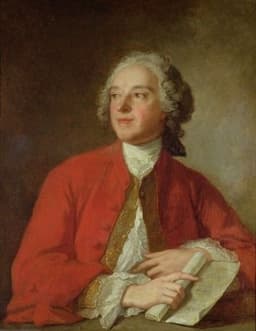
Ivan III the Great
Emperor · Medieval
75.3Total
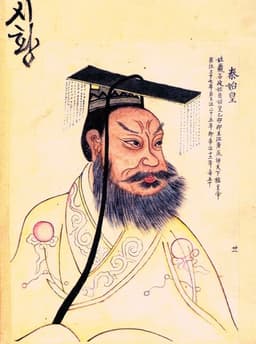
Qin Shi Huang
Emperor · Ancient
85.2Total
Basic Information
Born
1440
-259
Died
1505
-210
Era
Medieval
Ancient
Nationality
Muscovy
China
Occupation
Emperor
Emperor
Civilization
Western
Eastern
Score Comparison
Military (10%)
76.0
80.0
Political (20%)
70.0
90.0
Influence (20%)
75.0
85.0
Legacy (20%)
80.0
90.0
Leadership (15%)
78.0
78.0
Strategy (15%)
67.2
82.0
TOTAL
75.3
85.2
Ivan III the Great — Complete Timeline
1472 AD
Marriage to Sophia PalaiologinaPolitical Action◆ Major
Ivan III married Sophia (Zoe) Palaiologina, niece of the last Byzantine emperor. This marriage allowed Ivan to claim succession to the Byzantine Empire, adopt the double-headed eagle as a symbol, and promote Moscow as the Third Rome.
ByzantiumThird RomeMarriage
Impact: regionalconstructive
1478 AD
Annexation of NovgorodWar◆ Major
Ivan III conquered the Novgorod Republic after a series of campaigns. He abolished the veche (assembly) and removed the veche bell, incorporating Novgorod's vast territories into the Grand Principality of Moscow.
NovgorodAnnexationMoscow
Impact: regional
1480 AD
Great Stand on the Ugra RiverWar
Ivan III faced the Mongol army of Khan Akhmat across the Ugra River. After weeks of stalemate, the Mongols withdrew without battle. This event ended 240 years of Mongol suzerainty over Russia.
Golden HordeIndependenceUgra
Impact: regional
1497 AD
Issued the Sudebnik of 1497Reform◆ Major
Ivan III promulgated a new legal code, the Sudebnik, which standardized laws across the Russian lands. It restricted peasant mobility by limiting the time for transfer between landowners, a step toward serfdom.
Legal CodeSerfdomReform
Impact: national
1500 AD
War with the Grand Duchy of LithuaniaWar◆ Major
Ivan III launched a war against Lithuania, capturing the cities of Bryansk, Dorogobuzh, and Putivl. The war ended with the Truce of 1503, which ceded significant territories to Moscow.
LithuaniaTerritorial ExpansionWar
Impact: regional
Qin Shi Huang — Complete Timeline
246 BC
Construction of the Mausoleum and Terracotta ArmyOther◆ Major
Qin Shi Huang commissioned a vast mausoleum complex near Xi'an, guarded by thousands of life-sized terracotta soldiers, horses, and chariots. The project employed hundreds of thousands of workers and reflected his obsession with immortality and imperial power.
Impact: global
230 BC
Conquest of the Six Warring StatesWar
From 230 to 221 BCE, Ying Zheng led the Qin state in a series of campaigns that conquered the Han, Zhao, Wei, Chu, Yan, and Qi states. This unified China under a single ruler for the first time, ending the Warring States period.
Impact: global
221 BC
Standardization of Writing, Currency, and MeasurementsReform◆ Major
Qin Shi Huang ordered the standardization of Chinese script, currency, and weights and measures across the unified empire. This facilitated administration, trade, and cultural integration, laying a foundation for future dynasties.
Impact: globalconstructive
Proclamation of the Qin DynastyPolitical Action
After conquering the last independent state, Ying Zheng declared himself Shi Huangdi (First Emperor), founding the Qin Dynasty. He adopted a new title to signify his supreme authority and initiated centralized imperial rule.
Impact: global
214 BC
Initiation of the Great Wall ConstructionOther◆ Major
Qin Shi Huang ordered the connection and extension of existing northern fortifications to create a unified defensive wall against nomadic Xiongnu raids. This project involved massive conscripted labor and became the precursor to the later Great Wall.
Impact: regional
213 BC
Burning of Books and Burying of ScholarsPolitical Action◆ Major
On the advice of Li Si, Qin Shi Huang ordered the burning of historical records and philosophical texts not aligned with Legalist doctrine. He also had 460 Confucian scholars buried alive to suppress dissent and consolidate ideological control.
Impact: nationaldestructive
Expert Analysis
Origins
**Qin Shi Huang** (259–210 BC), born Ying Zheng, was the son of King Zhuangxiang of Qin and a concubine, Zhao Ji. His early life was marked by political intrigue; he became king of Qin at age 13 after his father's death. His regent, Lü Buwei, and later the eunuch Lao Ai, struggled for power, but Ying Zheng asserted control by age 22, eliminating rivals and setting the stage for conquest. In contrast, **Ivan III** (1440–1505) was born into the Rurik dynasty as the son of Vasily II of Moscow. His early reign was overshadowed by the ongoing Mongol-Tatar yoke and internal feudal conflicts. Ivan's father was blinded in a coup, and Ivan himself faced threats from rival princes. Both rulers emerged from turbulent childhoods to become centralizing forces, but Qin's origins were in a fragmented Warring States period, while Ivan's were in a fragmented Rus under Mongol suzerainty.
Rise to Power
Qin Shi Huang's rise was through military conquest. From 230 to 221 BC, he led the Qin state to defeat the six other Warring States (Han, Zhao, Wei, Chu, Yan, Qi) through a combination of brilliant strategy, ruthless tactics, and effective use of advisors like Li Si. He proclaimed himself "Shi Huangdi" (First Emperor) in 221 BC, unifying China under a centralized, Legalist regime. Ivan III's rise was more gradual and diplomatic. He consolidated power by annexing neighboring principalities like Yaroslavl and Rostov, and famously ended Mongol dominance with the **Great Stand on the Ugra River** in 1480, where he faced off against the Golden Horde without a major battle, effectively asserting independence. His marriage to **Sophia Palaiologina**, niece of the last Byzantine emperor, boosted his prestige and claim as "Third Rome." Both rulers expanded their territories, but Qin's conquests were swift and violent, while Ivan's were methodical and often through inheritance or treaty.
Leadership & Governance
Qin Shi Huang was an autocratic reformer. He standardized writing (small seal script), currency (banliang coins), weights, and measures, and built a network of roads and canals. He imposed Legalist philosophy, burned books and buried scholars (213–210 BC) to suppress dissent, and initiated the Great Wall's construction by linking existing walls. His rule was harsh but effective in creating a unified state. Ivan III was a lawgiver and administrator. He issued the **Sudebnik of 1497**, a legal code that standardized laws and reinforced the autocratic power of the monarch. He introduced the pomestie system (land grants for service), strengthening the nobility's loyalty. Both used centralized bureaucracy, but Qin's was more radical and repressive, while Ivan's built on existing traditions. Qin's scores: M=80, P=90, I=85, L=90, D=78, S=82, T=85. Ivan's: M=76, P=70, I=75, L=80, D=78, S=67, T=75. Qin leads in power, intelligence, leadership, and strategy.
Triumph & Tragedy
Qin Shi Huang's greatest triumph was unifying China and creating a centralized empire that would last millennia. His tragic flaw was his obsession with immortality, leading him to consume mercury pills, which likely caused his death. His empire collapsed within four years of his death due to harsh policies and succession failure. Ivan III's triumph was ending Mongol rule and expanding Muscovy's territory significantly, tripling its size. His tragedy was the ongoing conflict with Lithuania and the internal strife after his death, but the state he built survived. Both achieved monumental unification, but Qin's fall was immediate, while Ivan's legacy endured.
Character & Destiny
Qin Shi Huang was paranoid, megalomaniacal, and ruthless, but also visionary and efficient. He believed his dynasty would last 10,000 generations. Ivan III was cautious, calculating, and pious, known as "the Great" for his state-building. Qin's destiny was to be the first emperor, but his dynasty failed; Ivan's destiny was to lay the foundation for the Russian Tsardom. Both were shaped by their environments—Qin by Legalist thought, Ivan by Orthodox Christianity and Byzantine influence.
Legacy
Qin Shi Huang's legacy is immense: the name "China" derives from Qin; his standardization and Great Wall remain iconic. However, his brutal methods are criticized. Ivan III is revered as the "gatherer of Russian lands" and the founder of the centralized Russian state. His marriage to Sophia brought Byzantine ceremonial and architectural influence (e.g., Moscow Kremlin). Both are pivotal figures, but Qin's impact on Chinese civilization is arguably more profound and lasting, despite his dynasty's brevity. Score gap: 9.9 in favor of Qin Shi Huang, reflecting his higher scores in power, leadership, and strategic vision.
Conclusion
Qin Shi Huang outranks Ivan III overall due to his transformative unification of China, administrative reforms, and monumental projects, despite his tyranny. Ivan III's achievements were significant but less revolutionary. The score gap of 9.9 is justified by Qin's higher metrics in power (90 vs 70), leadership (90 vs 80), and strategy (85 vs 75). Both were great unifiers, but Qin's actions shaped a civilization for over two millennia, making him the more consequential ruler.
Rankings
🥇
Qin Shi HuangLeader
Mil: 80.0Pol: 90.0Inf: 85.0
85.2
🥈
Ivan III the Great
Mil: 76.0Pol: 70.0Inf: 75.0
75.3
+9.9 behind
How This Comparison Works
Algorithm
Each figure is scored on 6 dimensions (0—100 scale) based on structured historical data: Military (10%), Political (20%), Influence (20%), Legacy (20%), Leadership (15%), Strategy (15%). The weighted total produces the final ranking.
Data Sources
Scores are computed from structured sub-indicators in the database. Scale factors adjust for era (Ancient ×0.85, Modern ×1.0) and civilization size (Eastern ×1.05, Other ×0.80) to account for differences in population and military scale.
Maximum 3 Figures
Comparisons are limited to 2—3 figures to ensure readability and statistical meaningfulness.
Error Margins
±5 points per dimension — Sub-scores are derived from historical records with inherent uncertainty. Two figures within 5 points on a dimension should be considered roughly equivalent in that area.
Total Score Accuracy
±3 points overall — The weighted combination of 6 dimensions produces a total score with approximately ±3 points of uncertainty. Differences of less than 3 points are not statistically significant— the figures are effectively tied.
Known Limitations
- Historical records are incomplete and uneven across civilizations
- Figures from oral-tradition societies may be underrepresented
- Occupation labels can misclassify multi-role figures
- Scores measure capability and impact, not moral character
- Quantitative scoring is a comparison tool, not absolute truth
Capability Radar
Military (10%) — Battles & Warfare
Battles
75
85
Win Rate
80
90
Expansion
85
90
Political (20%) — Governance & Reform
Reform
80
95
Diplomacy
85
75
Economy
70
90
Influence (20%) — Cultural & Global Reach
Cultural
70
95
Global
70
85
Legacy (20%) — Historical Impact
Historical
85
95
Longevity
80
95
Leadership (15%) — Power & Stability
Tenure
85
70
Stability
75
65
Strategy (15%) — Tactics & Innovation
Strategy
85
85
Tactics
70
80
Reform
65
95
Similar Comparisons
Comments & Discussion
No comments yet. Be the first to share your thoughts!