Loading...
Ivan Asen I of Bulgaria vs Napoleon Bonaparte
Napoleon Bonaparte leads by 14.7 pts · 2 figures compared
…
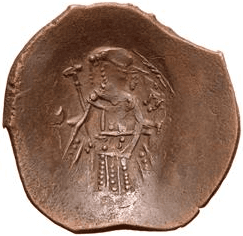
Ivan Asen I of Bulgaria
Emperor · Medieval
56.2Total

Napoleon Bonaparte
General · Modern
70.9Total
Basic Information
Born
1160
1769
Died
1196
1821
Era
Medieval
Modern
Nationality
Bulgaria
France
Occupation
Emperor
General
Civilization
Western
Western
Score Comparison
Military (10%)
61.7
94.0
Political (20%)
68.0
72.0
Influence (20%)
57.2
40.0
Legacy (20%)
54.0
80.0
Leadership (15%)
40.0
78.0
Strategy (15%)
60.7
90.0
TOTAL
56.2
70.9
Ivan Asen I of Bulgaria — Complete Timeline
1185 AD
Uprising against Byzantine rule in BulgariaWar
Ivan Asen I, along with his brother Peter, led a rebellion of Bulgarians and Vlachs against Byzantine rule. The uprising began after the brothers demanded a pronoia (land grant) from Emperor Isaac II Angelos and were refused. They proclaimed the restoration of the Bulgarian Empire, sparking a war that would eventually liberate much of Bulgaria.
RebellionBulgarian independenceByzantine decline
Impact: regionalconstructive
Proclamation of the Second Bulgarian Empire at TarnovoPolitical Action
Ivan Asen I and his brother Peter proclaimed the restoration of the Bulgarian Empire in the city of Tarnovo. They declared themselves emperors (tsars), claiming continuity from the First Bulgarian Empire. This act established the Second Bulgarian Empire, with Tarnovo as its capital. The proclamation was accompanied by the consecration of a new patriarch.
Empire restorationTarnovoTsar proclamation
Impact: regionalconstructive
1190 AD
Battle of Tryavna (1190)War◆ Major
Ivan Asen I's forces ambushed and defeated a Byzantine army under Emperor Isaac II Angelos in the Tryavna Pass. The Byzantines were caught in a narrow mountain pass and suffered heavy losses. This victory secured Bulgarian control over the Balkan Mountains and forced the Byzantines to recognize the Second Bulgarian Empire's existence.
BattleByzantine defeatMountain pass
Impact: regionalconstructive
1196 AD
Assassination by his cousin IvankoPolitical Action◆ Major
Ivan Asen I was assassinated by his cousin Ivanko, who had been accused of plotting against him. The murder occurred during a hunting trip. Ivanko briefly seized power but was soon overthrown by Peter, Ivan's brother. This assassination destabilized the new empire and led to a period of internal conflict among the Asen dynasty.
AssassinationDynastic conflictPolitical instability
Impact: regionaltragic
Napoleon Bonaparte — Complete Timeline
1799 AD
Coup of 18 BrumaireOther◆ Major
Napoleon Bonaparte, with support from his brother Lucien and key political figures, overthrew the Directory in a bloodless coup. He established the Consulate with himself as First Consul, effectively becoming the ruler of France. This event ended the French Revolution's most unstable period.
French RevolutionCoupRise to Power
Impact: regional
1804 AD
Promulgation of the Napoleonic CodeOther◆ Major
Napoleon enacted the Civil Code of the French, known as the Napoleonic Code, a comprehensive set of laws that replaced the fragmented feudal legal systems. The code established legal equality, protected property rights, and secularized law. It became the basis for legal systems in many European and world countries.
Legal ReformNapoleonic CodeCivil Law
Impact: globalconstructive
1805 AD
Battle of AusterlitzWar◆ Major
Napoleon's Grande Arm
Napoleonic WarsBattleDecisive Victory
Impact: global
1812 AD
Invasion of RussiaWar◆ Major
Napoleon led the Grande Arm
Napoleonic WarsInvasionDisaster
Impact: globaldestructive
1815 AD
Battle of WaterlooWar◆ Major
Napoleon's French army was defeated by the combined forces of the Duke of Wellington's Anglo-Allied army and Gebhard Leberecht von Bl
Napoleonic WarsBattleFinal Defeat
Impact: globaldestructive
Expert Analysis
ivan-asen-i-of-bulgaria-vs-napoleon-bonaparte
# The Emperor and the Rebel: Two Paths to Power
On a June morning in 1815, Napoleon Bonaparte watched his dreams crumble in the muddy fields of Waterloo, his Grande Armée shattered by a coalition of European powers. Twenty-three years earlier and a thousand miles away, Ivan Asen I stood in the city of Tarnovo, raising a rebel banner against the Byzantine Empire, a man who would restore a kingdom lost for nearly two centuries. Both were men of war, both reshaped the map of their worlds, yet their journeys ended in starkly different fates—one exiled to a remote Atlantic island, the other stabbed to death by his own cousin. What drove these divergent outcomes? The answer lies not merely in their deeds, but in the soil from which they grew.
Origins
Napoleon Bonaparte was born in 1769 on the Mediterranean island of Corsica, a place just recently annexed by France. His family belonged to the minor nobility, but they were poor and resentful of French rule. The young Napoleon spoke Italian at home and learned French only at school, where he was mocked for his accent. This outsider status forged a relentless ambition—he would conquer the very empire that had conquered his homeland. The Enlightenment was in full bloom, and Napoleon devoured the works of Rousseau and Voltaire, dreaming of glory through reason and will.
Ivan Asen I, born around 1160, emerged from a very different world. Bulgaria had been under Byzantine domination for nearly 170 years, its people reduced to subjects of a distant emperor in Constantinople. Little is known of Asen's early life, but he was likely a boyar—a local noble—among the Vlachs and Bulgarians of the Balkan mountains. His world was one of oral tradition, Orthodox Christianity, and simmering resentment against Greek-speaking overlords. Where Napoleon absorbed the ideas of revolution, Ivan Asen absorbed the grievances of his people.
Rise to Power
Napoleon's ascent was a masterpiece of opportunity seized. The French Revolution had thrown open the doors of military command to talent rather than birth. In 1793, at just 24, he distinguished himself at the Siege of Toulon, earning promotion to brigadier general. By 1796, he was commanding the Army of Italy, where his lightning campaigns against the Austrians made him a national hero. Each victory was a stepping stone: the Egyptian campaign of 1798, the coup of 18 Brumaire in 1799, and finally, the coronation as Emperor in 1804. His rise was a ladder built from his own victories.
Ivan Asen's path was more desperate. In 1185, he and his brother Peter IV sparked an uprising against Byzantine rule, exploiting the weakness of Emperor Isaac II Angelos, who was distracted by wars in the East. The rebellion began not with a grand battle, but with a calculated provocation: the brothers built a church dedicated to Saint Demetrius in Tarnovo, claiming the saint had abandoned the Byzantines to support their cause. It was a gamble of faith and timing. By 1187, they had secured recognition from the Byzantine emperor, but only after years of guerrilla warfare in the mountain passes. Napoleon stormed the stage; Ivan Asen crept onto it.
Leadership & Governance
As emperor, Napoleon was a whirlwind of reform. He centralized the French state, established the Bank of France, and most enduringly, codified the Napoleonic Code in 1804—a legal system that enshrined equality before the law, property rights, and secular authority. His military genius was unmatched: he could coordinate corps across hundreds of miles, strike at the enemy's weakest point, and inspire soldiers with personal courage. His score of 93 in strategy reflects this—a man who could win battles like Austerlitz in 1805 by feigning weakness and then crushing the allied center.
Ivan Asen I governed differently. As co-emperor with his brother, he focused on expanding Bulgarian territory through a series of campaigns against Byzantium. The Battle of Tryavna in 1190 was his finest moment: ambushing Emperor Isaac II's army in a narrow pass, he inflicted a devastating defeat that secured Bulgarian independence for decades. But his political score of 56.7 reveals a leader who struggled with the internal dynamics of his court. He was a warrior, not an administrator. The Second Bulgarian Empire he founded lacked the centralized institutions Napoleon built; it was a feudal patchwork held together by personal loyalty and military success.
Triumph & Tragedy
Napoleon's triumph was Austerlitz, where he crushed the combined armies of Russia and Austria. His tragedy was the invasion of Russia in 1812—a colossal miscalculation that cost him half a million men. His final defeat at Waterloo in 1815 sealed his fate: exiled to Saint Helena, he died in 1821, a prisoner of the British.
Ivan Asen's triumph was the restoration of the Bulgarian Empire itself—a feat that echoed through the centuries. His tragedy came in 1196, when his cousin Ivanko, accused of plotting against him, stabbed him to death. There was no grand battle, no epic downfall. Just a knife in the dark, wielded by a man he trusted. His empire survived, but his assassination left it vulnerable to the intrigues that would eventually weaken it.
Character & Destiny
Napoleon's character was a paradox: a man of immense discipline and boundless ambition. He once said, "Impossible is a word to be found only in the dictionary of fools." This drive made him conquer Europe, but it also blinded him to limits. He could not stop, could not compromise. His destiny was to rise higher than any man of his age—and to fall further.
Ivan Asen I was more pragmatic, a man who knew when to strike and when to retreat. But his world was smaller, more brutal. In the medieval Balkans, a ruler's life was cheap, and betrayal was a constant companion. His character was shaped by the need for survival, not the pursuit of glory. His destiny was to restore a nation, but not to build a lasting legacy.
Legacy
Napoleon's legacy is global. The Napoleonic Code influenced legal systems from Europe to Latin America. His military tactics are still studied in war colleges. His name is synonymous with ambition and genius. His scores—82.4 overall—reflect a man who changed the world, for better and for worse.
Ivan Asen I's legacy is more localized but no less profound. He is remembered as the founder of the Second Bulgarian Empire, a national hero who threw off Byzantine rule. His score of 66.7 reflects a figure of regional importance, not global fame. Yet for Bulgarians, his name evokes the same pride that Napoleon inspires in the French.
Conclusion
Standing at the end of these two lives, one cannot help but feel the weight of circumstance. Napoleon was born into an age of revolution, when a single man could reshape a continent. Ivan Asen was born into an age of restoration, when a single man could revive a kingdom. Both were driven by ambition, both were masters of war, and both ended in violence—one by exile, one by assassination. Their different outcomes were not merely the products of talent or character, but of the worlds they inhabited. Napoleon's tragedy was that he could not stop reaching for more. Ivan Asen's tragedy was that he could not hold on to what he had. In the end, history judges both not by how they died, but by what they dared to build.
Rankings
🥇
Napoleon BonaparteLeader
Mil: 94.0Pol: 72.0Inf: 40.0
70.9
🥈
Ivan Asen I of Bulgaria
Mil: 61.7Pol: 68.0Inf: 57.2
56.2
+14.7 behind
How This Comparison Works
Algorithm
Each figure is scored on 6 dimensions (0—100 scale) based on structured historical data: Military (10%), Political (20%), Influence (20%), Legacy (20%), Leadership (15%), Strategy (15%). The weighted total produces the final ranking.
Data Sources
Scores are computed from structured sub-indicators in the database. Scale factors adjust for era (Ancient ×0.85, Modern ×1.0) and civilization size (Eastern ×1.05, Other ×0.80) to account for differences in population and military scale.
Maximum 3 Figures
Comparisons are limited to 2—3 figures to ensure readability and statistical meaningfulness.
Error Margins
±5 points per dimension — Sub-scores are derived from historical records with inherent uncertainty. Two figures within 5 points on a dimension should be considered roughly equivalent in that area.
Total Score Accuracy
±3 points overall — The weighted combination of 6 dimensions produces a total score with approximately ±3 points of uncertainty. Differences of less than 3 points are not statistically significant— the figures are effectively tied.
Known Limitations
- Historical records are incomplete and uneven across civilizations
- Figures from oral-tradition societies may be underrepresented
- Occupation labels can misclassify multi-role figures
- Scores measure capability and impact, not moral character
- Quantitative scoring is a comparison tool, not absolute truth
Capability Radar
Military (10%) — Battles & Warfare
Battles
65
95
Win Rate
70
90
Expansion
70
95
Political (20%) — Governance & Reform
Reform
55
95
Diplomacy
60
80
Economy
50
85
Influence (20%) — Cultural & Global Reach
Cultural
45
85
Global
40
90
Legacy (20%) — Historical Impact
Historical
60
95
Longevity
55
90
Leadership (15%) — Power & Stability
Tenure
60
85
Stability
55
70
Strategy (15%) — Tactics & Innovation
Strategy
65
95
Tactics
60
98
Reform
55
92
Similar Comparisons
Comments & Discussion
IronLegionnaire6/17/2026
"Napoleon vs Ivan Asen? That's like comparing a wildfire to a bonfire. Sure, Napoleon conquered Europe with revolutionary logistics and mass conscription, but Ivan Asen toppled the Byzantine Empire itself with just a rebel army in 1185—and rebuilt Bulgaria from scratch. The French Emperor had a Grand Army of half a million; Asen’s force was a fraction of that. Yet Asen’s kingdom lasted centuries; Napoleon’s collapsed in a decade. History favors the underdog who builds foundations, not just march
史海沉舟6/17/2026
“拿坡仑的失败在于他不懂‘守成’二字,而伊凡·阿森一世恰恰是守成的天才。拿破仑打了60场战役,兵败滑铁卢后就被流放;伊凡·阿森在1196年被亲表哥刺杀,但他在位期间巩固了保加利亚第二帝国,连拜占庭都不得不承认其独立。拿破仑的帝国像烟花,绚烂却短暂;伊凡的王国像老树,根深叶茂。数据骗不了人:拿破仑在位14年即崩,阿森王朝却延续了120年。”
CorsicanWraith6/17/2026
"Let’s not romanticize Ivan Asen as some noble liberator—he was a warlord who rose through blood and betrayal. Napoleon, despite his megalomania, actually codified laws (the Napoleonic Code) and modernized administration. Asen’s legacy? A kingdom built on raids and peasant levies, undone by his own family’s knives. If we’re comparing impact, Napoleon reshaped Europe’s legal and political landscape for two centuries; Ivan Asen’s Bulgaria barely held its borders for three decades before internal s
墨守成规6/17/2026
“军事对比?拿破仑的战术革新(比如使用军团系统)碾压了伊凡·阿森的封建骑兵。但历史评分不是比谁枪炮多。伊凡·阿森在1187年守住了特尔诺沃,迫使拜占庭认输,而拿破仑在1812年莫斯科撤退时损失了50万人——这是他自己的决定,不是气候的错。阿森死得窝囊(被表哥捅死),可他在位时保加利亚重新强盛;拿破仑死得风光,但帝国提前崩盘。谁更懂政治?一目了然。”
ReformistGaze6/17/2026
"The real difference isn't military might—it's adaptability. Napoleon tried to export the French Revolution's ideals through conquest, ignoring local cultures. Ivan Asen, meanwhile, cleverly exploited Byzantine tax revolts and Orthodox Christian resentments, rebuilding Bulgarian identity from the ground up. Napoleon's empire fractured under nationalist pressures; Asen's kingdom united