Loading...
Ismail I vs Napoleon Bonaparte
Napoleon Bonaparte leads by 3.7 pts · 2 figures compared
…
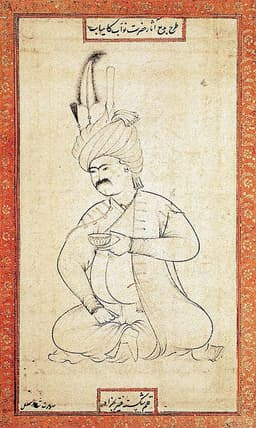
Ismail I
Emperor · Medieval
67.2Total

Napoleon Bonaparte
General · Modern
70.9Total
Basic Information
Born
1487
1769
Died
1524
1821
Era
Medieval
Modern
Nationality
Persia
France
Occupation
Emperor
General
Civilization
Middle Eastern
Western
Score Comparison
Military (10%)
78.0
94.0
Political (20%)
78.0
72.0
Influence (20%)
40.0
40.0
Legacy (20%)
80.0
80.0
Leadership (15%)
72.0
78.0
Strategy (15%)
69.1
90.0
TOTAL
67.2
70.9
Ismail I — Complete Timeline
1501 AD
Proclamation as Shah of IranPolitical Action
Ismail I proclaimed himself Shah of Iran at Tabriz, founding the Safavid dynasty. He declared Twelver Shia Islam the state religion, a move that distinguished Iran from its Sunni neighbors and shaped its religious identity.
FoundingState ReligionShia Islam
Impact: regionalconstructive
1508 AD
Conquest of BaghdadWar◆ Major
Ismail I captured Baghdad from the Aq Qoyunlu confederation. This conquest extended Safavid control over Mesopotamia and secured the shrine cities of Najaf and Karbala, important Shia pilgrimage sites.
ConquestMesopotamiaShia Shrines
Impact: regional
1514 AD
Battle of ChaldiranWar
Ismail I's army was defeated by the Ottoman Empire under Sultan Selim I at Chaldiran. The Ottomans used superior artillery and gunpowder tactics, forcing Ismail to retreat and ending his expansion into Anatolia.
BattleOttoman-Safavid WarMilitary Defeat
Impact: regionaltragic
Napoleon Bonaparte — Complete Timeline
1799 AD
Coup of 18 BrumaireOther◆ Major
Napoleon Bonaparte, with support from his brother Lucien and key political figures, overthrew the Directory in a bloodless coup. He established the Consulate with himself as First Consul, effectively becoming the ruler of France. This event ended the French Revolution's most unstable period.
French RevolutionCoupRise to Power
Impact: regional
1804 AD
Promulgation of the Napoleonic CodeOther◆ Major
Napoleon enacted the Civil Code of the French, known as the Napoleonic Code, a comprehensive set of laws that replaced the fragmented feudal legal systems. The code established legal equality, protected property rights, and secularized law. It became the basis for legal systems in many European and world countries.
Legal ReformNapoleonic CodeCivil Law
Impact: globalconstructive
1805 AD
Battle of AusterlitzWar◆ Major
Napoleon's Grande Arm
Napoleonic WarsBattleDecisive Victory
Impact: global
1812 AD
Invasion of RussiaWar◆ Major
Napoleon led the Grande Arm
Napoleonic WarsInvasionDisaster
Impact: globaldestructive
1815 AD
Battle of WaterlooWar◆ Major
Napoleon's French army was defeated by the combined forces of the Duke of Wellington's Anglo-Allied army and Gebhard Leberecht von Bl
Napoleonic WarsBattleFinal Defeat
Impact: globaldestructive
Expert Analysis
ismail-i-vs-napoleon-bonaparte
# The Throne and the Sword
On a September morning in 1514, two men who had never met faced each other across a field in northwestern Persia. One was a sultan who had just marched his army across Anatolia, dragging cannons up mountains. The other was a teenage emperor who believed God protected him. When the smoke cleared, the cannons had spoken, and the boy-king who had conquered Baghdad at twenty-one was fleeing on horseback, his legend shattered by gunpowder. Three hundred years later and a continent away, another young general would stand before the Pyramids and tell his men that forty centuries were watching them. Napoleon Bonaparte and Ismail I never shared a century, yet their stories mirror each other in ways that reveal the strange machinery of ambition, faith, and fate.
Origins
Ismail was born in 1487 into a world of fire and prophecy. His father had been killed in battle, his grandfather murdered, and he spent his childhood in hiding among the Sufi mystics of the Caspian coast. The Safavid order was not merely a dynasty—it was a religious movement, a brotherhood of warriors who believed their leader was divinely guided. Ismail grew up surrounded by men who called him a messiah. By the time he was twelve, he was leading armies. By fourteen, he had conquered Tabriz. He was not raised to rule a kingdom; he was raised to redeem the world.
Napoleon, born in 1769 on the island of Corsica, had no such divine mandate. His family were minor nobles in a land that had just been conquered by France. He spoke Italian before he learned French, and his schoolmates mocked his accent. Where Ismail inherited a holy war, Napoleon inherited a revolution. The old order of Europe was collapsing, and a young artillery officer with a talent for mathematics and a hunger for glory could rise faster than any prince of the blood.
Rise to Power
Ismail’s ascent was a whirlwind. In 1501, at fourteen, he proclaimed himself Shah of Iran in Tabriz. He declared Twelver Shia Islam the state religion, a decision that would reshape the Middle East for centuries. His followers believed he was the hidden imam, the promised savior. They wore red headgear with twelve tassels—one for each imam—and fought with a fury that terrified their enemies. By 1508, Ismail had captured Baghdad, sweeping aside the Aq Qoyunlu confederation. He was twenty-one, master of an empire stretching from the Euphrates to the Oxus.
Napoleon’s rise was slower but more methodical. He was twenty-four when he cleared the streets of Paris with a whiff of grapeshot, saving the revolutionary government from a royalist mob. At twenty-seven, he was commanding the Army of Italy, defeating Austrian generals twice his age. At thirty, he was in Egypt, dreaming of Alexander. But unlike Ismail, Napoleon did not inherit an army of believers. He built one. He won loyalty through victory, not prophecy.
Leadership & Governance
Here the two men diverged most sharply. Ismail ruled as a holy king. His authority was absolute because it was divine. He did not need to compromise, negotiate, or build institutions—God was on his side. The Safavid state was a theocracy in embryo, and Ismail’s word was law. But divine right has a weakness: it depends on victory. When Ismail lost, he lost everything.
Napoleon, by contrast, was a child of the Enlightenment. He believed in reason, merit, and efficiency. His Napoleonic Code reformed French law, abolishing feudalism and establishing equality before the law. He built schools, roads, and a centralized bureaucracy. He was a tyrant, yes, but a rational one. He understood that power required institutions, not just charisma. Where Ismail ruled through faith, Napoleon ruled through force and order.
Militarily, the difference was even starker. Napoleon’s strategic genius is legendary—he won sixty battles, outmaneuvered every army in Europe, and invented modern warfare. His 1805 victory at Austerlitz remains a masterpiece of deception and timing. Ismail was a brave warrior but a poor strategist. At the Battle of Chaldiran in 1514, he charged the Ottoman lines with cavalry, only to be mowed down by artillery. He had never faced cannons before. Napoleon, an artilleryman himself, would have known better.
Triumph & Tragedy
Ismail’s greatest moment was also his beginning. The conquest of Tabriz, the declaration of Shiism—these were triumphs of faith over reason. His tragedy was Chaldiran. After that defeat, he never led an army again. He retreated into his palace, drank wine, and watched his empire stagnate. The boy-king who had conquered Baghdad at twenty-one died at thirty-six, broken by the realization that he was not invincible.
Napoleon’s tragedy was grander and more drawn out. His greatest triumph was Austerlitz, where he crushed the combined armies of Austria and Russia. His greatest failure was the invasion of Russia in 1812. Half a million men marched east; fewer than fifty thousand returned. He was exiled to Elba, escaped, ruled for a hundred days, and was finally defeated at Waterloo in 1815. He died in exile on Saint Helena, six thousand miles from Paris.
Character & Destiny
Ismail’s character was defined by certainty. He believed he was chosen by God, and that belief made him fearless—until it made him foolish. He could not adapt because adaptation would mean admitting doubt. Napoleon’s character was defined by ambition. He believed he could shape the world through will and intellect. That belief made him brilliant—until it made him blind. He could not stop because stopping would mean admitting limits.
Both men were destroyed by their greatest strengths. Ismail’s faith gave him an empire but left him unable to learn from defeat. Napoleon’s ambition gave him Europe but left him unable to accept peace. They were mirrors of each other: one ruled by heaven, the other by earth.
Legacy
Ismail’s legacy is the Safavid dynasty, which ruled Iran for two centuries and made Shia Islam a permanent force in the Islamic world. Every Shia Muslim today lives in a world shaped by his decision in 1501. Napoleon’s legacy is the modern state: the legal code, the centralized administration, the idea that talent matters more than birth. Every European nation today lives in a world shaped by his reforms.
But there is a deeper difference. Ismail created a religion-state; Napoleon created a nation-state. Ismail’s legacy is about belief; Napoleon’s is about power. One built a cathedral; the other built a machine.
Conclusion
Standing at the edge of history, we see two young men who conquered the world before they were thirty. One wore a crown of thorns; the other wore a crown of laurels. One died in a palace, forgotten; the other died on an island, remembered. They were both giants, but giants of different ages. Ismail belonged to the age of faith, when men followed prophets. Napoleon belonged to the age of reason, when men followed ideas. Perhaps the real difference is not between them, but between the worlds that made them. The world that believed in miracles, and the world that believed in itself.
Rankings
🥇
Napoleon BonaparteLeader
Mil: 94.0Pol: 72.0Inf: 40.0
70.9
🥈
Ismail I
Mil: 78.0Pol: 78.0Inf: 40.0
67.2
+3.7 behind
How This Comparison Works
Algorithm
Each figure is scored on 6 dimensions (0—100 scale) based on structured historical data: Military (10%), Political (20%), Influence (20%), Legacy (20%), Leadership (15%), Strategy (15%). The weighted total produces the final ranking.
Data Sources
Scores are computed from structured sub-indicators in the database. Scale factors adjust for era (Ancient ×0.85, Modern ×1.0) and civilization size (Eastern ×1.05, Other ×0.80) to account for differences in population and military scale.
Maximum 3 Figures
Comparisons are limited to 2—3 figures to ensure readability and statistical meaningfulness.
Error Margins
±5 points per dimension — Sub-scores are derived from historical records with inherent uncertainty. Two figures within 5 points on a dimension should be considered roughly equivalent in that area.
Total Score Accuracy
±3 points overall — The weighted combination of 6 dimensions produces a total score with approximately ±3 points of uncertainty. Differences of less than 3 points are not statistically significant— the figures are effectively tied.
Known Limitations
- Historical records are incomplete and uneven across civilizations
- Figures from oral-tradition societies may be underrepresented
- Occupation labels can misclassify multi-role figures
- Scores measure capability and impact, not moral character
- Quantitative scoring is a comparison tool, not absolute truth
Capability Radar
Military (10%) — Battles & Warfare
Battles
75
95
Win Rate
80
90
Expansion
80
95
Political (20%) — Governance & Reform
Reform
90
95
Diplomacy
65
80
Economy
60
85
Influence (20%) — Cultural & Global Reach
Cultural
85
85
Global
70
90
Legacy (20%) — Historical Impact
Historical
85
95
Longevity
80
90
Leadership (15%) — Power & Stability
Tenure
70
85
Stability
55
70
Strategy (15%) — Tactics & Innovation
Strategy
75
95
Tactics
70
98
Reform
85
92
Similar Comparisons
Comments & Discussion
GunpowderSultan6/17/2026
Ismail wins the hardware race. He was dragging cannons through mountains before Napoleon was a glint in Corsica's eye. But look at what happened at Chaldiran: Ismail charged into Ottoman artillery because he genuinely believed God would protect him. That's not strategy, that's suicide. Napoleon never made that mistake—he used guns, he didn't pray at them. Faith wins sermons; gunpowder wins battles.
红旗下的骑兵6/17/2026
拿什么跟伊斯玛仪比?十四岁攻占大不里士,二十一岁征服巴格达,靠的不是什么欧洲战术手册,是狂热的信仰加骑兵冲锋。拿破仑那套炮兵战术在西欧吃得开,放到波斯高原试试?我承认拿破仑打了很多漂亮仗,但伊斯玛仪是在刀尖上跳舞的男孩,输了沙场却建立了帝国。拿破仑最后呢?滑铁卢没了。
HistoricalParallels6/17/2026
The real mirror here is not military genius but the collapse of invincibility. Ismail at Chaldiran lost his aura—Sufis stopped believing he was immortal. Napoleon at Waterloo lost his aura—Europe stopped fearing him. Both were undone not by enemies but by the gap between their myth and reality. Ismail's God didn't show up; Napoleon's luck ran out. That's the tragedy: empires are built on perception, and perception shatters.
伪历史学家6/17/2026
两个人都被夸大得离谱。伊斯玛仪是个宗教狂热的半文盲少年,Napoleon是个靠政变上位的投机者。比什么?比谁更会包装自己?Chaldiran战役里伊斯玛仪指挥混乱,完全靠骑兵送死,这叫军事天才?拿破仑更别提,埃及战役就是一场作秀,打几个马穆鲁克就敢说四十个世纪在看他。要说真本事,俩人都配不上"伟大"二字,只是碰上了分封割据的好时代。
DataSkeptic6/17/2026
You want a real comparison? Let's talk numbers. Ismail fielded about 40,000 cavalry at Chaldiran against 60,000 Ottomans with 200+ cannons. Loss ratio was catastrophic. Napoleon at Austerlitz had 73,000 against 85,000 and lost 1,300 to their 15,000. One is a religious massacre disguised as strategy; the other is tactical optimization. Ismail inspires poets; Napoleon inspires generals. Pick your metric, but don't pretend they're equals on the battlefield.