Loading...
Ishbara Qaghan vs Louis VII of France
Ishbara Qaghan leads by 13.4 pts · 2 figures compared
…

Ishbara Qaghan
Emperor · Medieval
59.4Total
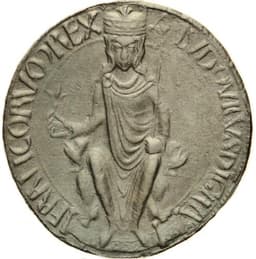
Louis VII of France
Emperor · Medieval
46.0Total
Basic Information
Born
540
1120
Died
587
1180
Era
Medieval
Medieval
Nationality
Gokturk Khaganate
France
Occupation
Emperor
Emperor
Civilization
Eastern
Western
Score Comparison
Military (10%)
65.0
25.9
Political (20%)
68.0
37.9
Influence (20%)
57.2
51.8
Legacy (20%)
50.0
45.0
Leadership (15%)
65.0
64.0
Strategy (15%)
61.2
39.6
TOTAL
59.4
46.0
Ishbara Qaghan — Complete Timeline
581 AD
Accession as Khagan of the Eastern Turkic KhaganatePolitical Action◆ Major
Ishbara Qaghan became the first ruler of the Eastern Turkic Khaganate after the division of the First Turkic Khaganate. He inherited the eastern territories and faced challenges from the Western Khaganate and China.
SuccessionEastern Turkic KhaganateDivision
Impact: regional
582 AD
War with the Western Turkic KhaganateWar◆ Major
Ishbara Qaghan fought a series of wars against the Western Turkic Khaganate under Tardu. These conflicts weakened both khaganates and allowed the Sui dynasty to assert influence over the steppe.
Civil WarTurkic KhaganatesConflict
Impact: regionaldestructive
585 AD
Submission to the Sui dynastyPolitical Action◆ Major
Facing pressure from the Western Khaganate and internal revolts, Ishbara Qaghan submitted to the Sui dynasty of China. He accepted Sui suzerainty, paying tribute and receiving Chinese support, which stabilized his rule temporarily.
TributeSui DynastySubmission
Impact: regional
587 AD
Death and successionPolitical Action
Ishbara Qaghan died, and his son was briefly khagan before being overthrown. His death led to further instability in the Eastern Turkic Khaganate, which continued to struggle with internal divisions and Chinese influence.
SuccessionDeathEastern Turkic Khaganate
Impact: regional
Louis VII of France — Complete Timeline
1137 AD
Reign as King of the FranksPolitical Action◆ Major
Louis VII succeeded his father Louis VI as King of the Franks. His reign was marked by the expansion of royal territory through marriage to Eleanor of Aquitaine, but also by conflicts with the Church and nobles.
KingshipCapetianReign
Impact: national
1147 AD
Second CrusadeWar◆ Major
Louis VII led the Second Crusade with his wife Eleanor of Aquitaine and the German king Conrad III. The crusade was a failure, with the army suffering heavy losses in Anatolia and failing to capture Damascus. The campaign damaged Louis's prestige.
CrusadeWarFailure
Impact: globaltragic
1152 AD
Conflict with Henry II of EnglandWar◆ Major
After Eleanor of Aquitaine married Henry II of England, Louis VII fought a series of wars against Henry over control of French territories. The conflicts were inconclusive, but they established the rivalry between the Capetian and Plantagenet dynasties.
WarPlantagenetTerritorial Conflict
Impact: regional
Divorce from Eleanor of AquitainePolitical Action◆ Major
Louis VII's marriage to Eleanor of Aquitaine was annulled on grounds of consanguinity. Eleanor then married Henry II of England, bringing the vast Duchy of Aquitaine under English control and leading to centuries of conflict between France and England.
DivorceAquitaineAnglo-French Conflict
Impact: globaltragic
1179 AD
Coronation of Philip II AugustusPolitical Action
Louis VII had his son Philip II Augustus crowned as co-king to ensure the succession. This act strengthened the Capetian dynasty and ensured a smooth transition of power after Louis's death.
CoronationSuccessionCapetian
Impact: nationalconstructive
Expert Analysis
Origins
Ishbara Qaghan, born around 540 CE, was a member of the Ashina clan, the ruling family of the First Turkic Khaganate. His early life was shaped by the nomadic steppe traditions of the Turks, where military skill and political acumen were essential. He likely received training in horsemanship and archery, and was involved in the khaganate's expansion under his predecessors. The division of the khaganate after the death of Taspar Qaghan in 581 CE set the stage for his rise.
Louis VII of France, born in 1120 CE, was the second son of King Louis VI of France and Adelaide of Maurienne. Originally destined for the church, he was educated at the Abbey of Saint-Denis, receiving a religious and academic upbringing. After the death of his older brother Philip in 1131, Louis was crowned co-king and succeeded his father in 1137. His marriage to Eleanor of Aquitaine in the same year brought the vast Duchy of Aquitaine under royal control.
Rise to Power
Ishbara Qaghan became khagan of the Eastern Turkic Khaganate in 581 CE after the division of the First Turkic Khaganate. He inherited the eastern territories, while his uncle Tardu ruled the west. His rise was contested, as he faced rivals within the Ashina clan. He consolidated power by suppressing internal revolts and asserting his authority over Turkic tribes. His political score of 68.0 reflects his ability to navigate these challenges.
Louis VII became king upon his father's death in 1137. His early reign was dominated by his marriage to Eleanor, which gave him control over Aquitaine. However, his religious piety and lack of military ambition led to conflicts with nobles. His decision to join the Second Crusade in 1147 was a turning point, elevating his status but also exposing his weaknesses. His political score of 37.9 indicates limited effectiveness in governance.
Leadership & Governance
Ishbara Qaghan's leadership style was typical of steppe rulers: he ruled through a combination of tribal alliances, military coercion, and diplomatic maneuvering. He attempted to maintain independence from the Sui dynasty but eventually submitted in 585 CE, accepting suzerainty and paying tribute. This pragmatic decision preserved his khaganate temporarily, but his military score of 65.0 was not enough to overcome the Western Turkic threat.
Louis VII's governance was heavily influenced by his religious convictions. He was known as a pious and just king, but his administrative skills were limited. He relied on advisors like Abbot Suger to manage the realm. His divorce from Eleanor in 1152 was a political disaster, as she married Henry II of England, creating a powerful rival. His leadership score of 64.0 reflects his moral authority, not his strategic acumen.
Triumph & Tragedy
Ishbara Qaghan's greatest success was establishing the Eastern Turkic Khaganate as a distinct entity, maintaining its existence for several decades. He managed to secure his rule despite the Sui dynasty's attempts to control the steppes. His tragedy was his submission to the Sui, which weakened Turkic independence and set a precedent for future khagans. He died around 587 CE, and his son was quickly overthrown, leading to instability.
Louis VII's triumph was the Second Crusade, which despite its failure, confirmed his status as a crusader king. He also successfully secured the Capetian dynasty by having his son Philip II crowned co-king in 1179. His tragedy was the loss of Aquitaine through his divorce, which led to decades of conflict with England. His military score of 25.9 reflects his poor performance in warfare.
Character & Destiny
Ishbara Qaghan was a pragmatic leader, willing to submit to the Sui to preserve his power. This decision, while controversial, showed his ability to adapt. However, his reliance on Sui support made him dependent and weakened his authority among the Turks. His character was shaped by the harsh realities of steppe politics, where survival often trumped pride.
Louis VII was deeply religious, earning the nickname "the Pious." His piety influenced his decisions, including the crusade and his divorce. He was often indecisive and lacked the ruthlessness of his contemporaries. His character led to both his moral high ground and his political failures, as he prioritized spiritual over temporal concerns.
Legacy
Ishbara Qaghan's legacy is mixed. He founded the Eastern Turkic Khaganate, but his submission to the Sui undermined Turkic independence. His reign foreshadowed the eventual revival under later khagans. His influence score of 57.2 reflects his role in the division of the Turkic world. The Eastern Khaganate lasted until 630 CE, when it was conquered by the Tang dynasty.
Louis VII's legacy is more enduring. He strengthened the Capetian monarchy by ensuring the succession of his son, Philip II, who became a powerful king. The Second Crusade, though a failure, contributed to the development of crusading ideology. His divorce reshaped European politics by creating the Angevin Empire. His legacy score of 45.0 acknowledges his limited but significant impact.
Conclusion
Ishbara Qaghan had a greater impact on the political landscape of his time than Louis VII. With a total score of 59.4 compared to Louis's 46.0, Ishbara's actions shaped the fate of the Turkic Khaganates and their relations with China. While Louis's reign had long-term consequences for France, his personal failures and lack of military success limit his influence. Ishbara's pragmatic submission allowed the Eastern Khaganate to survive, while Louis's crusade and divorce weakened his kingdom. On balance, the steppe warlord's decisions had more immediate and far-reaching effects on the balance of power in Eurasia.
Rankings
🥇
Ishbara QaghanLeader
Mil: 65.0Pol: 68.0Inf: 57.2
59.4
🥈
Louis VII of France
Mil: 25.9Pol: 37.9Inf: 51.8
46.0
+13.4 behind
How This Comparison Works
Algorithm
Each figure is scored on 6 dimensions (0—100 scale) based on structured historical data: Military (10%), Political (20%), Influence (20%), Legacy (20%), Leadership (15%), Strategy (15%). The weighted total produces the final ranking.
Data Sources
Scores are computed from structured sub-indicators in the database. Scale factors adjust for era (Ancient ×0.85, Modern ×1.0) and civilization size (Eastern ×1.05, Other ×0.80) to account for differences in population and military scale.
Maximum 3 Figures
Comparisons are limited to 2—3 figures to ensure readability and statistical meaningfulness.
Error Margins
±5 points per dimension — Sub-scores are derived from historical records with inherent uncertainty. Two figures within 5 points on a dimension should be considered roughly equivalent in that area.
Total Score Accuracy
±3 points overall — The weighted combination of 6 dimensions produces a total score with approximately ±3 points of uncertainty. Differences of less than 3 points are not statistically significant— the figures are effectively tied.
Known Limitations
- Historical records are incomplete and uneven across civilizations
- Figures from oral-tradition societies may be underrepresented
- Occupation labels can misclassify multi-role figures
- Scores measure capability and impact, not moral character
- Quantitative scoring is a comparison tool, not absolute truth
Capability Radar
Military (10%) — Battles & Warfare
Battles
65
15
Win Rate
60
20
Expansion
70
5
Political (20%) — Governance & Reform
Reform
50
30
Diplomacy
65
40
Economy
50
30
Influence (20%) — Cultural & Global Reach
Cultural
40
30
Global
45
20
Legacy (20%) — Historical Impact
Historical
55
40
Longevity
50
30
Leadership (15%) — Power & Stability
Tenure
55
60
Stability
45
35
Strategy (15%) — Tactics & Innovation
Strategy
75
10
Tactics
70
10
Reform
60
5
Similar Comparisons
Comments & Discussion
No comments yet. Be the first to share your thoughts!