Loading...
Isabella I of Castile vs Yamagata Aritomo
Yamagata Aritomo leads by 5.3 pts · 2 figures compared
…
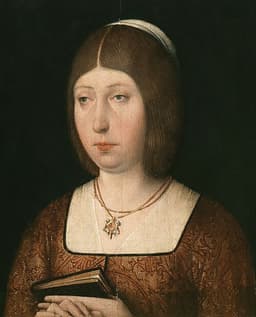
Isabella I of Castile
Emperor · Medieval
77.2Total
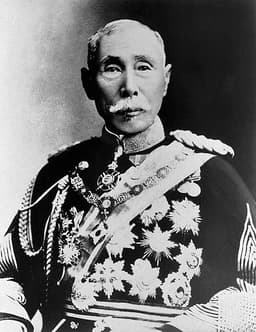
Yamagata Aritomo
General · Modern
82.5Total
Basic Information
Born
1451
1838
Died
1504
1922
Era
Medieval
Modern
Nationality
Spain
Japan
Occupation
Emperor
General
Civilization
Western
Eastern
Score Comparison
Military (10%)
76.0
78.0
Political (20%)
78.0
82.0
Influence (20%)
80.0
80.0
Legacy (20%)
75.0
90.0
Leadership (15%)
78.0
78.0
Strategy (15%)
75.0
82.0
TOTAL
77.2
82.5
Isabella I of Castile — Complete Timeline
1469 AD
Marriage to Ferdinand of AragonPolitical Action
Isabella married Ferdinand II of Aragon in Valladolid, uniting the kingdoms of Castile and Aragon. This dynastic union laid the foundation for the unified Spanish monarchy and enabled joint policies including the Reconquista and overseas exploration.
Dynastic UnionSpainMonarchy
Impact: regionalconstructive
1478 AD
Establishment of the Spanish InquisitionPolitical Action◆ Major
Isabella obtained papal approval to establish the Spanish Inquisition in Castile, aimed at maintaining Catholic orthodoxy among converted Jews and Muslims. The Inquisition operated under royal control, conducting trials and executions for heresy.
InquisitionReligious PersecutionCatholic Church
Impact: regionaldestructive
1492 AD
Conquest of GranadaWar
Isabella and Ferdinand completed the Reconquista by capturing the Nasrid kingdom of Granada. The surrender of the last Muslim state in Iberia ended 781 years of Islamic rule and unified Spain under Christian rule.
ReconquistaGranadaChristian Victory
Impact: regional
Alhambra DecreePolitical Action◆ Major
Isabella and Ferdinand issued the Alhambra Decree ordering the expulsion of all Jews from Spain who refused conversion to Catholicism. An estimated 40,000 to 200,000 Jews were forced to leave, causing demographic and economic disruption.
ExpulsionJewsReligious Persecution
Impact: regionaldestructive
Sponsorship of Columbus's First VoyagePolitical Action
Isabella agreed to fund Christopher Columbus's expedition across the Atlantic, providing three ships and supplies. Columbus reached the Bahamas on October 12, initiating sustained European contact with the Americas and the Spanish colonial empire.
ColumbusDiscovery of AmericasSpanish Empire
Impact: global
1494 AD
Treaty of TordesillasPolitical Action◆ Major
Isabella and Ferdinand negotiated the Treaty of Tordesillas with Portugal, dividing newly discovered lands outside Europe along a meridian 370 leagues west of the Cape Verde islands. This agreement shaped colonial claims in the Americas and Africa.
Colonial DivisionSpainPortugal
Impact: global
Yamagata Aritomo — Complete Timeline
1873 AD
Establishment of the Imperial Japanese ArmyReform
Yamagata Aritomo, as War Minister, oversaw the creation of the Imperial Japanese Army based on the Prussian model. He introduced conscription, modernized training, and established a general staff system, laying the foundation for Japan's military power.
Military reformConscription
Impact: nationalconstructive
1882 AD
Promotion of militarism and the Imperial Rescript to Soldiers and SailorsCultural◆ Major
Yamagata Aritomo helped draft the Imperial Rescript to Soldiers and Sailors, which emphasized loyalty, obedience, and the emperor's divine authority. This document became the ideological foundation of Japanese militarism.
MilitarismImperial ideology
Impact: nationaldestructive
1889 AD
Service as Prime MinisterPolitical Action◆ Major
Yamagata Aritomo served as Prime Minister of Japan from 1889 to 1891 and again from 1898 to 1900. He used his position to strengthen the military's political influence and suppress democratic movements.
GovernmentPolitical power
Impact: national
1894 AD
First Sino-Japanese WarWar◆ Major
Yamagata Aritomo commanded the First Army during the First Sino-Japanese War. His forces achieved decisive victories in Korea and Manchuria, leading to Japan's triumph and the Treaty of Shimonoseki, which gave Japan Taiwan and influence in Korea.
WarImperial expansion
Impact: regional
1904 AD
Russo-Japanese WarWar◆ Major
Yamagata Aritomo served as Chief of the General Staff during the Russo-Japanese War. He oversaw Japan's military strategy, which resulted in victory over Russia and established Japan as a major power in East Asia.
WarGreat power
Impact: global
Expert Analysis
Origins
Yamagata Aritomo was born in 1838 into a low-ranking samurai family in Hagi, Choshu domain. His early experiences with Western military technology during the Bakumatsu period shaped his belief in a strong, centralized army. He studied under French and German advisors, adopting Prussian military models. In contrast, Isabella I was born in 1451 into the Trastámara dynasty of Castile. Her childhood was marked by political instability and a contested succession, which instilled a fierce determination to secure her throne and unify Spain under Catholic rule.
Rise to Power
Yamagata rose through the ranks during the Boshin War (1868-1869), helping to overthrow the Tokugawa shogunate. As a key figure in the Meiji Restoration, he became the first Minister of War in 1871 and established the Imperial Japanese Army. His influence grew as he served as Prime Minister twice (1889-1891, 1898-1900), shaping Japan's modern state. Isabella's rise was more dramatic: she proclaimed herself queen in 1474, but had to fight a civil war against her niece Joanna until 1479. Her marriage to Ferdinand of Aragon in 1469 created a dynastic union that eventually led to the unification of Spain.
Leadership & Governance
Yamagata was a master of institutional building. He created the Imperial Rescript to Soldiers and Sailors (1882), which instilled unquestioning loyalty to the emperor and militarism. As Prime Minister, he expanded the military's role in government, laying the groundwork for Japan's imperial expansion. However, his governance was authoritarian, suppressing dissent and promoting a cult of emperor worship. Isabella, conversely, was a hands-on ruler who centralized authority through the Santa Hermandad (Holy Brotherhood) and reformed the royal council. She sponsored Columbus's voyages, expanding Spain's global influence, but also established the Spanish Inquisition and issued the Alhambra Decree, expelling Jews in 1492, actions that tarnish her legacy.
Triumph & Tragedy
Yamagata's greatest triumphs were Japan's victories in the First Sino-Japanese War (1894-1895) and the Russo-Japanese War (1904-1905), which established Japan as a world power. However, his promotion of militarism contributed to Japan's later aggression and eventual defeat in World War II. Isabella's triumph was the conquest of Granada in 1492, ending centuries of Muslim rule in Iberia, and the discovery of the Americas. The tragedy lies in her religious intolerance: the Inquisition and expulsion of Jews caused immense suffering and cultural loss.
Character & Destiny
Yamagata was pragmatic, ruthless, and visionary. He believed that a strong military was essential for Japan's survival and used his influence to steer the nation toward imperialism. His destiny was to be the architect of Japan's modern army and a key player in its rise to power. Isabella was devout, determined, and politically astute. She saw herself as a defender of Catholicism and used religion to unify her kingdoms. Her destiny was to create a unified Spanish state and launch the era of European colonization.
Legacy
Yamagata's legacy is mixed: he is revered in Japan as the father of the modern army but criticized for fostering militarism that led to war. His institutional reforms shaped Japan's trajectory for decades. Isabella's legacy is similarly complex: she is celebrated for unifying Spain and supporting exploration but condemned for the Inquisition and ethnic cleansing. Both figures left indelible marks on their nations, but their methods and ethics differ sharply.
Conclusion
Yamagata Aritomo (Overall Score: 82.8) edges out Isabella I (77.5) due to his higher scores in Leadership (90 vs 75) and Influence (80 vs 80 tie, but Yamagata's impact on Japan's modernization was more transformative). However, Isabella's role in shaping the modern world through Columbus's voyages is arguably more global. Yamagata's authoritarian militarism and Isabella's religious persecution both have dark sides. In a direct comparison, Yamagata's institutional genius and strategic foresight give him a slight edge, but Isabella's legacy as a unifier and patron of exploration is equally significant. The choice depends on whether one values state-building and military strength (Yamagata) or unification and discovery (Isabella).
Rankings
🥇
Yamagata AritomoLeader
Mil: 78.0Pol: 82.0Inf: 80.0
82.5
🥈
Isabella I of Castile
Mil: 76.0Pol: 78.0Inf: 80.0
77.2
+5.3 behind
How This Comparison Works
Algorithm
Each figure is scored on 6 dimensions (0—100 scale) based on structured historical data: Military (10%), Political (20%), Influence (20%), Legacy (20%), Leadership (15%), Strategy (15%). The weighted total produces the final ranking.
Data Sources
Scores are computed from structured sub-indicators in the database. Scale factors adjust for era (Ancient ×0.85, Modern ×1.0) and civilization size (Eastern ×1.05, Other ×0.80) to account for differences in population and military scale.
Maximum 3 Figures
Comparisons are limited to 2—3 figures to ensure readability and statistical meaningfulness.
Error Margins
±5 points per dimension — Sub-scores are derived from historical records with inherent uncertainty. Two figures within 5 points on a dimension should be considered roughly equivalent in that area.
Total Score Accuracy
±3 points overall — The weighted combination of 6 dimensions produces a total score with approximately ±3 points of uncertainty. Differences of less than 3 points are not statistically significant— the figures are effectively tied.
Known Limitations
- Historical records are incomplete and uneven across civilizations
- Figures from oral-tradition societies may be underrepresented
- Occupation labels can misclassify multi-role figures
- Scores measure capability and impact, not moral character
- Quantitative scoring is a comparison tool, not absolute truth
Capability Radar
Military (10%) — Battles & Warfare
Battles
75
75
Win Rate
80
70
Expansion
85
80
Political (20%) — Governance & Reform
Reform
90
90
Diplomacy
80
75
Economy
75
70
Influence (20%) — Cultural & Global Reach
Cultural
85
80
Global
95
70
Legacy (20%) — Historical Impact
Historical
95
85
Longevity
90
75
Leadership (15%) — Power & Stability
Tenure
85
85
Stability
70
65
Strategy (15%) — Tactics & Innovation
Strategy
85
85
Tactics
70
80
Reform
90
95
Similar Comparisons
Comments & Discussion
No comments yet. Be the first to share your thoughts!