Loading...
Isabella I of Castile vs Toyotomi Hideyoshi
Toyotomi Hideyoshi leads by 4.8 pts · 2 figures compared
…
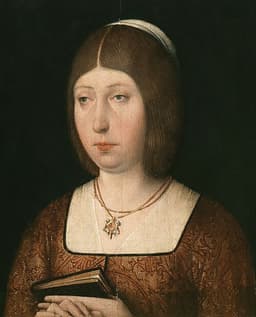
Isabella I of Castile
Emperor · Medieval
77.2Total
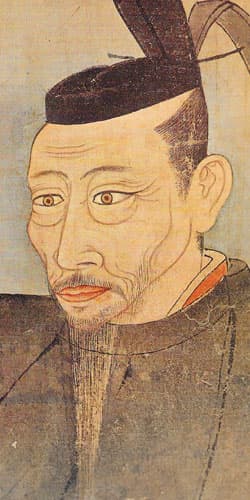
Toyotomi Hideyoshi
General · Modern
82.0Total
Basic Information
Born
1451
1537
Died
1504
1598
Era
Medieval
Modern
Nationality
Spain
Japan
Occupation
Emperor
General
Civilization
Western
Eastern
Score Comparison
Military (10%)
76.0
79.9
Political (20%)
78.0
78.0
Influence (20%)
80.0
88.0
Legacy (20%)
75.0
80.0
Leadership (15%)
78.0
82.0
Strategy (15%)
75.0
80.4
TOTAL
77.2
82.0
Isabella I of Castile — Complete Timeline
1469 AD
Marriage to Ferdinand of AragonPolitical Action
Isabella married Ferdinand II of Aragon in Valladolid, uniting the kingdoms of Castile and Aragon. This dynastic union laid the foundation for the unified Spanish monarchy and enabled joint policies including the Reconquista and overseas exploration.
Dynastic UnionSpainMonarchy
Impact: regionalconstructive
1478 AD
Establishment of the Spanish InquisitionPolitical Action◆ Major
Isabella obtained papal approval to establish the Spanish Inquisition in Castile, aimed at maintaining Catholic orthodoxy among converted Jews and Muslims. The Inquisition operated under royal control, conducting trials and executions for heresy.
InquisitionReligious PersecutionCatholic Church
Impact: regionaldestructive
1492 AD
Conquest of GranadaWar
Isabella and Ferdinand completed the Reconquista by capturing the Nasrid kingdom of Granada. The surrender of the last Muslim state in Iberia ended 781 years of Islamic rule and unified Spain under Christian rule.
ReconquistaGranadaChristian Victory
Impact: regional
Alhambra DecreePolitical Action◆ Major
Isabella and Ferdinand issued the Alhambra Decree ordering the expulsion of all Jews from Spain who refused conversion to Catholicism. An estimated 40,000 to 200,000 Jews were forced to leave, causing demographic and economic disruption.
ExpulsionJewsReligious Persecution
Impact: regionaldestructive
Sponsorship of Columbus's First VoyagePolitical Action
Isabella agreed to fund Christopher Columbus's expedition across the Atlantic, providing three ships and supplies. Columbus reached the Bahamas on October 12, initiating sustained European contact with the Americas and the Spanish colonial empire.
ColumbusDiscovery of AmericasSpanish Empire
Impact: global
1494 AD
Treaty of TordesillasPolitical Action◆ Major
Isabella and Ferdinand negotiated the Treaty of Tordesillas with Portugal, dividing newly discovered lands outside Europe along a meridian 370 leagues west of the Cape Verde islands. This agreement shaped colonial claims in the Americas and Africa.
Colonial DivisionSpainPortugal
Impact: global
Toyotomi Hideyoshi — Complete Timeline
1583 AD
Battle of ShizugatakeWar◆ Major
Hideyoshi defeated his rival Shibata Katsuie at the Battle of Shizugatake, solidifying his control over central Japan. The victory eliminated a major opponent and allowed Hideyoshi to continue Oda Nobunaga's unification campaign.
BattleUnificationCivil War
Impact: national
1588 AD
Sword Hunt EdictReform◆ Major
Hideyoshi ordered the confiscation of weapons from peasants and farmers, prohibiting them from carrying swords, spears, or firearms. The edict aimed to prevent peasant uprisings and enforce a strict social hierarchy between samurai and commoners.
Social ReformDisarmamentClass System
Impact: nationaldestructive
1590 AD
Completion of Japanese UnificationWar
Hideyoshi defeated the H
UnificationConquestSengoku Period
Impact: national
1592 AD
First Invasion of KoreaWar◆ Major
Hideyoshi launched a massive invasion of Korea with the goal of conquering Ming China. Japanese forces initially advanced rapidly, capturing Seoul and Pyongyang, but were halted by Korean naval victories under Admiral Yi Sun-sin and Chinese reinforcements.
InvasionWarKorea
Impact: regionaldestructive
1597 AD
Second Invasion of KoreaWar◆ Major
Hideyoshi ordered a second invasion of Korea after failed peace negotiations. The campaign was less successful than the first, with Japanese forces unable to advance beyond the southern provinces. The invasion ended with Hideyoshi's death in 1598.
InvasionWarKorea
Impact: regionaldestructive
Expert Analysis
Origins
Toyotomi Hideyoshi (1537–1598) was born a peasant in Nakamura, Owari Province, and rose from obscurity to become Japan's supreme unifier. His humble beginnings shaped his pragmatic and ambitious nature. In contrast, Isabella I of Castile (1451–1504) was born into royalty, daughter of King John II of Castile. Her early life was marked by political turmoil and a contested succession, which forged her determination and strategic acumen. Both figures emerged from chaotic periods—Japan's Sengoku era and Spain's fractious kingdoms—but their origins defined their paths: Hideyoshi the self-made warrior, Isabella the legitimate queen.
Rise to Power
Hideyoshi climbed the ranks under Oda Nobunaga, proving himself at the Battle of Shizugatake (1583) and succeeding Nobunaga after his death. Through cunning alliances and military campaigns, he defeated rivals like Shibata Katsuie and the Tokugawa clan, ultimately unifying Japan by 1590. Isabella's rise involved a civil war against her niece Joanna la Beltraneja, securing her crown in 1479 via the Treaty of Alcáçovas. Her marriage to Ferdinand of Aragon in 1469 laid the foundation for a unified Spain, combining their kingdoms through equal partnership.
Leadership & Governance
Hideyoshi centralized Japan through the Sword Hunt Edict (1588), disarming peasants to prevent rebellion, and implemented land surveys and tax reforms. He also restricted social mobility, freezing the caste system. Isabella, with Ferdinand, reorganized the Spanish monarchy, centralizing power, reforming the church, and financing Christopher Columbus's 1492 voyage, which launched Spanish colonization. She also established the Spanish Inquisition (1478) to enforce Catholic orthodoxy. Both leaders used strong centralized control, but Hideyoshi's governance was more militaristic, while Isabella's was bureaucratic and religious.
Triumph & Tragedy
Hideyoshi's greatest triumph was completing Japan's unification after centuries of war. However, his tragic flaw was hubris: his invasions of Korea (1592–1598) ended in failure, draining resources and causing immense suffering. Isabella's triumph was the conquest of Granada (1492), ending Muslim rule in Spain. The Alhambra Decree (1492) expelled Jews, a tragic act of religious intolerance that weakened Spain's economy. While Hideyoshi's tragedy was external overreach, Isabella's was internal persecution.
Character & Destiny
Hideyoshi was charismatic, cunning, and ruthless, but also known for his cultural patronage and tea ceremonies. His peasant background gave him empathy for commoners, yet he was merciless to enemies. Isabella was devout, iron-willed, and strategic, viewing her rule as a divine mission. Both believed in their destinies: Hideyoshi as the supreme unifier, Isabella as the defender of Catholicism. Their characters led to contrasting legacies—Hideyoshi's ambition undid him, while Isabella's piety shaped Spain's golden age.
Legacy
Hideyoshi's unification paved the way for the Tokugawa shogunate, but his Korean invasions sowed seeds of conflict and left a mixed legacy in East Asia. Isabella's sponsorship of Columbus led to the Spanish Empire, but the Inquisition and expulsion of Jews tarnished her reign. Both are remembered as nation-builders, but Hideyoshi's military focus contrasts with Isabella's religious and exploratory drive. In historical impact, Isabella's global influence arguably surpasses Hideyoshi's, yet his rise from peasant to ruler remains inspirational.
Conclusion
Toyotomi Hideyoshi and Isabella I of Castile were transformative rulers who unified their nations through different means: Hideyoshi through military conquest and social engineering, Isabella through dynastic marriage and religious consolidation. Hideyoshi scores higher overall (81.4 vs 76.6) due to his remarkable ascent and military prowess, but Isabella's legacy reshaped world history through exploration and empire. While Hideyoshi's Korean campaigns were a strategic failure, Isabella's Inquisition was a moral failure. Ultimately, both were products of their times, but Hideyoshi's personal journey from peasant to unifier gives him a slight edge in historical fascination.
Rankings
🥇
Toyotomi HideyoshiLeader
Mil: 79.9Pol: 78.0Inf: 88.0
82.0
🥈
Isabella I of Castile
Mil: 76.0Pol: 78.0Inf: 80.0
77.2
+4.8 behind
How This Comparison Works
Algorithm
Each figure is scored on 6 dimensions (0—100 scale) based on structured historical data: Military (10%), Political (20%), Influence (20%), Legacy (20%), Leadership (15%), Strategy (15%). The weighted total produces the final ranking.
Data Sources
Scores are computed from structured sub-indicators in the database. Scale factors adjust for era (Ancient ×0.85, Modern ×1.0) and civilization size (Eastern ×1.05, Other ×0.80) to account for differences in population and military scale.
Maximum 3 Figures
Comparisons are limited to 2—3 figures to ensure readability and statistical meaningfulness.
Error Margins
±5 points per dimension — Sub-scores are derived from historical records with inherent uncertainty. Two figures within 5 points on a dimension should be considered roughly equivalent in that area.
Total Score Accuracy
±3 points overall — The weighted combination of 6 dimensions produces a total score with approximately ±3 points of uncertainty. Differences of less than 3 points are not statistically significant— the figures are effectively tied.
Known Limitations
- Historical records are incomplete and uneven across civilizations
- Figures from oral-tradition societies may be underrepresented
- Occupation labels can misclassify multi-role figures
- Scores measure capability and impact, not moral character
- Quantitative scoring is a comparison tool, not absolute truth
Capability Radar
Military (10%) — Battles & Warfare
Battles
75
85
Win Rate
80
88
Expansion
85
80
Political (20%) — Governance & Reform
Reform
90
95
Diplomacy
80
80
Economy
75
90
Influence (20%) — Cultural & Global Reach
Cultural
85
85
Global
95
70
Legacy (20%) — Historical Impact
Historical
95
90
Longevity
90
85
Leadership (15%) — Power & Stability
Tenure
85
85
Stability
70
75
Strategy (15%) — Tactics & Innovation
Strategy
85
92
Tactics
70
90
Reform
90
95
Similar Comparisons
Comments & Discussion
No comments yet. Be the first to share your thoughts!