Loading...
Isabella I of Castile vs Toussaint Louverture
Toussaint Louverture leads by 1.3 pts · 2 figures compared
…
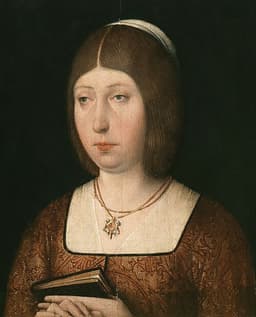
Isabella I of Castile
Emperor · Medieval
77.2Total
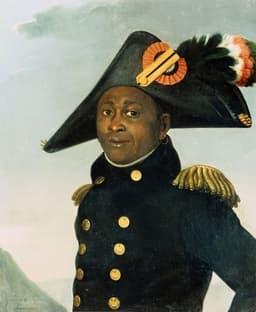
Toussaint Louverture
General · Modern
78.5Total
Basic Information
Born
1451
1743
Died
1504
1803
Era
Medieval
Modern
Nationality
Spain
Haiti
Occupation
Emperor
General
Civilization
Western
Western
Score Comparison
Military (10%)
76.0
85.0
Political (20%)
78.0
70.3
Influence (20%)
80.0
84.0
Legacy (20%)
75.0
82.0
Leadership (15%)
78.0
72.0
Strategy (15%)
75.0
72.0
TOTAL
77.2
78.5
Isabella I of Castile — Complete Timeline
1469 AD
Marriage to Ferdinand of AragonPolitical Action
Isabella married Ferdinand II of Aragon in Valladolid, uniting the kingdoms of Castile and Aragon. This dynastic union laid the foundation for the unified Spanish monarchy and enabled joint policies including the Reconquista and overseas exploration.
Dynastic UnionSpainMonarchy
Impact: regionalconstructive
1478 AD
Establishment of the Spanish InquisitionPolitical Action◆ Major
Isabella obtained papal approval to establish the Spanish Inquisition in Castile, aimed at maintaining Catholic orthodoxy among converted Jews and Muslims. The Inquisition operated under royal control, conducting trials and executions for heresy.
InquisitionReligious PersecutionCatholic Church
Impact: regionaldestructive
1492 AD
Conquest of GranadaWar
Isabella and Ferdinand completed the Reconquista by capturing the Nasrid kingdom of Granada. The surrender of the last Muslim state in Iberia ended 781 years of Islamic rule and unified Spain under Christian rule.
ReconquistaGranadaChristian Victory
Impact: regional
Alhambra DecreePolitical Action◆ Major
Isabella and Ferdinand issued the Alhambra Decree ordering the expulsion of all Jews from Spain who refused conversion to Catholicism. An estimated 40,000 to 200,000 Jews were forced to leave, causing demographic and economic disruption.
ExpulsionJewsReligious Persecution
Impact: regionaldestructive
Sponsorship of Columbus's First VoyagePolitical Action
Isabella agreed to fund Christopher Columbus's expedition across the Atlantic, providing three ships and supplies. Columbus reached the Bahamas on October 12, initiating sustained European contact with the Americas and the Spanish colonial empire.
ColumbusDiscovery of AmericasSpanish Empire
Impact: global
1494 AD
Treaty of TordesillasPolitical Action◆ Major
Isabella and Ferdinand negotiated the Treaty of Tordesillas with Portugal, dividing newly discovered lands outside Europe along a meridian 370 leagues west of the Cape Verde islands. This agreement shaped colonial claims in the Americas and Africa.
Colonial DivisionSpainPortugal
Impact: global
Toussaint Louverture — Complete Timeline
1791 AD
Haitian Revolution LeadershipWar
Louverture joined the slave revolt in Saint-Domingue, quickly rising to leadership. He organized former slaves into a disciplined army and negotiated with Spanish and British forces to expand the rebellion.
Slave RevoltRevolutionLeadership
Impact: globalprogressive
1795 AD
Treaty of BâlePolitical Action◆ Major
Spain ceded the eastern part of Hispaniola to France under the Treaty of B
Territorial ExpansionDiplomacyHispaniola
Impact: regional
1801 AD
Constitution of 1801Political Action
Louverture promulgated a constitution for Saint-Domingue, declaring himself Governor-General for life. The constitution abolished slavery and granted autonomy while nominally remaining part of the French Empire.
ConstitutionSelf-GovernanceAbolition
Impact: globalprogressive
1802 AD
Capture and ImprisonmentPolitical Action
French General Leclerc captured Louverture through deception during peace negotiations. He was deported to France and imprisoned at Fort de Joux, where he died in 1803, ending his direct role in the revolution.
BetrayalImprisonmentFrench Repression
Impact: globaltragic
Expert Analysis
Origins
Toussaint Louverture was born into slavery on a plantation in Saint-Domingue (modern Haiti) around 1743. He gained freedom in his 30s and became a wealthy planter, but his life took a radical turn with the outbreak of the Haitian Revolution in 1791. Isabella I was born in 1451 as the daughter of King John II of Castile. She seized power through political maneuvering, marrying Ferdinand of Aragon in 1469 to unite Spain. Their origins reflect starkly different worlds: Louverture rose from the depths of oppression, while Isabella was born into royalty.
Rise to Power
Louverture's rise was meteoric. Initially a coachman and overseer, he became a key military leader in the slave revolt, displaying exceptional strategic acumen. He allied with the Spanish against the French, then switched sides to the French when they abolished slavery. By 1797, he was the de facto ruler of Saint-Domingue, outmaneuvering rivals and foreign powers. Isabella's rise was more conventional but no less dramatic. She inherited a fractured Castile, faced a war of succession against her niece Joanna, and ultimately triumphed, securing her throne in 1479. Her marriage to Ferdinand created the basis for a unified Spain.
Leadership & Governance
Louverture governed Saint-Domingue with a mix of military discipline and political pragmatism. He restored the plantation economy using paid labor, drafted a constitution that abolished slavery and made himself governor-for-life, and sought to maintain autonomy while nominally under French rule. His governance was authoritarian but aimed at stability and racial equality. Isabella, alongside Ferdinand, centralized power, subdued the nobility, and imposed religious uniformity through the Spanish Inquisition and the Alhambra Decree expelling Jews. She sponsored Columbus's voyages, initiating Spanish colonization of the Americas. Her governance was effective but ruthless, prioritizing Christian unity and imperial expansion.
Triumph & Tragedy
Louverture's greatest triumph was leading the only successful slave revolt in history, forcing France and Britain to recognize Haitian independence. His tragedy came when Napoleon Bonaparte, aiming to restore slavery, tricked him into peace talks and captured him. He died in a French prison in 1803, never seeing the independent Haiti he helped create. Isabella's triumph was the conquest of Granada in 1492, ending centuries of Muslim rule in Spain, and the sponsorship of Columbus, which brought immense wealth. Her tragedy was personal: the deaths of her children and the madness of her daughter Joanna, which cast a shadow over her legacy.
Character & Destiny
Louverture was a brilliant strategist, charismatic, and cunning, described as "the Black Napoleon." He believed in freedom and equality but was also power-hungry and autocratic. His destiny was to break the chains of slavery, but his capture prevented him from leading the final stage of the revolution. Isabella was devout, determined, and politically astute, but also fanatical in her Catholicism. Her destiny was to forge a unified Spain and launch its golden age, but at the cost of religious persecution and colonial exploitation.
Legacy
Louverture's legacy is profound: he inspired anti-colonial movements worldwide and remains a symbol of black liberation. Haiti's independence, however, was followed by decades of instability and isolation. Isabella's legacy is mixed: she is revered for unifying Spain and enabling exploration, but condemned for the Inquisition and the oppression of Jews and Muslims. Her sponsorship of Columbus led to the colonization of the Americas and the transatlantic slave trade. In historical rankings, Louverture scores higher overall (78 vs 77), reflecting his transformative impact against greater odds.
Conclusion
Toussaint Louverture and Isabella I of Castile were both transformative leaders, but their contexts and methods differ sharply. Louverture's fight for freedom from slavery represents a universal human struggle, while Isabella's unification and expansion of Spain laid foundations for modern Europe but also for colonialism. Based on my analysis, Louverture has the edge in moral impact and overcoming adversity, though Isabella's geopolitical achievements are immense. The score gap of 1.3 points (78 vs 77) is narrow, but Louverture's legacy as a liberator gives him the victory in this comparison.
**Scores:** Toussaint Louverture: M=85, P=70, I=84, L=82, D=72, S=72, T=78 | Isabella I: M=76, P=78, I=80, L=75, D=78, S=75, T=77
Rankings
🥇
Toussaint LouvertureLeader
Mil: 85.0Pol: 70.3Inf: 84.0
78.5
🥈
Isabella I of Castile
Mil: 76.0Pol: 78.0Inf: 80.0
77.2
+1.3 behind
How This Comparison Works
Algorithm
Each figure is scored on 6 dimensions (0—100 scale) based on structured historical data: Military (10%), Political (20%), Influence (20%), Legacy (20%), Leadership (15%), Strategy (15%). The weighted total produces the final ranking.
Data Sources
Scores are computed from structured sub-indicators in the database. Scale factors adjust for era (Ancient ×0.85, Modern ×1.0) and civilization size (Eastern ×1.05, Other ×0.80) to account for differences in population and military scale.
Maximum 3 Figures
Comparisons are limited to 2—3 figures to ensure readability and statistical meaningfulness.
Error Margins
±5 points per dimension — Sub-scores are derived from historical records with inherent uncertainty. Two figures within 5 points on a dimension should be considered roughly equivalent in that area.
Total Score Accuracy
±3 points overall — The weighted combination of 6 dimensions produces a total score with approximately ±3 points of uncertainty. Differences of less than 3 points are not statistically significant— the figures are effectively tied.
Known Limitations
- Historical records are incomplete and uneven across civilizations
- Figures from oral-tradition societies may be underrepresented
- Occupation labels can misclassify multi-role figures
- Scores measure capability and impact, not moral character
- Quantitative scoring is a comparison tool, not absolute truth
Capability Radar
Military (10%) — Battles & Warfare
Battles
75
85
Win Rate
80
80
Expansion
85
70
Political (20%) — Governance & Reform
Reform
90
85
Diplomacy
80
80
Economy
75
60
Influence (20%) — Cultural & Global Reach
Cultural
85
85
Global
95
85
Legacy (20%) — Historical Impact
Historical
95
95
Longevity
90
90
Leadership (15%) — Power & Stability
Tenure
85
65
Stability
70
55
Strategy (15%) — Tactics & Innovation
Strategy
85
85
Tactics
70
90
Reform
90
75
Similar Comparisons
Comments & Discussion
No comments yet. Be the first to share your thoughts!