Loading...
Isabella I of Castile vs Tokugawa Ieyasu
Tokugawa Ieyasu leads by 4.6 pts · 2 figures compared
…
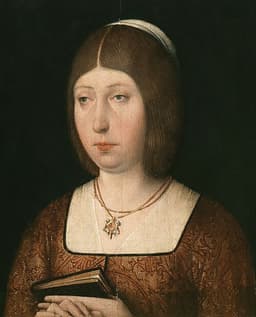
Isabella I of Castile
Emperor · Medieval
77.2Total
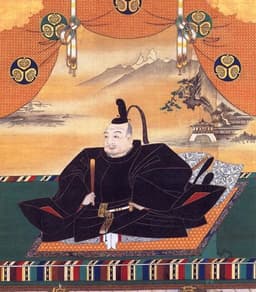
Tokugawa Ieyasu
General · Modern
81.8Total
Basic Information
Born
1451
1543
Died
1504
1616
Era
Medieval
Modern
Nationality
Spain
Japan
Occupation
Emperor
General
Civilization
Western
Eastern
Score Comparison
Military (10%)
76.0
78.0
Political (20%)
78.0
82.0
Influence (20%)
80.0
88.0
Legacy (20%)
75.0
75.0
Leadership (15%)
78.0
85.0
Strategy (15%)
75.0
82.0
TOTAL
77.2
81.8
Isabella I of Castile — Complete Timeline
1469 AD
Marriage to Ferdinand of AragonPolitical Action
Isabella married Ferdinand II of Aragon in Valladolid, uniting the kingdoms of Castile and Aragon. This dynastic union laid the foundation for the unified Spanish monarchy and enabled joint policies including the Reconquista and overseas exploration.
Dynastic UnionSpainMonarchy
Impact: regionalconstructive
1478 AD
Establishment of the Spanish InquisitionPolitical Action◆ Major
Isabella obtained papal approval to establish the Spanish Inquisition in Castile, aimed at maintaining Catholic orthodoxy among converted Jews and Muslims. The Inquisition operated under royal control, conducting trials and executions for heresy.
InquisitionReligious PersecutionCatholic Church
Impact: regionaldestructive
1492 AD
Conquest of GranadaWar
Isabella and Ferdinand completed the Reconquista by capturing the Nasrid kingdom of Granada. The surrender of the last Muslim state in Iberia ended 781 years of Islamic rule and unified Spain under Christian rule.
ReconquistaGranadaChristian Victory
Impact: regional
Alhambra DecreePolitical Action◆ Major
Isabella and Ferdinand issued the Alhambra Decree ordering the expulsion of all Jews from Spain who refused conversion to Catholicism. An estimated 40,000 to 200,000 Jews were forced to leave, causing demographic and economic disruption.
ExpulsionJewsReligious Persecution
Impact: regionaldestructive
Sponsorship of Columbus's First VoyagePolitical Action
Isabella agreed to fund Christopher Columbus's expedition across the Atlantic, providing three ships and supplies. Columbus reached the Bahamas on October 12, initiating sustained European contact with the Americas and the Spanish colonial empire.
ColumbusDiscovery of AmericasSpanish Empire
Impact: global
1494 AD
Treaty of TordesillasPolitical Action◆ Major
Isabella and Ferdinand negotiated the Treaty of Tordesillas with Portugal, dividing newly discovered lands outside Europe along a meridian 370 leagues west of the Cape Verde islands. This agreement shaped colonial claims in the Americas and Africa.
Colonial DivisionSpainPortugal
Impact: global
Tokugawa Ieyasu — Complete Timeline
1600 AD
Battle of SekigaharaWar
Tokugawa Ieyasu led the Eastern Army to victory over Ishida Mitsunari's Western Army at Sekigahara. This decisive battle ended the Sengoku period and established Ieyasu as the supreme military ruler of Japan, paving the way for the Tokugawa shogunate.
Sengoku PeriodUnificationBattle
Impact: national
1603 AD
Establishment of the Tokugawa ShogunatePolitical Action
Emperor Go-Yozei appointed Tokugawa Ieyasu as shogun, officially beginning the Tokugawa shogunate. Ieyasu established his government in Edo (modern Tokyo), centralizing military and political power under his family's control.
ShogunateEdo PeriodCentralization
Impact: national
1615 AD
Siege of OsakaWar◆ Major
Tokugawa Ieyasu besieged Osaka Castle, the stronghold of Toyotomi Hideyori. The castle fell, and Hideyori committed suicide. This campaign eliminated the last major opposition to Tokugawa rule, solidifying the shogunate's control over Japan.
Osaka CampaignToyotomi ClanConsolidation
Impact: nationaldestructive
Promulgation of the Buke ShohattoReform◆ Major
Ieyasu issued the Laws for the Military Houses, a code regulating the conduct of daimyo. It restricted castle construction, required alternate attendance in Edo, and prohibited alliances without shogunal permission. This law helped control the feudal lords.
Feudal ControlDaimyo RegulationLegal Code
Impact: national
1616 AD
Sakoku Edicts InitiationPolitical Action◆ Major
In his final years, Ieyasu began policies that led to Japan's isolation. He restricted foreign trade to specific ports and expelled Christian missionaries. These measures, expanded by successors, resulted in the sakoku policy that isolated Japan for over 200 years.
IsolationismForeign PolicyChristianity
Impact: national
Expert Analysis
Origins
Tokugawa Ieyasu (1543–1616) was born into the Matsudaira clan of Mikawa Province, a minor daimyo family during Japan's chaotic Sengoku period. His early life was marked by hostage situations—first with the Oda clan, then the Imagawa—instilling a deep sense of pragmatism and patience. In contrast, Isabella I of Castile (1451–1504) was born into the Trastámara dynasty, inheriting a fractured kingdom rife with noble rebellions and religious tensions. Her early years were spent navigating court intrigues and securing her claim against her niece Juana. Both figures emerged from periods of fragmentation, but Ieyasu's path was forged in constant warfare, while Isabella's was shaped by dynastic politics and faith.
Rise to Power
Ieyasu's rise was gradual and strategic. He allied with Oda Nobunaga and Toyotomi Hideyoshi, surviving their purges and consolidating power through land acquisitions and military campaigns. His defining moment came at the Battle of Sekigahara (1600), where he defeated Ishida Mitsunari's coalition, effectively gaining control of Japan. Isabella's rise was more direct: she defied her brother Henry IV and married Ferdinand of Aragon in 1469, uniting two major kingdoms. Her military campaign against the Emirate of Granada culminated in 1492, ending centuries of Muslim rule. Both used marriage alliances—Ieyasu through his children's political matches—but Isabella's union was foundational to her success.
Leadership & Governance
Ieyasu's governance was centralized and authoritarian. He established the Tokugawa shogunate, moving the capital to Edo (Tokyo) and implementing the Bakuhan system to control daimyo. Key policies include the Buke Shohatto (laws for warrior households) and the Sakoku edicts that isolated Japan. His leadership score (L=75) reflects his effective but rigid control. Isabella, alongside Ferdinand, imposed royal authority over the nobility and church. She sponsored Columbus's voyages, expanding Spanish influence, but also established the Inquisition (score L=75). Both were meticulous administrators, but Ieyasu's long-term stability (250 years of peace) outshines Isabella's shorter reign.
Triumph & Tragedy
Ieyasu's triumph was Sekigahara and the Siege of Osaka (1615), which eliminated the Toyotomi clan. His tragedy? The Sakoku edicts stifled innovation and led to eventual decline. Isabella's greatest triumph was the conquest of Granada and Columbus's discovery of the Americas, which launched Spain's empire. Her tragedy is the Alhambra Decree (1492), expelling Jews, and the Inquisition's brutality. Both made decisions with lasting negative consequences, but Ieyasu's actions preserved Japanese culture while Isabella's fueled the Spanish Inquisition.
Character & Destiny
Ieyasu was patient, cunning, and superstitious (he revered the fox deity Inari). His destiny was to unify Japan after centuries of war, a role he accepted with stoic determination. Isabella was devout, iron-willed, and ambitious, driven by a vision of Catholic Spain. Her destiny was to forge a global empire, but at a cost to religious minorities. Both were pragmatic, but Ieyasu's flexibility (e.g., tolerating Christians initially) contrasts with Isabella's rigid orthodoxy. Their characters aligned with their epochs: Ieyasu the master of adaptation; Isabella the crusader queen.
Legacy
Ieyasu's legacy is the Edo period, a 250-year era of peace, cultural flourishing (kabuki, ukiyo-e), and isolation. His shogunate shaped modern Japan's identity. Isabella's legacy is the Spanish Empire, the Columbian Exchange, and the spread of Catholicism. Yet her policies also sowed seeds of intolerance. Numerically, Ieyasu scores higher overall (82 vs 77), with advantages in power (82 vs 78), influence (88 vs 80), and strategy (82 vs 75). Isabella matches in leadership (75) and diplomacy (75), but her governance was less stable long-term.
Conclusion
Tokugawa Ieyasu and Isabella I were both unifiers, but their methods and outcomes differed. Ieyasu's focus on stability and isolation created a sustainable peace, while Isabella's expansionist, religiously-driven policies built a short-lived empire. Given the score gap (4.6) and the enduring impact of the Tokugawa system on Japan's development, Ieyasu emerges as the more effective leader. Isabella's achievements, while monumental, were marred by persecution and imperial overreach. In the balance of history, Ieyasu's pragmatic consolidation outweighs Isabella's glorious but costly conquests.
Rankings
🥇
Tokugawa IeyasuLeader
Mil: 78.0Pol: 82.0Inf: 88.0
81.8
🥈
Isabella I of Castile
Mil: 76.0Pol: 78.0Inf: 80.0
77.2
+4.6 behind
How This Comparison Works
Algorithm
Each figure is scored on 6 dimensions (0—100 scale) based on structured historical data: Military (10%), Political (20%), Influence (20%), Legacy (20%), Leadership (15%), Strategy (15%). The weighted total produces the final ranking.
Data Sources
Scores are computed from structured sub-indicators in the database. Scale factors adjust for era (Ancient ×0.85, Modern ×1.0) and civilization size (Eastern ×1.05, Other ×0.80) to account for differences in population and military scale.
Maximum 3 Figures
Comparisons are limited to 2—3 figures to ensure readability and statistical meaningfulness.
Error Margins
±5 points per dimension — Sub-scores are derived from historical records with inherent uncertainty. Two figures within 5 points on a dimension should be considered roughly equivalent in that area.
Total Score Accuracy
±3 points overall — The weighted combination of 6 dimensions produces a total score with approximately ±3 points of uncertainty. Differences of less than 3 points are not statistically significant— the figures are effectively tied.
Known Limitations
- Historical records are incomplete and uneven across civilizations
- Figures from oral-tradition societies may be underrepresented
- Occupation labels can misclassify multi-role figures
- Scores measure capability and impact, not moral character
- Quantitative scoring is a comparison tool, not absolute truth
Capability Radar
Military (10%) — Battles & Warfare
Battles
75
85
Win Rate
80
90
Expansion
85
75
Political (20%) — Governance & Reform
Reform
90
90
Diplomacy
80
85
Economy
75
88
Influence (20%) — Cultural & Global Reach
Cultural
85
85
Global
95
70
Legacy (20%) — Historical Impact
Historical
95
90
Longevity
90
95
Leadership (15%) — Power & Stability
Tenure
85
95
Stability
70
95
Strategy (15%) — Tactics & Innovation
Strategy
85
92
Tactics
70
88
Reform
90
80
Similar Comparisons
Comments & Discussion
No comments yet. Be the first to share your thoughts!