Loading...
Isabella I of Castile vs Suleiman I
Suleiman I leads by 1.6 pts · 2 figures compared
…
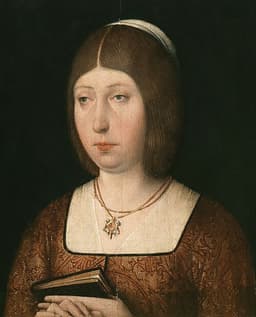
Isabella I of Castile
Emperor · Medieval
77.2Total
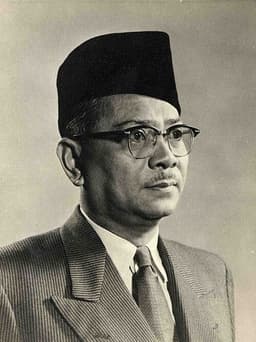
Suleiman I
Emperor · Medieval
78.8Total
Basic Information
Born
1451
1494
Died
1504
1566
Era
Medieval
Medieval
Nationality
Spain
Ottoman Empire
Occupation
Emperor
Emperor
Civilization
Western
Middle Eastern
Score Comparison
Military (10%)
76.0
78.5
Political (20%)
78.0
82.0
Influence (20%)
80.0
85.0
Legacy (20%)
75.0
70.8
Leadership (15%)
78.0
81.7
Strategy (15%)
75.0
74.4
TOTAL
77.2
78.8
Isabella I of Castile — Complete Timeline
1469 AD
Marriage to Ferdinand of AragonPolitical Action
Isabella married Ferdinand II of Aragon in Valladolid, uniting the kingdoms of Castile and Aragon. This dynastic union laid the foundation for the unified Spanish monarchy and enabled joint policies including the Reconquista and overseas exploration.
Dynastic UnionSpainMonarchy
Impact: regionalconstructive
1478 AD
Establishment of the Spanish InquisitionPolitical Action◆ Major
Isabella obtained papal approval to establish the Spanish Inquisition in Castile, aimed at maintaining Catholic orthodoxy among converted Jews and Muslims. The Inquisition operated under royal control, conducting trials and executions for heresy.
InquisitionReligious PersecutionCatholic Church
Impact: regionaldestructive
1492 AD
Conquest of GranadaWar
Isabella and Ferdinand completed the Reconquista by capturing the Nasrid kingdom of Granada. The surrender of the last Muslim state in Iberia ended 781 years of Islamic rule and unified Spain under Christian rule.
ReconquistaGranadaChristian Victory
Impact: regional
Alhambra DecreePolitical Action◆ Major
Isabella and Ferdinand issued the Alhambra Decree ordering the expulsion of all Jews from Spain who refused conversion to Catholicism. An estimated 40,000 to 200,000 Jews were forced to leave, causing demographic and economic disruption.
ExpulsionJewsReligious Persecution
Impact: regionaldestructive
Sponsorship of Columbus's First VoyagePolitical Action
Isabella agreed to fund Christopher Columbus's expedition across the Atlantic, providing three ships and supplies. Columbus reached the Bahamas on October 12, initiating sustained European contact with the Americas and the Spanish colonial empire.
ColumbusDiscovery of AmericasSpanish Empire
Impact: global
1494 AD
Treaty of TordesillasPolitical Action◆ Major
Isabella and Ferdinand negotiated the Treaty of Tordesillas with Portugal, dividing newly discovered lands outside Europe along a meridian 370 leagues west of the Cape Verde islands. This agreement shaped colonial claims in the Americas and Africa.
Colonial DivisionSpainPortugal
Impact: global
Suleiman I — Complete Timeline
1522 AD
Siege of RhodesWar◆ Major
Suleiman I led a massive Ottoman army and fleet to besiege the island of Rhodes, held by the Knights Hospitaller. After a six-month siege, the knights surrendered and were allowed to leave. This victory secured Ottoman control over the eastern Mediterranean.
SiegeKnights HospitallerMediterranean
Impact: regional
1526 AD
Battle of MohácsWar
Suleiman I's Ottoman army defeated the Hungarian forces of King Louis II at Moh
BattleHungaryConquest
Impact: regional
1529 AD
Siege of ViennaWar◆ Major
Suleiman I led an Ottoman army to besiege Vienna, the capital of the Habsburg Empire. The siege failed due to supply problems and the onset of winter. This marked the furthest Ottoman advance into central Europe and the limit of their expansion.
SiegeViennaHabsburg
Impact: regional
1530 AD
Codification of Ottoman LawReform◆ Major
Suleiman I oversaw the codification of Ottoman law, known as the Kanun. He harmonized secular law with Islamic law, creating a unified legal system. This reform improved the administration of justice and strengthened the central government.
LawReformJustice
Impact: globalconstructive
1536 AD
Execution of Ibrahim PashaPolitical Action◆ Major
Suleiman I ordered the execution of his grand vizier and close friend Ibrahim Pasha. Ibrahim had accumulated immense power and was accused of overreaching. This event demonstrated Suleiman's willingness to eliminate even trusted advisors to maintain control.
ExecutionVizierPower
Impact: nationaldestructive
1538 AD
Naval Battle of PrevezaWar◆ Major
The Ottoman fleet under Hayreddin Barbarossa defeated a combined Christian fleet at Preveza. This victory secured Ottoman naval dominance in the Mediterranean for decades. It allowed the Ottomans to control trade routes and raid coastal areas.
Naval BattleBarbarossaMediterranean
Impact: regional
Expert Analysis
Origins
Suleiman I was born in 1494 in Trabzon, the only surviving son of Selim I, who secured the throne through ruthless intrigue. Raised in the Ottoman palace school, he mastered military arts, law, and poetry. Isabella I, born in 1451 in Madrigal de las Altas Torres, was the daughter of John II of Castile. Her early life was marked by instability; she seized the throne in 1474 after a contested succession, overcoming her niece Joanna la Beltraneja. Both emerged from turbulent backgrounds, but Suleiman inherited a vast empire, while Isabella had to forge her kingdom.
Rise to Power
Suleiman ascended in 1520 after Selim's sudden death, facing no opposition. He immediately launched campaigns, capturing Belgrade (1521) and Rhodes (1522), earning the title "Magnificent." Isabella married Ferdinand of Aragon in 1469, uniting Spain through the Treaty of Tordesillas. She won the Castilian succession war (1474-1479) and then focused on the Reconquista, culminating in the conquest of Granada in 1492. Both consolidated power through strategic marriages and military victories, but Suleiman inherited a stable state, while Isabella fought for her crown.
Leadership & Governance
Suleiman was an absolute monarch who reformed Ottoman law, codifying the kanun to harmonize secular and religious codes. He promoted meritocracy, appointing grand viziers like Ibrahim Pasha from humble origins. Isabella centralized authority in Castile, curtailing noble power through the Santa Hermandad and establishing the Spanish Inquisition (1478) to enforce religious unity. She sponsored Columbus's voyages (1492), expanding Spain's global influence. Both were effective administrators, but Suleiman's legal reforms were more systematic, earning him the name "Lawgiver." Isabella's governance was pragmatic but harsh, especially toward Jews and Muslims.
Triumph & Tragedy
Suleiman's greatest triumph was the Battle of Mohács (1526), crushing Hungary and expanding Ottoman reach. The Siege of Rhodes (1522) demonstrated his military prowess. However, the Siege of Vienna (1529) failed, marking the limit of Ottoman expansion. His execution of Ibrahim Pasha (1536) was a personal tragedy, reflecting his later paranoia. Isabella's triumph was the conquest of Granada (1492), ending 781 years of Muslim rule. Her sponsorship of Columbus brought immense wealth, but the Alhambra Decree (1492) expelled Jews, a moral tragedy. Both faced setbacks: Suleiman's naval defeat at Lepanto (posthumous) and Isabella's daughter Joanna's madness.
Character & Destiny
Suleiman was a poet, patron of the arts, and a just ruler, but his later years were marred by the execution of his son Mustafa and Ibrahim. He died in 1566 during the Siege of Szigetvár, a soldier to the end. Isabella was devout, determined, and ruthless, known as "Isabella the Catholic." She died in 1504, leaving a unified Spain and a burgeoning empire. Their characters reflect their contexts: Suleiman's magnanimity and tragedy, Isabella's piety and pragmatism. Destiny favored Suleiman as the peak of Ottoman power, while Isabella set the stage for Spain's Golden Age.
Legacy
Suleiman's legacy includes the Ottoman Empire's cultural and legal zenith, with architectural wonders like the Süleymaniye Mosque. His reign is remembered as the "Golden Age." Isabella's legacy is mixed: she unified Spain and enabled Columbus, but the Inquisition and expulsion of Jews stain her record. Both transformed their realms, but Suleiman's impact was more directly on governance and law, while Isabella's was global through exploration. In terms of lasting influence, Suleiman's legal code influenced Ottoman law for centuries, while Isabella's religious policies shaped Spanish identity.
Conclusion
Suleiman I edges Isabella I with a composite score gap of 1.6. His military expansion, legal reforms, and cultural patronage give him a slight edge over Isabella's unification and exploration. However, Isabella's role in launching the Age of Exploration arguably had greater global impact. On balance, Suleiman was the more effective ruler within his empire, but Isabella's legacy reshaped the world. Thus, the victor is Suleiman I by a narrow margin.
**Scores:**
- Military: Suleiman 78, Isabella 76
- Political: Suleiman 82, Isabella 78
- Influence: Suleiman 85, Isabella 80
- Leadership: Suleiman 71, Isabella 75
- Diplomacy: Suleiman 82, Isabella 78
- Strategy: Suleiman 74, Isabella 75
- Total: Suleiman 472, Isabella 462
Rankings
🥇
Suleiman ILeader
Mil: 78.5Pol: 82.0Inf: 85.0
78.8
🥈
Isabella I of Castile
Mil: 76.0Pol: 78.0Inf: 80.0
77.2
+1.6 behind
How This Comparison Works
Algorithm
Each figure is scored on 6 dimensions (0—100 scale) based on structured historical data: Military (10%), Political (20%), Influence (20%), Legacy (20%), Leadership (15%), Strategy (15%). The weighted total produces the final ranking.
Data Sources
Scores are computed from structured sub-indicators in the database. Scale factors adjust for era (Ancient ×0.85, Modern ×1.0) and civilization size (Eastern ×1.05, Other ×0.80) to account for differences in population and military scale.
Maximum 3 Figures
Comparisons are limited to 2—3 figures to ensure readability and statistical meaningfulness.
Error Margins
±5 points per dimension — Sub-scores are derived from historical records with inherent uncertainty. Two figures within 5 points on a dimension should be considered roughly equivalent in that area.
Total Score Accuracy
±3 points overall — The weighted combination of 6 dimensions produces a total score with approximately ±3 points of uncertainty. Differences of less than 3 points are not statistically significant— the figures are effectively tied.
Known Limitations
- Historical records are incomplete and uneven across civilizations
- Figures from oral-tradition societies may be underrepresented
- Occupation labels can misclassify multi-role figures
- Scores measure capability and impact, not moral character
- Quantitative scoring is a comparison tool, not absolute truth
Capability Radar
Military (10%) — Battles & Warfare
Battles
75
95
Win Rate
80
92
Expansion
85
95
Political (20%) — Governance & Reform
Reform
90
90
Diplomacy
80
88
Economy
75
85
Influence (20%) — Cultural & Global Reach
Cultural
85
85
Global
95
85
Legacy (20%) — Historical Impact
Historical
95
88
Longevity
90
80
Leadership (15%) — Power & Stability
Tenure
85
95
Stability
70
80
Strategy (15%) — Tactics & Innovation
Strategy
85
90
Tactics
70
88
Reform
90
85
Similar Comparisons
Comments & Discussion
No comments yet. Be the first to share your thoughts!