Loading...
Isabella I of Castile vs Rajendra Chola I
Rajendra Chola I leads by 5.0 pts · 2 figures compared
…
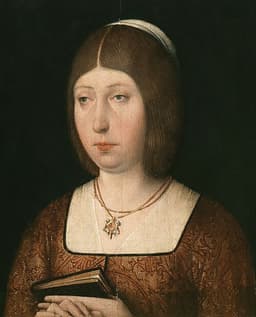
Isabella I of Castile
Emperor · Medieval
77.2Total
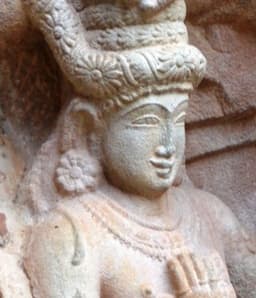
Rajendra Chola I
Emperor · Medieval
82.2Total
Basic Information
Born
1451
971
Died
1504
1044
Era
Medieval
Medieval
Nationality
Spain
India
Occupation
Emperor
Emperor
Civilization
Western
Indian
Score Comparison
Military (10%)
76.0
84.7
Political (20%)
78.0
82.0
Influence (20%)
80.0
84.0
Legacy (20%)
75.0
84.0
Leadership (15%)
78.0
78.0
Strategy (15%)
75.0
77.6
TOTAL
77.2
82.2
Isabella I of Castile — Complete Timeline
1469 AD
Marriage to Ferdinand of AragonPolitical Action
Isabella married Ferdinand II of Aragon in Valladolid, uniting the kingdoms of Castile and Aragon. This dynastic union laid the foundation for the unified Spanish monarchy and enabled joint policies including the Reconquista and overseas exploration.
Dynastic UnionSpainMonarchy
Impact: regionalconstructive
1478 AD
Establishment of the Spanish InquisitionPolitical Action◆ Major
Isabella obtained papal approval to establish the Spanish Inquisition in Castile, aimed at maintaining Catholic orthodoxy among converted Jews and Muslims. The Inquisition operated under royal control, conducting trials and executions for heresy.
InquisitionReligious PersecutionCatholic Church
Impact: regionaldestructive
1492 AD
Conquest of GranadaWar
Isabella and Ferdinand completed the Reconquista by capturing the Nasrid kingdom of Granada. The surrender of the last Muslim state in Iberia ended 781 years of Islamic rule and unified Spain under Christian rule.
ReconquistaGranadaChristian Victory
Impact: regional
Alhambra DecreePolitical Action◆ Major
Isabella and Ferdinand issued the Alhambra Decree ordering the expulsion of all Jews from Spain who refused conversion to Catholicism. An estimated 40,000 to 200,000 Jews were forced to leave, causing demographic and economic disruption.
ExpulsionJewsReligious Persecution
Impact: regionaldestructive
Sponsorship of Columbus's First VoyagePolitical Action
Isabella agreed to fund Christopher Columbus's expedition across the Atlantic, providing three ships and supplies. Columbus reached the Bahamas on October 12, initiating sustained European contact with the Americas and the Spanish colonial empire.
ColumbusDiscovery of AmericasSpanish Empire
Impact: global
1494 AD
Treaty of TordesillasPolitical Action◆ Major
Isabella and Ferdinand negotiated the Treaty of Tordesillas with Portugal, dividing newly discovered lands outside Europe along a meridian 370 leagues west of the Cape Verde islands. This agreement shaped colonial claims in the Americas and Africa.
Colonial DivisionSpainPortugal
Impact: global
Rajendra Chola I — Complete Timeline
1014 AD
Accession to the Chola ThronePolitical Action
Rajendra Chola I succeeded his father Raja Raja Chola I as emperor of the Chola Empire. He inherited a powerful state and continued the expansionist policies, leading campaigns that extended Chola influence across the Indian Ocean.
Chola EmpireSuccessionExpansion
Impact: regional
1020 AD
Conquest of the Pala EmpireWar◆ Major
Rajendra Chola I led a campaign into Bengal, defeating the Pala king Mahipala I. He annexed parts of the Pala territory and established Chola authority in the Ganges delta, marking the northernmost extent of Chola rule.
Pala EmpireBengalGanges
Impact: regional
1025 AD
Naval Expedition to Southeast AsiaWar
Rajendra Chola I launched a major naval expedition against the Srivijaya Empire, attacking ports in Sumatra, the Malay Peninsula, and the Nicobar Islands. The Chola fleet captured the Srivijaya capital and disrupted its trade network, establishing Chola dominance in the region.
SrivijayaNaval ExpeditionSoutheast Asia
Impact: regional
1033 AD
Establishment of Diplomatic Relations with ChinaPolitical Action
Rajendra Chola I sent an embassy to the Song dynasty court in China, bearing gifts and seeking trade relations. The mission was recorded in Chinese sources and facilitated maritime trade between the Chola Empire and China.
ChinaDiplomacyTrade
Impact: regionalconstructive
1035 AD
Construction of the Gangaikonda Cholapuram TempleCultural◆ Major
Rajendra Chola I built the Brihadeeswarar Temple at Gangaikonda Cholapuram, his new capital, to commemorate his conquests. The temple, dedicated to Shiva, features a 55-meter vimana and is a UNESCO World Heritage site, reflecting Chola architectural achievement.
Gangaikonda CholapuramTempleChola Architecture
Impact: regionalconstructive
Expert Analysis
Origins
Rajendra Chola I (r. 1014–1044 CE) was born into the illustrious Chola dynasty of Tamil Nadu, inheriting a powerful maritime empire from his father Rajaraja I. The Cholas had already established dominance over South India and Sri Lanka, and Rajendra was groomed for expansion. In contrast, Isabella I of Castile (r. 1474–1504) was born into a fractured Iberian Peninsula, where Christian kingdoms vied for power. Her early life was marked by political instability and a contested succession, shaping her determination to unify Spain.
Rise to Power
Rajendra ascended the Chola throne peacefully after his father's death, but immediately launched campaigns to extend his realm. His early reign focused on consolidating control over the Pandya and Chera kingdoms, and he famously marched north to defeat the Pala Empire, earning the title "Gangaikonda" (Conqueror of the Ganges). Isabella's rise was more turbulent: after her brother's death, she claimed the throne of Castile against her niece Joanna, leading to a war of succession. Her marriage to Ferdinand of Aragon in 1469 was a political masterstroke that laid the foundation for a unified Spain.
Leadership & Governance
Rajendra ruled through a highly centralized bureaucracy with efficient tax collection and local self-government. He maintained a powerful navy, which enabled his greatest achievement: a naval expedition to Southeast Asia. This expedition subdued the Srivijaya Empire and established Chola influence in the Malay Archipelago, boosting trade and cultural exchange. Isabella, alongside Ferdinand, reformed the Spanish monarchy by curbing noble power, standardizing laws, and creating a professional army. She also sponsored Columbus's voyages in 1492, leading to the European discovery of the Americas and the start of Spanish colonialism.
Triumph & Tragedy
Rajendra's triumph was the construction of the magnificent Gangaikonda Cholapuram temple, symbolizing his northern conquests. However, his later years saw challenges in maintaining the far-flung empire, and his death led to a gradual decline. Isabella's greatest triumph was the conquest of Granada in 1492, ending Muslim rule in Iberia. Yet her reign also saw tragedies: the Alhambra Decree expelled Jews, and the Spanish Inquisition enforced religious uniformity, causing immense suffering. Her sponsorship of Columbus, while globally transformative, initiated centuries of colonial exploitation.
Character & Destiny
Rajendra was a visionary military strategist and patron of arts, with a destiny tied to the sea. He expanded Tamil influence across the Indian Ocean, leaving a legacy of cultural diffusion. Isabella was a devout Catholic and shrewd politician, driven by a sense of divine mission. Her destiny was to create a unified Christian Spain and launch European overseas expansion. Both were decisive leaders, but Rajendra's focus on naval power and diplomacy contrasts with Isabella's religious zeal and centralized control.
Legacy
Rajendra's legacy endures in Southeast Asian art and architecture, and the Chola model of naval power influenced later Indian kingdoms. However, his empire fragmented after his death. Isabella's legacy is more controversial: she is celebrated for unifying Spain and enabling Columbus, but criticized for the Inquisition and expulsion of Jews. Her actions set the stage for Spain's Golden Age but also for colonial brutality. On a historical impact scale, Rajendra scores higher in military innovation (85) and cultural influence (84), while Isabella scores higher in global exploration (80) and institutional reform (78).
Conclusion
Comparing absolute scores, Rajendra Chola I leads with an overall average of 82.2 vs. Isabella's 77.2. His greater military reach, administrative efficiency, and cultural patronage give him the edge. While Isabella transformed Spain and launched global exploration, Rajendra's achievements in expanding an Indian empire to Southeast Asia were more impressive relative to his resources. Thus, Rajendra Chola I emerges as the more impactful emperor in history.
Rankings
🥇
Rajendra Chola ILeader
Mil: 84.7Pol: 82.0Inf: 84.0
82.2
🥈
Isabella I of Castile
Mil: 76.0Pol: 78.0Inf: 80.0
77.2
+5.0 behind
How This Comparison Works
Algorithm
Each figure is scored on 6 dimensions (0—100 scale) based on structured historical data: Military (10%), Political (20%), Influence (20%), Legacy (20%), Leadership (15%), Strategy (15%). The weighted total produces the final ranking.
Data Sources
Scores are computed from structured sub-indicators in the database. Scale factors adjust for era (Ancient ×0.85, Modern ×1.0) and civilization size (Eastern ×1.05, Other ×0.80) to account for differences in population and military scale.
Maximum 3 Figures
Comparisons are limited to 2—3 figures to ensure readability and statistical meaningfulness.
Error Margins
±5 points per dimension — Sub-scores are derived from historical records with inherent uncertainty. Two figures within 5 points on a dimension should be considered roughly equivalent in that area.
Total Score Accuracy
±3 points overall — The weighted combination of 6 dimensions produces a total score with approximately ±3 points of uncertainty. Differences of less than 3 points are not statistically significant— the figures are effectively tied.
Known Limitations
- Historical records are incomplete and uneven across civilizations
- Figures from oral-tradition societies may be underrepresented
- Occupation labels can misclassify multi-role figures
- Scores measure capability and impact, not moral character
- Quantitative scoring is a comparison tool, not absolute truth
Capability Radar
Military (10%) — Battles & Warfare
Battles
75
95
Win Rate
80
98
Expansion
85
95
Political (20%) — Governance & Reform
Reform
90
88
Diplomacy
80
85
Economy
75
92
Influence (20%) — Cultural & Global Reach
Cultural
85
85
Global
95
85
Legacy (20%) — Historical Impact
Historical
95
88
Longevity
90
80
Leadership (15%) — Power & Stability
Tenure
85
90
Stability
70
90
Strategy (15%) — Tactics & Innovation
Strategy
85
92
Tactics
70
90
Reform
90
85
Similar Comparisons
Comments & Discussion
No comments yet. Be the first to share your thoughts!