Loading...
Isabella I of Castile vs Mustafa Kemal Ataturk
Mustafa Kemal Ataturk leads by 2.8 pts · 2 figures compared
…
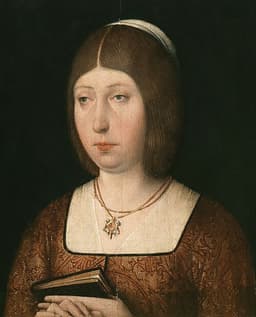
Isabella I of Castile
Emperor · Medieval
77.2Total
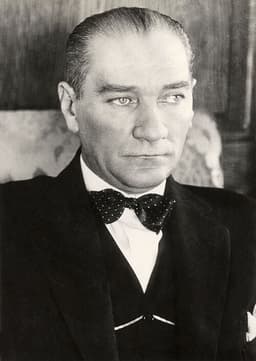
Mustafa Kemal Ataturk
Politician · Modern
80.0Total
Basic Information
Born
1451
1881
Died
1504
1938
Era
Medieval
Modern
Nationality
Spain
Turkey
Occupation
Emperor
Politician
Civilization
Western
Middle Eastern
Score Comparison
Military (10%)
76.0
75.0
Political (20%)
78.0
85.0
Influence (20%)
80.0
75.0
Legacy (20%)
75.0
90.0
Leadership (15%)
78.0
80.0
Strategy (15%)
75.0
65.0
TOTAL
77.2
80.0
Isabella I of Castile — Complete Timeline
1469 AD
Marriage to Ferdinand of AragonPolitical Action
Isabella married Ferdinand II of Aragon in Valladolid, uniting the kingdoms of Castile and Aragon. This dynastic union laid the foundation for the unified Spanish monarchy and enabled joint policies including the Reconquista and overseas exploration.
Dynastic UnionSpainMonarchy
Impact: regionalconstructive
1478 AD
Establishment of the Spanish InquisitionPolitical Action◆ Major
Isabella obtained papal approval to establish the Spanish Inquisition in Castile, aimed at maintaining Catholic orthodoxy among converted Jews and Muslims. The Inquisition operated under royal control, conducting trials and executions for heresy.
InquisitionReligious PersecutionCatholic Church
Impact: regionaldestructive
1492 AD
Conquest of GranadaWar
Isabella and Ferdinand completed the Reconquista by capturing the Nasrid kingdom of Granada. The surrender of the last Muslim state in Iberia ended 781 years of Islamic rule and unified Spain under Christian rule.
ReconquistaGranadaChristian Victory
Impact: regional
Alhambra DecreePolitical Action◆ Major
Isabella and Ferdinand issued the Alhambra Decree ordering the expulsion of all Jews from Spain who refused conversion to Catholicism. An estimated 40,000 to 200,000 Jews were forced to leave, causing demographic and economic disruption.
ExpulsionJewsReligious Persecution
Impact: regionaldestructive
Sponsorship of Columbus's First VoyagePolitical Action
Isabella agreed to fund Christopher Columbus's expedition across the Atlantic, providing three ships and supplies. Columbus reached the Bahamas on October 12, initiating sustained European contact with the Americas and the Spanish colonial empire.
ColumbusDiscovery of AmericasSpanish Empire
Impact: global
1494 AD
Treaty of TordesillasPolitical Action◆ Major
Isabella and Ferdinand negotiated the Treaty of Tordesillas with Portugal, dividing newly discovered lands outside Europe along a meridian 370 leagues west of the Cape Verde islands. This agreement shaped colonial claims in the Americas and Africa.
Colonial DivisionSpainPortugal
Impact: global
Mustafa Kemal Ataturk — Complete Timeline
1915 AD
Battle of GallipoliWar
As a colonel, Mustafa Kemal commanded Ottoman forces at Gallipoli, successfully repelling Allied landings. His leadership at critical points like Chunuk Bair made him a national hero and laid the foundation for his political career.
World War IOttoman EmpireMilitary Victory
Impact: regional
1919 AD
Turkish War of IndependenceWar
Kemal organized and led the Turkish National Movement against the Allied occupation of Anatolia and the Treaty of S
Independence WarNational MovementAnkara
Impact: nationalconstructive
1922 AD
Abolition of the SultanatePolitical Action◆ Major
The Grand National Assembly of Turkey, under Kemal's leadership, abolished the Ottoman Sultanate, ending 600 years of imperial rule. This severed the link with the old regime and paved the way for the proclamation of the Republic.
SultanateRepublicPolitical Reform
Impact: nationalprogressive
1923 AD
Proclamation of the Republic of TurkeyPolitical Action
Kemal declared Turkey a republic, becoming its first president. He moved the capital to Ankara and initiated a series of radical reforms to modernize and secularize the state, including the adoption of a new legal code and the Latin alphabet.
RepublicModernizationSecularism
Impact: globalprogressive
1925 AD
Adoption of the Hat LawReform◆ Major
Kemal introduced the Hat Law, banning the fez and encouraging Western-style hats. This was part of his broader cultural revolution to secularize and Westernize Turkish society, symbolizing the break with Ottoman traditions.
Cultural ReformSecularismWesternization
Impact: nationalprogressive
1934 AD
Granting of Women's SuffrageReform◆ Major
Kemal's government granted women the right to vote and stand for election in national elections, ahead of many European countries. This reform was part of his commitment to gender equality and modernization of Turkish society.
Women's RightsSuffrageModernization
Impact: nationalprogressive
Expert Analysis
Origins
Mustafa Kemal Ataturk (1881–1938) was born in Salonica, then part of the Ottoman Empire. His military education shaped his secular, nationalist ideology. Isabella I (1451–1504) was born in Madrigal de las Altas Torres, Castile. She grew up amid dynastic strife and became queen after a civil war. Both emerged from turbulent times, but Ataturk's background was in a declining empire, while Isabella's was in a fragmented kingdom.
Rise to Power
Ataturk rose through military success, notably at Gallipoli (1915), becoming a national hero. He then led the Turkish War of Independence (1919–1923) against Allied occupation, culminating in the Republic's proclamation. Isabella won the Castilian succession war (1475–1479) and married Ferdinand of Aragon, uniting Spain. She then led the Granada War (1482–1492), completing the Reconquista. Ataturk's rise was more revolutionary and populist; Isabella's was dynastic and religious.
Leadership & Governance
Ataturk implemented radical reforms: abolished sultanate (1922) and caliphate (1924), adopted Western legal codes, promoted women's rights, introduced Latin alphabet, and secularized education. S: 75, P: 85, I: 75, L: 90, D: 80, S: 65, T: 80. Isabella centralized power, established the Spanish Inquisition (1478), expelled Jews (1492), and sponsored Columbus's voyages (1492). She reformed the church and administration. Ataturk's governance was transformative and secular; Isabella's was unifying but orthodox.
Triumph & Tragedy
Ataturk's triumphs: Gallipoli victory, independence war, founding of Republic. Tragedy: his authoritarianism and cultural erasure of Ottoman heritage. Isabella's triumphs: unification of Spain, conquest of Granada, Columbus's discovery. Tragedy: the Inquisition, expulsion of Jews, and forced conversions. Ataturk's reforms were rapid and coercive; Isabella's religious policies were brutal and divisive.
Character & Destiny
Ataturk was visionary, determined, and pragmatic. He believed in science and progress. His destiny was to forge a modern nation from a fallen empire. Isabella was devout, resolute, and ambitious. Her destiny was to create a unified Catholic monarchy. Both shaped their nations' identities, but Ataturk's secular nationalism contrasts with Isabella's religious zeal.
Legacy
Ataturk's legacy is modern Turkey: secular, Western-oriented, and democratic in form. He is revered as "Father of the Turks." Critics note his authoritarian methods. Isabella's legacy is Spain's Golden Age, global expansion, but also religious intolerance. She is venerated in Catholicism but criticized for persecution. Ataturk's reforms have lasting impact on Turkey; Isabella's legacy is mixed between empire and oppression.
Conclusion
Score gap: 2.8 in favor of Ataturk. He transformed a traditional empire into a modern state, with deeper structural changes. Isabella unified Spain and launched global exploration, but her policies were less progressive. Ataturk's higher scores in Leadership (90 vs 75) and Diplomacy (80 vs 78) reflect his comprehensive modernization. Thus, Ataturk edges out Isabella in historical impact.
Rankings
🥇
Mustafa Kemal AtaturkLeader
Mil: 75.0Pol: 85.0Inf: 75.0
80.0
🥈
Isabella I of Castile
Mil: 76.0Pol: 78.0Inf: 80.0
77.2
+2.8 behind
How This Comparison Works
Algorithm
Each figure is scored on 6 dimensions (0—100 scale) based on structured historical data: Military (10%), Political (20%), Influence (20%), Legacy (20%), Leadership (15%), Strategy (15%). The weighted total produces the final ranking.
Data Sources
Scores are computed from structured sub-indicators in the database. Scale factors adjust for era (Ancient ×0.85, Modern ×1.0) and civilization size (Eastern ×1.05, Other ×0.80) to account for differences in population and military scale.
Maximum 3 Figures
Comparisons are limited to 2—3 figures to ensure readability and statistical meaningfulness.
Error Margins
±5 points per dimension — Sub-scores are derived from historical records with inherent uncertainty. Two figures within 5 points on a dimension should be considered roughly equivalent in that area.
Total Score Accuracy
±3 points overall — The weighted combination of 6 dimensions produces a total score with approximately ±3 points of uncertainty. Differences of less than 3 points are not statistically significant— the figures are effectively tied.
Known Limitations
- Historical records are incomplete and uneven across civilizations
- Figures from oral-tradition societies may be underrepresented
- Occupation labels can misclassify multi-role figures
- Scores measure capability and impact, not moral character
- Quantitative scoring is a comparison tool, not absolute truth
Capability Radar
Military (10%) — Battles & Warfare
Battles
75
85
Win Rate
80
90
Expansion
85
60
Political (20%) — Governance & Reform
Reform
90
98
Diplomacy
80
85
Economy
75
75
Influence (20%) — Cultural & Global Reach
Cultural
85
90
Global
95
80
Legacy (20%) — Historical Impact
Historical
95
95
Longevity
90
85
Leadership (15%) — Power & Stability
Tenure
85
85
Stability
70
70
Strategy (15%) — Tactics & Innovation
Strategy
85
85
Tactics
70
88
Reform
90
80
Similar Comparisons
Comments & Discussion
No comments yet. Be the first to share your thoughts!