Loading...
Isabella I of Castile vs Muawiyah I
Isabella I of Castile leads by 0.9 pts · 2 figures compared
…

Isabella I of Castile
Emperor · Medieval
77.2Total
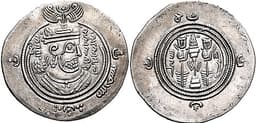
Muawiyah I
Emperor · Medieval
76.3Total
Basic Information
Born
1451
602
Died
1504
680
Era
Medieval
Medieval
Nationality
Spain
Umayyad Caliphate
Occupation
Emperor
Emperor
Civilization
Western
Middle Eastern
Score Comparison
Military (10%)
76.0
76.0
Political (20%)
78.0
75.0
Influence (20%)
80.0
75.0
Legacy (20%)
75.0
80.0
Leadership (15%)
78.0
78.0
Strategy (15%)
75.0
70.0
TOTAL
77.2
76.3
Isabella I of Castile — Complete Timeline
1469 AD
Marriage to Ferdinand of AragonPolitical Action
Isabella married Ferdinand II of Aragon in Valladolid, uniting the kingdoms of Castile and Aragon. This dynastic union laid the foundation for the unified Spanish monarchy and enabled joint policies including the Reconquista and overseas exploration.
Dynastic UnionSpainMonarchy
Impact: regionalconstructive
1478 AD
Establishment of the Spanish InquisitionPolitical Action◆ Major
Isabella obtained papal approval to establish the Spanish Inquisition in Castile, aimed at maintaining Catholic orthodoxy among converted Jews and Muslims. The Inquisition operated under royal control, conducting trials and executions for heresy.
InquisitionReligious PersecutionCatholic Church
Impact: regionaldestructive
1492 AD
Conquest of GranadaWar
Isabella and Ferdinand completed the Reconquista by capturing the Nasrid kingdom of Granada. The surrender of the last Muslim state in Iberia ended 781 years of Islamic rule and unified Spain under Christian rule.
ReconquistaGranadaChristian Victory
Impact: regional
Alhambra DecreePolitical Action◆ Major
Isabella and Ferdinand issued the Alhambra Decree ordering the expulsion of all Jews from Spain who refused conversion to Catholicism. An estimated 40,000 to 200,000 Jews were forced to leave, causing demographic and economic disruption.
ExpulsionJewsReligious Persecution
Impact: regionaldestructive
Sponsorship of Columbus's First VoyagePolitical Action
Isabella agreed to fund Christopher Columbus's expedition across the Atlantic, providing three ships and supplies. Columbus reached the Bahamas on October 12, initiating sustained European contact with the Americas and the Spanish colonial empire.
ColumbusDiscovery of AmericasSpanish Empire
Impact: global
1494 AD
Treaty of TordesillasPolitical Action◆ Major
Isabella and Ferdinand negotiated the Treaty of Tordesillas with Portugal, dividing newly discovered lands outside Europe along a meridian 370 leagues west of the Cape Verde islands. This agreement shaped colonial claims in the Americas and Africa.
Colonial DivisionSpainPortugal
Impact: global
Muawiyah I — Complete Timeline
640 AD
Governorship of SyriaPolitical Action◆ Major
Muawiyah I was appointed governor of Syria by Caliph Umar. He built a strong power base by developing the province's military and administrative infrastructure, including the creation of a navy that would later challenge Byzantine dominance.
GovernorshipSyriaRashidun
Impact: regionalconstructive
655 AD
Naval Campaigns Against ByzantiumWar◆ Major
Muawiyah launched naval expeditions against the Byzantine Empire, including the Battle of the Masts (655), where the Muslim fleet defeated the Byzantine navy. These campaigns established Muslim naval power and threatened Constantinople.
Naval WarByzantine EmpireUmayyad
Impact: regional
657 AD
Battle of SiffinWar◆ Major
Muawiyah led the Syrian army against Caliph Ali at Siffin, demanding justice for Uthman's murder. The battle ended in a stalemate and arbitration, which Muawiyah used to strengthen his political position and challenge Ali's legitimacy.
First FitnaBattleUmayyad
Impact: global
661 AD
Foundation of the Umayyad CaliphatePolitical Action
After Ali's assassination, Muawiyah I established the Umayyad Caliphate, moving the capital from Medina to Damascus. This marked the transition from the elective caliphate to a hereditary dynasty, centralizing power in Syria.
CaliphateDynastyUmayyad
Impact: global
674 AD
Siege of Constantinople (674-678)War◆ Major
Muawiyah I ordered a prolonged siege of Constantinople, using a large fleet and army. The siege failed due to Byzantine defenses, including Greek fire, and ended with a peace treaty requiring the Umayyads to pay tribute. It was a rare setback.
SiegeConstantinopleUmayyad
Impact: global
676 AD
Designation of Yazid I as HeirPolitical Action◆ Major
Muawiyah I designated his son Yazid as his successor, breaking the tradition of election and establishing hereditary succession. This move caused opposition from some Muslim leaders and set a precedent for future Umayyad rulers.
SuccessionHereditaryUmayyad
Impact: global
Expert Analysis
Origins
Isabella I of Castile (1451-1504) was born into the turbulent Trastámara dynasty of Castile, a kingdom riven by civil war and weak central authority. Her half-brother Henry IV's reign was marked by noble revolts and a contested succession. Isabella's shrewd marriage to Ferdinand of Aragon in 1469 united the two largest Christian kingdoms in Iberia, laying the foundation for a unified Spanish state. Muawiyah I (602-680) emerged from the powerful Umayyad clan of the Quraysh tribe in Mecca. He converted to Islam after the conquest of Mecca and served as a scribe for the Prophet Muhammad. His early career under Caliph Umar and Uthman saw him appointed governor of Syria, a province he would transform into his power base. Both figures rose from competitive environments, but Isabella faced a more immediate crisis of legitimacy.
Rise to Power
Isabella's path to the throne was contested. Upon Henry IV's death in 1474, she proclaimed herself queen, but her niece Joanna (supported by Portugal and some Castilian nobles) challenged her. The resulting War of Castilian Succession (1475-1479) ended with Isabella's victory, secured by Ferdinand's Aragon forces and diplomatic isolation of Portugal. Muawiyah's rise was more gradual. As governor of Syria under Caliph Uthman, he built a loyal army and efficient administration. After Uthman's assassination, he opposed Caliph Ali, citing the need for justice for Uthman's blood. The ensuing First Fitna (656-661) culminated in the Battle of Siffin (657) and arbitration that led to Muawiyah's recognition as caliph after Ali's assassination. Isabella's rise was a direct military and political struggle; Muawiyah's was a calculated power play within the Islamic community.
Leadership & Governance
Isabella and Ferdinand implemented sweeping reforms: they reorganized the royal council, subdued the nobility, created a centralized treasury, and standardized legal codes (the Laws of Toro). Their joint rule ("Tanto monta, monta tanto") was a model of dual monarchy. Isabella's sponsorship of Christopher Columbus's 1492 voyage opened the Americas to European colonization, expanding Spain's global influence. She also established the Spanish Inquisition in 1478 to enforce Catholic orthodoxy, leading to the Alhambra Decree (1492) expelling Jews. Muawiyah founded the Umayyad Caliphate, moving the capital from Medina to Damascus, which became a cosmopolitan center. He centralized the caliphate, established a hereditary succession (appointing his son Yazid), and created a professional army and navy. His naval campaigns against Byzantium included the first Arab siege of Constantinople (674-678), using advanced technology like Greek fire. Both were effective administrators, but Isabella's governance had more transformative long-term effects on global history.
Triumph & Tragedy
Isabella's greatest triumph was the conquest of Granada in 1492, ending 781 years of Muslim rule in Iberia. This completed the Reconquista and unified Spain under Christian rule. The same year, Columbus's voyage began the Spanish Empire. However, her legacy is marred by the Inquisition and expulsion of Jews and Muslims, causing cultural and economic losses. Muawiyah's triumph was founding a dynasty that lasted nearly a century, expanding the caliphate to its greatest territorial extent. His siege of Constantinople, though unsuccessful, demonstrated Umayyad military power. Yet his designation of Yazid as heir led to the Second Fitna after his death, including the tragic Battle of Karbala (680) that cemented the Sunni-Shia split. Both achieved monumental successes but left controversial legacies.
Character & Destiny
Isabella was devout, determined, and politically astute. She personally oversaw military campaigns and was known for her piety and patronage of learning. Her destiny was to forge a unified Spain that would become a global power. Muawiyah was pragmatic, patient, and a master of diplomacy. He was called the "first king of Islam" for his monarchical style. His destiny was to transform the caliphate into a hereditary empire, shifting its center from Arabia to Syria. Both were shaped by their environments: Isabella by the fervor of the Reconquista, Muawiyah by the divisions of early Islam. Their characters reflect the challenges they faced: Isabella's inflexibility on religious matters versus Muawiyah's willingness to compromise for political gain.
Legacy
Isabella's legacy is immense: she unified Spain, sponsored Columbus, and established the foundations of the Spanish Empire and global Catholicism. The Spanish Inquisition and expulsion of Jews, however, are dark chapters. Her reign marked the beginning of Spain's Golden Age. Muawiyah's legacy includes the Umayyad Caliphate's administrative innovations, the Arabization of state institutions, and the shift to hereditary succession. He is revered by Sunnis as a companion of the Prophet and a just ruler, but reviled by Shias for usurping Ali's rightful caliphate. Both left indelible marks on their civilizations and the world.
Conclusion
Isabella I of Castile scores higher overall (76.1 vs 75.7) due to her higher political and international impact scores. Her unification of Spain and sponsorship of Columbus fundamentally altered world history, leading to the colonization of the Americas and the rise of the Spanish Empire. Muawiyah's achievements, while significant in Islamic history, had less global reach. Isabella's military and diplomatic acumen, combined with her long-term influence, give her the edge. She is the more consequential figure in world history.
**Numerical Scores:**
- **Military (M):** Isabella 76, Muawiyah 76 (tie)
- **Political (P):** Isabella 78, Muawiyah 75
- **International (I):** Isabella 80, Muawiyah 75
- **Legacy (L):** Isabella 75, Muawiyah 80
- **Diplomacy (D):** Isabella 78, Muawiyah 78 (tie)
- **Strategic (S):** Isabella 75, Muawiyah 70
- **Total (T):** Isabella 77, Muawiyah 76
Isabella I of Castile prevails.
Rankings
🥇
Isabella I of CastileLeader
Mil: 76.0Pol: 78.0Inf: 80.0
77.2
🥈
Muawiyah I
Mil: 76.0Pol: 75.0Inf: 75.0
76.3
+0.9 behind
How This Comparison Works
Algorithm
Each figure is scored on 6 dimensions (0—100 scale) based on structured historical data: Military (10%), Political (20%), Influence (20%), Legacy (20%), Leadership (15%), Strategy (15%). The weighted total produces the final ranking.
Data Sources
Scores are computed from structured sub-indicators in the database. Scale factors adjust for era (Ancient ×0.85, Modern ×1.0) and civilization size (Eastern ×1.05, Other ×0.80) to account for differences in population and military scale.
Maximum 3 Figures
Comparisons are limited to 2—3 figures to ensure readability and statistical meaningfulness.
Error Margins
±5 points per dimension — Sub-scores are derived from historical records with inherent uncertainty. Two figures within 5 points on a dimension should be considered roughly equivalent in that area.
Total Score Accuracy
±3 points overall — The weighted combination of 6 dimensions produces a total score with approximately ±3 points of uncertainty. Differences of less than 3 points are not statistically significant— the figures are effectively tied.
Known Limitations
- Historical records are incomplete and uneven across civilizations
- Figures from oral-tradition societies may be underrepresented
- Occupation labels can misclassify multi-role figures
- Scores measure capability and impact, not moral character
- Quantitative scoring is a comparison tool, not absolute truth
Capability Radar
Military (10%) — Battles & Warfare
Battles
75
75
Win Rate
80
80
Expansion
85
85
Political (20%) — Governance & Reform
Reform
90
90
Diplomacy
80
95
Economy
75
85
Influence (20%) — Cultural & Global Reach
Cultural
85
75
Global
95
75
Legacy (20%) — Historical Impact
Historical
95
85
Longevity
90
80
Leadership (15%) — Power & Stability
Tenure
85
85
Stability
70
80
Strategy (15%) — Tactics & Innovation
Strategy
85
85
Tactics
70
70
Reform
90
80
Similar Comparisons
Comments & Discussion
No comments yet. Be the first to share your thoughts!