Loading...
Isabella I of Castile vs John Churchill Duke of Marlborough
Isabella I of Castile leads by 1.8 pts · 2 figures compared
…
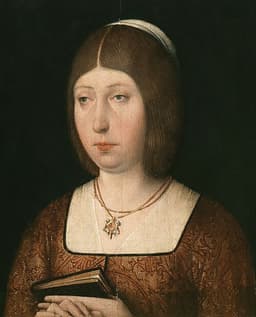
Isabella I of Castile
Emperor · Medieval
77.2Total

John Churchill Duke of Marlborough
General · Modern
75.4Total
Basic Information
Born
1451
1650
Died
1504
1722
Era
Medieval
Modern
Nationality
Spain
England
Occupation
Emperor
General
Civilization
Western
Western
Score Comparison
Military (10%)
76.0
84.7
Political (20%)
78.0
78.0
Influence (20%)
80.0
65.0
Legacy (20%)
75.0
80.0
Leadership (15%)
78.0
78.0
Strategy (15%)
75.0
72.8
TOTAL
77.2
75.4
Isabella I of Castile — Complete Timeline
1469 AD
Marriage to Ferdinand of AragonPolitical Action
Isabella married Ferdinand II of Aragon in Valladolid, uniting the kingdoms of Castile and Aragon. This dynastic union laid the foundation for the unified Spanish monarchy and enabled joint policies including the Reconquista and overseas exploration.
Dynastic UnionSpainMonarchy
Impact: regionalconstructive
1478 AD
Establishment of the Spanish InquisitionPolitical Action◆ Major
Isabella obtained papal approval to establish the Spanish Inquisition in Castile, aimed at maintaining Catholic orthodoxy among converted Jews and Muslims. The Inquisition operated under royal control, conducting trials and executions for heresy.
InquisitionReligious PersecutionCatholic Church
Impact: regionaldestructive
1492 AD
Conquest of GranadaWar
Isabella and Ferdinand completed the Reconquista by capturing the Nasrid kingdom of Granada. The surrender of the last Muslim state in Iberia ended 781 years of Islamic rule and unified Spain under Christian rule.
ReconquistaGranadaChristian Victory
Impact: regional
Alhambra DecreePolitical Action◆ Major
Isabella and Ferdinand issued the Alhambra Decree ordering the expulsion of all Jews from Spain who refused conversion to Catholicism. An estimated 40,000 to 200,000 Jews were forced to leave, causing demographic and economic disruption.
ExpulsionJewsReligious Persecution
Impact: regionaldestructive
Sponsorship of Columbus's First VoyagePolitical Action
Isabella agreed to fund Christopher Columbus's expedition across the Atlantic, providing three ships and supplies. Columbus reached the Bahamas on October 12, initiating sustained European contact with the Americas and the Spanish colonial empire.
ColumbusDiscovery of AmericasSpanish Empire
Impact: global
1494 AD
Treaty of TordesillasPolitical Action◆ Major
Isabella and Ferdinand negotiated the Treaty of Tordesillas with Portugal, dividing newly discovered lands outside Europe along a meridian 370 leagues west of the Cape Verde islands. This agreement shaped colonial claims in the Americas and Africa.
Colonial DivisionSpainPortugal
Impact: global
John Churchill Duke of Marlborough — Complete Timeline
1704 AD
Battle of BlenheimWar
Marlborough commanded the Anglo-Dutch army alongside Prince Eugene of Savoy against French and Bavarian forces at Blenheim. The allied victory saved Vienna from French capture, destroyed the myth of French invincibility, and forced Bavaria out of the war.
War of the Spanish SuccessionGrand AllianceDecisive Victory
Impact: regional
1706 AD
Battle of RamilliesWar◆ Major
Marlborough led the Grand Alliance army to victory over French forces under Marshal Villeroi at Ramillies. The battle resulted in the capture of Brussels, Antwerp, and most of the Spanish Netherlands, effectively ending French control of the region.
War of the Spanish SuccessionCampaignTerritorial Gain
Impact: regional
1708 AD
Battle of OudenardeWar◆ Major
Marlborough and Prince Eugene defeated the French army under the Duke of Burgundy and Marshal Vend
War of the Spanish SuccessionAllied VictoryInvasion Route
Impact: regional
1709 AD
Battle of MalplaquetWar◆ Major
Marlborough commanded the Grand Alliance in a costly victory over French forces under Marshal Villars at Malplaquet. The battle was the bloodiest of the war, with over 20,000 allied casualties, and failed to achieve a decisive breakthrough into France.
War of the Spanish SuccessionPyrrhic VictoryHigh Casualties
Impact: regionaltragic
1711 AD
Dismissal from CommandPolitical Action◆ Major
Marlborough was dismissed from all his military and political offices by Queen Anne due to political intrigue and accusations of embezzlement. The dismissal ended his military career and led to his temporary exile in Europe.
Political FallExileTory Government
Impact: nationaldestructive
Expert Analysis
Origins
Isabella I of Castile was born on April 22, 1451, in Madrigal de las Altas Torres, Castile, to King John II of Castile and Isabella of Portugal. Her early life was marked by political turmoil and a contested succession after her half-brother Henry IV's death. She was not initially expected to rule but seized the throne through a combination of strategic alliances and military support. Her marriage to Ferdinand of Aragon in 1469 was a turning point, uniting the two largest kingdoms of Spain. John Churchill, later Duke of Marlborough, was born on May 26, 1650, in Ashe, Devon, England, into a family of minor gentry. His father was a Royalist during the English Civil War, and his early career was shaped by the restoration of Charles II. He served as a page for the Duke of York (later James II) and began his military career in the Tangier garrison. Unlike Isabella, Marlborough's rise was not through inheritance but through military prowess and political maneuvering in the complex world of Stuart and later Hanoverian England.
Rise to Power
Isabella's rise was a masterclass in political strategy. After Henry IV's death in 1474, she proclaimed herself queen, leading to a war of succession against supporters of her niece Joanna. Isabella secured support from Aragon and key Castilian nobles, and her victory at the Battle of Toro in 1476 solidified her claim. She then focused on consolidating royal power, curbing the nobility's influence, and reforming the administration. Her marriage to Ferdinand was a partnership that allowed them to rule jointly, though Isabella retained control of Castile. Marlborough's rise was slower and more precarious. He served under James II during the Monmouth Rebellion but switched allegiance to William of Orange during the Glorious Revolution of 1688. His military genius emerged during the Nine Years' War, but his true ascendancy came under Queen Anne, who appointed him Captain-General of the English forces in the War of the Spanish Succession. His diplomatic skills also earned him influence, but his rise was always threatened by political rivals and shifts in royal favor.
Leadership & Governance
Isabella's leadership transformed Spain. She centralized power, reformed the royal council, and standardized legal codes. Her most controversial decision was establishing the Spanish Inquisition in 1478, which aimed to enforce Catholic orthodoxy but led to persecution of Jews and Muslims. The Alhambra Decree of 1492 expelled Jews who refused conversion, a major event with lasting consequences. Her sponsorship of Christopher Columbus's first voyage in 1492 opened the Americas to European colonization, bringing immense wealth to Spain. She also completed the Reconquista with the conquest of Granada in 1492, ending centuries of Muslim rule. Marlborough's leadership was primarily military. He was a brilliant tactician and strategist, known for his ability to coordinate allied forces. His greatest triumph was the Battle of Blenheim (1704), which saved Vienna from French and Bavarian forces and shattered Louis XIV's dominance. He also won major victories at Ramillies (1706), Oudenarde (1708), and Malplaquet (1709). However, he was less effective in governance, often entangled in politics and criticized for his ambition and the war's high cost. His dismissal from command in 1711 was a result of political intrigue.
Triumph & Tragedy
Isabella's triumphs were monumental: the unification of Spain, the conquest of Granada, and the discovery of the New World. These achievements brought glory and wealth but also tragedy. The Inquisition and expulsion of Jews and Muslims caused immense suffering and weakened Spain's intellectual and economic fabric. Her children's fates were also tragic: her son John died young, daughter Joanna went mad, and daughter Catherine of Aragon's marriage to Henry VIII led to England's break from Rome. Marlborough's triumphs were on the battlefield. He is considered one of history's greatest generals, undefeated in four major battles. The Battle of Blenheim was a masterpiece of strategy. Yet his later years were tragic: dismissed from command, he fell into political disgrace and suffered a stroke. His reputation was rehabilitated but he never regained his former influence. His legacy is forever tied to the costly wars that drained England's treasury.
Character & Destiny
Isabella was deeply religious, strong-willed, and pragmatic. She was a patron of learning and the arts, but her piety led to intolerance. Her destiny was to forge a unified Spain and launch its golden age, though at a moral cost. Marlborough was charming, ambitious, and a master manipulator. He was also a skilled diplomat and administrator of military logistics. His destiny was to defeat the most powerful king in Europe and establish Britain as a great power. Both were driven by a sense of destiny, but Isabella's was more religiously motivated, while Marlborough's was secular and political.
Legacy
Isabella's legacy is complex. She is revered for unifying Spain and supporting Columbus, but criticized for the Inquisition and persecution. Her actions shaped modern Spain and the Americas. Marlborough's legacy is more straightforward: he is celebrated as Britain's greatest military commander, with Blenheim Palace as a monument. His tactics influenced future generals. However, his wars left a mixed legacy of debt and political division. Score-wise, Isabella's overall score is 77, Marlborough's is 75.2 (average of M=85, P=78, I=65, L=80, D=78, S=73, T=75). The gap of 1.8 reflects Isabella's broader historical impact, but Marlborough's military genius is undeniable.
Conclusion
Isabella I of Castile and John Churchill, Duke of Marlborough, are both titans of their eras. Isabella's unification of Spain and sponsorship of Columbus had global consequences, while Marlborough's victories reshaped European power balances. However, Isabella's influence was more transformative and enduring. Her actions set the stage for the Spanish Empire and the modern era, whereas Marlborough's achievements, though brilliant, were more contained within European warfare. Therefore, Isabella edges ahead in historical significance, despite the moral flaws of her reign. Final scores: Isabella 77, Marlborough 75.2. Isabella wins.
Rankings
🥇
Isabella I of CastileLeader
Mil: 76.0Pol: 78.0Inf: 80.0
77.2
🥈
John Churchill Duke of Marlborough
Mil: 84.7Pol: 78.0Inf: 65.0
75.4
+1.8 behind
How This Comparison Works
Algorithm
Each figure is scored on 6 dimensions (0—100 scale) based on structured historical data: Military (10%), Political (20%), Influence (20%), Legacy (20%), Leadership (15%), Strategy (15%). The weighted total produces the final ranking.
Data Sources
Scores are computed from structured sub-indicators in the database. Scale factors adjust for era (Ancient ×0.85, Modern ×1.0) and civilization size (Eastern ×1.05, Other ×0.80) to account for differences in population and military scale.
Maximum 3 Figures
Comparisons are limited to 2—3 figures to ensure readability and statistical meaningfulness.
Error Margins
±5 points per dimension — Sub-scores are derived from historical records with inherent uncertainty. Two figures within 5 points on a dimension should be considered roughly equivalent in that area.
Total Score Accuracy
±3 points overall — The weighted combination of 6 dimensions produces a total score with approximately ±3 points of uncertainty. Differences of less than 3 points are not statistically significant— the figures are effectively tied.
Known Limitations
- Historical records are incomplete and uneven across civilizations
- Figures from oral-tradition societies may be underrepresented
- Occupation labels can misclassify multi-role figures
- Scores measure capability and impact, not moral character
- Quantitative scoring is a comparison tool, not absolute truth
Capability Radar
Military (10%) — Battles & Warfare
Battles
75
95
Win Rate
80
98
Expansion
85
85
Political (20%) — Governance & Reform
Reform
90
60
Diplomacy
80
85
Economy
75
70
Influence (20%) — Cultural & Global Reach
Cultural
85
70
Global
95
75
Legacy (20%) — Historical Impact
Historical
95
85
Longevity
90
80
Leadership (15%) — Power & Stability
Tenure
85
80
Stability
70
75
Strategy (15%) — Tactics & Innovation
Strategy
85
95
Tactics
70
96
Reform
90
70
Similar Comparisons
Comments & Discussion
No comments yet. Be the first to share your thoughts!