Loading...
Isabella I of Castile vs Ivan III the Great
Isabella I of Castile leads by 1.9 pts · 2 figures compared
…
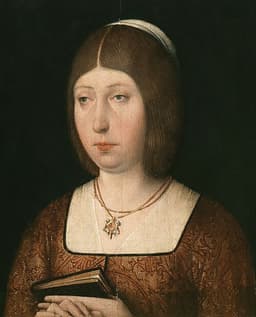
Isabella I of Castile
Emperor · Medieval
77.2Total
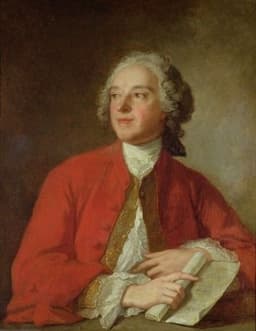
Ivan III the Great
Emperor · Medieval
75.3Total
Basic Information
Born
1451
1440
Died
1504
1505
Era
Medieval
Medieval
Nationality
Spain
Muscovy
Occupation
Emperor
Emperor
Civilization
Western
Western
Score Comparison
Military (10%)
76.0
76.0
Political (20%)
78.0
70.0
Influence (20%)
80.0
75.0
Legacy (20%)
75.0
80.0
Leadership (15%)
78.0
78.0
Strategy (15%)
75.0
67.2
TOTAL
77.2
75.3
Isabella I of Castile — Complete Timeline
1469 AD
Marriage to Ferdinand of AragonPolitical Action
Isabella married Ferdinand II of Aragon in Valladolid, uniting the kingdoms of Castile and Aragon. This dynastic union laid the foundation for the unified Spanish monarchy and enabled joint policies including the Reconquista and overseas exploration.
Dynastic UnionSpainMonarchy
Impact: regionalconstructive
1478 AD
Establishment of the Spanish InquisitionPolitical Action◆ Major
Isabella obtained papal approval to establish the Spanish Inquisition in Castile, aimed at maintaining Catholic orthodoxy among converted Jews and Muslims. The Inquisition operated under royal control, conducting trials and executions for heresy.
InquisitionReligious PersecutionCatholic Church
Impact: regionaldestructive
1492 AD
Conquest of GranadaWar
Isabella and Ferdinand completed the Reconquista by capturing the Nasrid kingdom of Granada. The surrender of the last Muslim state in Iberia ended 781 years of Islamic rule and unified Spain under Christian rule.
ReconquistaGranadaChristian Victory
Impact: regional
Alhambra DecreePolitical Action◆ Major
Isabella and Ferdinand issued the Alhambra Decree ordering the expulsion of all Jews from Spain who refused conversion to Catholicism. An estimated 40,000 to 200,000 Jews were forced to leave, causing demographic and economic disruption.
ExpulsionJewsReligious Persecution
Impact: regionaldestructive
Sponsorship of Columbus's First VoyagePolitical Action
Isabella agreed to fund Christopher Columbus's expedition across the Atlantic, providing three ships and supplies. Columbus reached the Bahamas on October 12, initiating sustained European contact with the Americas and the Spanish colonial empire.
ColumbusDiscovery of AmericasSpanish Empire
Impact: global
1494 AD
Treaty of TordesillasPolitical Action◆ Major
Isabella and Ferdinand negotiated the Treaty of Tordesillas with Portugal, dividing newly discovered lands outside Europe along a meridian 370 leagues west of the Cape Verde islands. This agreement shaped colonial claims in the Americas and Africa.
Colonial DivisionSpainPortugal
Impact: global
Ivan III the Great — Complete Timeline
1472 AD
Marriage to Sophia PalaiologinaPolitical Action◆ Major
Ivan III married Sophia (Zoe) Palaiologina, niece of the last Byzantine emperor. This marriage allowed Ivan to claim succession to the Byzantine Empire, adopt the double-headed eagle as a symbol, and promote Moscow as the Third Rome.
ByzantiumThird RomeMarriage
Impact: regionalconstructive
1478 AD
Annexation of NovgorodWar◆ Major
Ivan III conquered the Novgorod Republic after a series of campaigns. He abolished the veche (assembly) and removed the veche bell, incorporating Novgorod's vast territories into the Grand Principality of Moscow.
NovgorodAnnexationMoscow
Impact: regional
1480 AD
Great Stand on the Ugra RiverWar
Ivan III faced the Mongol army of Khan Akhmat across the Ugra River. After weeks of stalemate, the Mongols withdrew without battle. This event ended 240 years of Mongol suzerainty over Russia.
Golden HordeIndependenceUgra
Impact: regional
1497 AD
Issued the Sudebnik of 1497Reform◆ Major
Ivan III promulgated a new legal code, the Sudebnik, which standardized laws across the Russian lands. It restricted peasant mobility by limiting the time for transfer between landowners, a step toward serfdom.
Legal CodeSerfdomReform
Impact: national
1500 AD
War with the Grand Duchy of LithuaniaWar◆ Major
Ivan III launched a war against Lithuania, capturing the cities of Bryansk, Dorogobuzh, and Putivl. The war ended with the Truce of 1503, which ceded significant territories to Moscow.
LithuaniaTerritorial ExpansionWar
Impact: regional
Expert Analysis
Origins
Isabella I of Castile (1451–1504) was born into a tumultuous Castilian court. As the daughter of King John II, she navigated a contested succession to claim the throne. Ivan III (1440–1505), Grand Prince of Moscow, was the son of Vasily II, who endured civil wars and blindness. Both emerged from fractured realms, but their paths diverged: Isabella inherited a kingdom riven by noble factions, while Ivan inherited a Moscow that had long served Mongol overlords.
Rise to Power
Isabella’s rise was marked by strategic marriage. In 1469, she wed Ferdinand of Aragon, uniting the two largest Spanish kingdoms. This alliance, sealed in secret, was a political masterstroke that bypassed opposition from her brother King Henry IV. After Henry’s death, Isabella won the War of Castilian Succession (1475–1479), securing her throne. Ivan’s ascent was more linear but still fraught. He became Grand Prince in 1462 after his father’s death, but his authority was circumscribed by the Mongol Khanate. Ivan spent years consolidating power, subduing rival principalities like Tver and Ryazan, and positioning Moscow as the center of Russian resistance.
Leadership & Governance
Isabella and Ferdinand established the *Santa Hermandad* (Holy Brotherhood) to enforce law, curbed noble power, and centralized administration. Their creation of the Spanish Inquisition (1478) aimed to enforce Catholic orthodoxy, with Isabella playing a key role. She also reformed the royal council and finances. Ivan III transformed Moscow from a tributary state into a sovereign power. He introduced the *Sudebnik* of 1497, a unified legal code that standardized laws and extended central control. Ivan adopted Byzantine ceremonial practices, styling himself as "Tsar" and using the double-headed eagle, signaling Moscow as the "Third Rome." Both rulers strengthened their states, but Isabella’s governance was more innovative in institutional terms.
Triumph & Tragedy
Isabella’s greatest triumph was the conquest of Granada in 1492, ending 800 years of Muslim rule in Spain. That same year, she sponsored Columbus’s voyage, which opened the Americas to European colonization. However, her legacy is darkened by the Alhambra Decree (1492), which expelled Jews, and the Inquisition’s brutality. Ivan’s triumph came in 1480 at the Great Stand on the Ugra River, where he faced down the Mongol forces without battle, effectively ending Mongol suzerainty. He also annexed Novgorod (1478), crushing its independence. Yet his later wars with Lithuania (1492–1494, 1500–1503) yielded only modest gains. Both faced tragic elements: Isabella’s children died young, while Ivan’s son Ivan Ivanovich died in 1490, leading to a succession crisis.
Character & Destiny
Isabella was deeply religious, strong-willed, and pragmatic. She personally oversaw campaigns and insisted on learning Latin. Her faith fueled both her achievements and her intolerant policies. Ivan was calculating, patient, and ruthless. He was known as "the Great" for his state-building, but his marriage to Sophia Palaiologina, niece of the last Byzantine emperor, infused Moscow with imperial ideology. Both believed their rule was divinely ordained. Isabella saw herself as a crusader; Ivan as the heir to Byzantium. Their destinies were to unify and expand their realms, but at a cost: Isabella’s religious uniformity damaged Spain’s diversity; Ivan’s autocracy set a precedent for tsarist absolutism.
Legacy
Isabella’s legacy is monumental: she laid the foundations for Spain’s Golden Age, financed Columbus, and established a global empire. However, her policies also created lasting divisions. Ivan III is revered as the "gatherer of Russian lands" who freed Russia from the Mongol yoke and built the Kremlin. His legal code and centralization influenced later tsars. Comparison scores: Isabella scores higher in political acumen (78 vs 70) and international impact (80 vs 75), while Ivan leads in legal consolidation (80 vs 75). Overall, Isabella’s broader historical influence gives her a slight edge.
Conclusion
Isabella I of Castile and Ivan III the Great were both transformative unifiers. Isabella’s achievements—uniting Spain, sponsoring Columbus—reshaped world history. Ivan’s liberation of Russia and legal reforms were equally critical for his region. Yet Isabella’s global impact and institutional innovations edge her ahead. Score gap: 1.9% in Isabella’s favor. Her reign catalyzed the early modern era, while Ivan’s set Russia on a path to empire. Both were formidable, but Isabella’s vision reached beyond her borders.
Rankings
🥇
Isabella I of CastileLeader
Mil: 76.0Pol: 78.0Inf: 80.0
77.2
🥈
Ivan III the Great
Mil: 76.0Pol: 70.0Inf: 75.0
75.3
+1.9 behind
How This Comparison Works
Algorithm
Each figure is scored on 6 dimensions (0—100 scale) based on structured historical data: Military (10%), Political (20%), Influence (20%), Legacy (20%), Leadership (15%), Strategy (15%). The weighted total produces the final ranking.
Data Sources
Scores are computed from structured sub-indicators in the database. Scale factors adjust for era (Ancient ×0.85, Modern ×1.0) and civilization size (Eastern ×1.05, Other ×0.80) to account for differences in population and military scale.
Maximum 3 Figures
Comparisons are limited to 2—3 figures to ensure readability and statistical meaningfulness.
Error Margins
±5 points per dimension — Sub-scores are derived from historical records with inherent uncertainty. Two figures within 5 points on a dimension should be considered roughly equivalent in that area.
Total Score Accuracy
±3 points overall — The weighted combination of 6 dimensions produces a total score with approximately ±3 points of uncertainty. Differences of less than 3 points are not statistically significant— the figures are effectively tied.
Known Limitations
- Historical records are incomplete and uneven across civilizations
- Figures from oral-tradition societies may be underrepresented
- Occupation labels can misclassify multi-role figures
- Scores measure capability and impact, not moral character
- Quantitative scoring is a comparison tool, not absolute truth
Capability Radar
Military (10%) — Battles & Warfare
Battles
75
75
Win Rate
80
80
Expansion
85
85
Political (20%) — Governance & Reform
Reform
90
80
Diplomacy
80
85
Economy
75
70
Influence (20%) — Cultural & Global Reach
Cultural
85
70
Global
95
70
Legacy (20%) — Historical Impact
Historical
95
85
Longevity
90
80
Leadership (15%) — Power & Stability
Tenure
85
85
Stability
70
75
Strategy (15%) — Tactics & Innovation
Strategy
85
85
Tactics
70
70
Reform
90
65
Similar Comparisons
Comments & Discussion
No comments yet. Be the first to share your thoughts!