Loading...
Intef I vs Napoleon Bonaparte
Napoleon Bonaparte leads by 33.6 pts · 2 figures compared
…
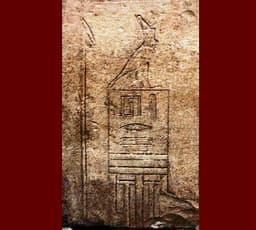
Intef I
Emperor · Ancient
37.3Total

Napoleon Bonaparte
General · Modern
70.9Total
Basic Information
Born
-2110
1769
Died
-2100
1821
Era
Ancient
Modern
Nationality
Middle Kingdom Egypt
France
Occupation
Emperor
General
Civilization
Middle Eastern
Western
Score Comparison
Military (10%)
50.0
94.0
Political (20%)
30.7
72.0
Influence (20%)
43.2
40.0
Legacy (20%)
34.2
80.0
Leadership (15%)
31.2
78.0
Strategy (15%)
36.8
90.0
TOTAL
37.3
70.9
Intef I — Complete Timeline
2110 BC
Accession as Theban rulerPolitical Action◆ Major
Intef I succeeded Mentuhotep I as ruler of Thebes, taking the Horus name Sehertawy ('He who pacifies the Two Lands'). His reign continued the 11th Dynasty's efforts to expand Theban influence during the First Intermediate Period.
AccessionTheban DynastyFirst Intermediate Period
Impact: regional
2105 BC
Military campaigns against the northWar
Intef I led military expeditions northward against the Heracleopolitan kingdom. These campaigns extended Theban control into Middle Egypt but did not achieve a decisive victory, maintaining the stalemate between the two powers.
Military CampaignHeracleopolisExpansion
Impact: regional
Napoleon Bonaparte — Complete Timeline
1799 AD
Coup of 18 BrumaireOther◆ Major
Napoleon Bonaparte, with support from his brother Lucien and key political figures, overthrew the Directory in a bloodless coup. He established the Consulate with himself as First Consul, effectively becoming the ruler of France. This event ended the French Revolution's most unstable period.
French RevolutionCoupRise to Power
Impact: regional
1804 AD
Promulgation of the Napoleonic CodeOther◆ Major
Napoleon enacted the Civil Code of the French, known as the Napoleonic Code, a comprehensive set of laws that replaced the fragmented feudal legal systems. The code established legal equality, protected property rights, and secularized law. It became the basis for legal systems in many European and world countries.
Legal ReformNapoleonic CodeCivil Law
Impact: globalconstructive
1805 AD
Battle of AusterlitzWar◆ Major
Napoleon's Grande Arm
Napoleonic WarsBattleDecisive Victory
Impact: global
1812 AD
Invasion of RussiaWar◆ Major
Napoleon led the Grande Arm
Napoleonic WarsInvasionDisaster
Impact: globaldestructive
1815 AD
Battle of WaterlooWar◆ Major
Napoleon's French army was defeated by the combined forces of the Duke of Wellington's Anglo-Allied army and Gebhard Leberecht von Bl
Napoleonic WarsBattleFinal Defeat
Impact: globaldestructive
Expert Analysis
intef-i-vs-napoleon-bonaparte
# The Emperor and the Nomarch: Two Paths to Power in Different Worlds
In the spring of 1815, Napoleon Bonaparte stood before his Grande Armée for the last time, a man who had reshaped Europe through sheer will and military genius. Four thousand years earlier, on the banks of the Nile, another ruler—Intef I—raised his standards above Thebes, proclaiming himself "He who pacifies the Two Lands" with far more modest ambitions. One would conquer from Madrid to Moscow; the other would barely extend his reach beyond a single Egyptian nome. Yet both understood something fundamental about power: that it must be seized before it can be held.
Origins
Napoleon was born in 1769 on Corsica, an island that had just passed from Genoese to French control. His family were minor nobility, but they were not wealthy. The young Napoleon spoke Italian before French, and his classmates mocked his accent at the military academy of Brienne. This outsider status forged something in him: a hunger for recognition that would never be satisfied. He devoured history and military theory, and when the French Revolution erupted in 1789, he saw not chaos but opportunity.
Intef I emerged from a very different world—the First Intermediate Period of Egypt, around 2110 BC, when the Old Kingdom had collapsed and the land was fractured between the Heracleopolitan kingdom in the north and the Theban kingdom in the south. He was a nomarch, a regional governor of Thebes, inheriting a small domain rather than a throne. The title "Intef" was common among the Theban ruling family; his distinction lay in being the first to claim the Horus name Sehertawy, a bold assertion that he would restore unity to a divided land. Where Napoleon grew up amid revolutionary ferment, Intef I grew up amid civil war—both men learned early that order was fragile and power was personal.
Rise to Power
Napoleon's ascent was meteoric. At twenty-four, he drove the British out of Toulon and was promoted to brigadier general. By twenty-six, he was commanding the Army of Italy, where his lightning campaigns against the Austrians stunned Europe. In 1799, he returned from Egypt—where he had fought the Mamelukes and studied the pyramids—to stage a coup d'état, becoming First Consul of France. Within five years, he crowned himself Emperor. His path was one of pure ambition, accelerated by revolutionary chaos and his own tactical brilliance.
Intef I's rise was slower and more constrained. When he succeeded Mentuhotep I as Theban ruler around 2110 BC, his domain was small, his resources limited. He could not conquer by grand strategy; he could only push northward in careful campaigns against the Heracleopolitan kingdom, extending Theban control perhaps a few dozen miles up the Nile. His key event was a series of military expeditions in 2105 BC, which chronicles record as campaigns "against the north." These were not Napoleonic blitzkriegs but grinding, local wars—capturing one town, then another, building power brick by brick. Where Napoleon seized a continent, Intef I could barely pacify a region.
Leadership & Governance
Napoleon governed through genius and terror. He centralized the French state, created the Napoleonic Code—which standardized law across Europe—and appointed prefects who answered directly to him. He was a master of propaganda, controlling newspapers and staging grand ceremonies. Yet his governance was also deeply personal: he led from the front at Austerlitz in 1805, where he crushed the Russian and Austrian armies, and he micromanaged everything from military logistics to civil administration. His leadership score of 80.0 reflects a man who inspired devotion but also demanded absolute obedience.
Intef I ruled from Thebes, a city that would later become the religious capital of Egypt. His governance was more traditional: he relied on local nobles, maintained the cult of Amun, and presented himself as a restorer of order. His Horus name was a political statement—"He who pacifies the Two Lands"—but his actual reach was limited. His political score of 34.5 and leadership score of 31.8 suggest a ruler who was competent but not transformative. He did not reform law or create institutions; he simply held his ground and expanded cautiously. Where Napoleon reshaped society, Intef I preserved tradition.
Triumph & Tragedy
Napoleon's greatest triumph was Austerlitz, where he defeated a larger Austro-Russian army through a masterful feint and flanking maneuver. His greatest tragedy was the invasion of Russia in 1812, where he lost half a million men to winter, disease, and guerrilla warfare. He was exiled to Elba in 1814, returned for the Hundred Days, and was finally defeated at Waterloo in 1815. His life was a Shakespearean arc of rise, glory, hubris, and fall.
Intef I's triumphs were smaller but more durable. He secured Theban independence and laid the groundwork for the Middle Kingdom, which would reunite Egypt under his successors. His tragedy was that he did not live to see it: he reigned only about ten years, dying around 2100 BC, leaving the work of unification to his brother Mentuhotep II. He had no Waterloo, but he also had no Austerlitz—just a steady accumulation of territory that would bear fruit after his death.
Character & Destiny
Napoleon was restless, brilliant, and insatiable. "Impossible is a word to be found only in the dictionary of fools," he once said. His military score of 94.0 and strategy score of 93.0 reflect a mind that could calculate odds faster than his enemies. But his character also drove his downfall: he could not stop, could not compromise, could not delegate. He needed to conquer more, rule more, be more—until the world pushed back.
Intef I was cautious, patient, and realistic. He knew his limits. He did not claim to be a god-king like later pharaohs; he simply claimed to pacify the Two Lands, a task he knew he could not finish. His military score of 16.5 and strategy score of 43.6 are low by Napoleon's standards, but they reflect a different kind of warfare: local, limited, and strategic in a long-term sense. He was a builder, not a conqueror.
Legacy
Napoleon's legacy is immense and contested. The Napoleonic Code influenced legal systems across Europe and the Americas. His military campaigns are still studied in war colleges. He is remembered as both a liberator who spread revolutionary ideals and a tyrant who caused millions of deaths. His legacy score of 78.0 and influence score of 82.0 place him among history's most consequential figures.
Intef I's legacy is quieter but enduring. He founded the Eleventh Dynasty, which would reunite Egypt. His name appears on monuments and in king lists, but he is not a household name. His legacy score of 45.1 and influence score of 57.5 reflect a figure who mattered in his time but whose impact was regional and historical rather than global. He is remembered by Egyptologists, not schoolchildren.
Conclusion
Napoleon and Intef I ruled worlds apart—one in a Europe of mass armies and nationalism, the other in an Egypt of spearmen and river barges. Yet both faced the same fundamental question: how do you turn power into lasting achievement? Napoleon answered with speed, brilliance, and overwhelming force, and he burned out in a blaze of glory. Intef I answered with patience, tradition, and incremental gain, and he built a foundation that outlasted him. Perhaps the real difference is not in their scores or their battles but in their sense of time. Napoleon lived as if every moment were his last; Intef I ruled as if he had eternity. In the end, it was the patient builder, not the brilliant conqueror, whose work endured.
Rankings
🥇
Napoleon BonaparteLeader
Mil: 94.0Pol: 72.0Inf: 40.0
70.9
🥈
Intef I
Mil: 50.0Pol: 30.7Inf: 43.2
37.3
+33.6 behind
How This Comparison Works
Algorithm
Each figure is scored on 6 dimensions (0—100 scale) based on structured historical data: Military (10%), Political (20%), Influence (20%), Legacy (20%), Leadership (15%), Strategy (15%). The weighted total produces the final ranking.
Data Sources
Scores are computed from structured sub-indicators in the database. Scale factors adjust for era (Ancient ×0.85, Modern ×1.0) and civilization size (Eastern ×1.05, Other ×0.80) to account for differences in population and military scale.
Maximum 3 Figures
Comparisons are limited to 2—3 figures to ensure readability and statistical meaningfulness.
Error Margins
±5 points per dimension — Sub-scores are derived from historical records with inherent uncertainty. Two figures within 5 points on a dimension should be considered roughly equivalent in that area.
Total Score Accuracy
±3 points overall — The weighted combination of 6 dimensions produces a total score with approximately ±3 points of uncertainty. Differences of less than 3 points are not statistically significant— the figures are effectively tied.
Known Limitations
- Historical records are incomplete and uneven across civilizations
- Figures from oral-tradition societies may be underrepresented
- Occupation labels can misclassify multi-role figures
- Scores measure capability and impact, not moral character
- Quantitative scoring is a comparison tool, not absolute truth
Capability Radar
Military (10%) — Battles & Warfare
Battles
15
95
Win Rate
20
90
Expansion
20
95
Political (20%) — Governance & Reform
Reform
10
95
Diplomacy
15
80
Economy
10
85
Influence (20%) — Cultural & Global Reach
Cultural
10
85
Global
5
90
Legacy (20%) — Historical Impact
Historical
15
95
Longevity
10
90
Leadership (15%) — Power & Stability
Tenure
20
85
Stability
15
70
Strategy (15%) — Tactics & Innovation
Strategy
15
95
Tactics
10
98
Reform
5
92
Similar Comparisons
Comments & Discussion
No comments yet. Be the first to share your thoughts!