Loading...
Intaphrenes vs Napoleon Bonaparte
Napoleon Bonaparte leads by 28.4 pts · 2 figures compared
…
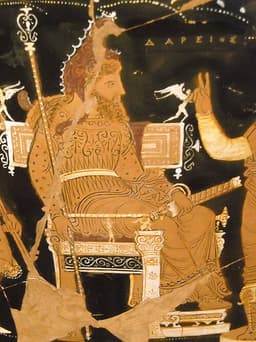
Intaphrenes
General · Ancient
42.5Total

Napoleon Bonaparte
General · Modern
70.9Total
Basic Information
Born
-550
1769
Died
-495
1821
Era
Ancient
Modern
Nationality
Achaemenid Empire
France
Occupation
General
General
Civilization
Middle Eastern
Western
Score Comparison
Military (10%)
47.5
94.0
Political (20%)
35.0
72.0
Influence (20%)
44.0
40.0
Legacy (20%)
34.2
80.0
Leadership (15%)
57.1
78.0
Strategy (15%)
43.7
90.0
TOTAL
42.5
70.9
Intaphrenes — Complete Timeline
522 BC
Conspiracy of the SevenPolitical Action◆ Major
Intaphrenes was one of seven Persian nobles who conspired to overthrow the Magian usurper Gaumata. The conspiracy succeeded, and Darius I became king. Intaphrenes was rewarded with high office.
Achaemenid EmpireDarius ISuccession
Impact: nationalconstructive
520 BC
Execution for InsolencePolitical Action◆ Major
Intaphrenes demanded an audience with Darius I, suspecting the king of plotting against him. When denied, he cut off the ears and nose of the royal messenger. Darius ordered the execution of Intaphrenes and his entire family.
Achaemenid EmpireDarius IExecution
tragic
Napoleon Bonaparte — Complete Timeline
1799 AD
Coup of 18 BrumaireOther◆ Major
Napoleon Bonaparte, with support from his brother Lucien and key political figures, overthrew the Directory in a bloodless coup. He established the Consulate with himself as First Consul, effectively becoming the ruler of France. This event ended the French Revolution's most unstable period.
French RevolutionCoupRise to Power
Impact: regional
1804 AD
Promulgation of the Napoleonic CodeOther◆ Major
Napoleon enacted the Civil Code of the French, known as the Napoleonic Code, a comprehensive set of laws that replaced the fragmented feudal legal systems. The code established legal equality, protected property rights, and secularized law. It became the basis for legal systems in many European and world countries.
Legal ReformNapoleonic CodeCivil Law
Impact: globalconstructive
1805 AD
Battle of AusterlitzWar◆ Major
Napoleon's Grande Arm
Napoleonic WarsBattleDecisive Victory
Impact: global
1812 AD
Invasion of RussiaWar◆ Major
Napoleon led the Grande Arm
Napoleonic WarsInvasionDisaster
Impact: globaldestructive
1815 AD
Battle of WaterlooWar◆ Major
Napoleon's French army was defeated by the combined forces of the Duke of Wellington's Anglo-Allied army and Gebhard Leberecht von Bl
Napoleonic WarsBattleFinal Defeat
Impact: globaldestructive
Expert Analysis
intaphrenes-vs-napoleon-bonaparte
# The Emperor and the Conspirator: Two Tales of Ambition, Power, and Ruin
In the spring of 1815, Napoleon Bonaparte stood before his assembled troops at Grenoble, a man who had already conquered Europe and lost it all, now marching on Paris to reclaim his throne. Twenty-three centuries earlier, in the Persian palace of Susa, another general named Intaphrenes demanded an audience with his king, suspecting betrayal—and sealed his own doom with that single act of insolence. Both men had helped place their rulers on thrones. Both had tasted the intoxicating wine of power. Yet one reshaped the world and became a legend; the other vanished into a footnote of history, remembered only for his death. What separated them was not talent alone, but the stage on which they performed and the choices they made when the curtain rose.
Origins
Napoleon Bonaparte was born in 1769 on the island of Corsica, a place that had only recently become French. His family was minor nobility, poor enough to feel the sting of social inferiority, proud enough to nurse lifelong resentments. The son of a lawyer, he spoke Italian-accented French and was mocked by his classmates at military school. That outsider’s hunger drove him: every slight, every closed door became fuel. He devoured military history and Enlightenment philosophy, a volatile mixture of ambition and ideas.
Intaphrenes, by contrast, was born around 550 BC into the heart of the Achaemenid Persian Empire, a civilization that stretched from India to the Aegean. He was a nobleman of ancient lineage, steeped in the codes of honor and hierarchy that defined Persian court life. His world was one of ritual, where access to the king was the highest privilege and any breach of protocol could mean death. Where Napoleon’s era was erupting with revolution and possibility, Intaphrenes’ was bound by tradition and the absolute will of a monarch.
Rise to Power
In 522 BC, a crisis shook the Persian Empire. The Magian usurper Gaumata had seized the throne, pretending to be the dead brother of Cambyses II. Intaphrenes joined six other noble conspirators—including Darius, a man of royal blood—to overthrow the impostor. The conspiracy succeeded. Darius became king, and Intaphrenes was rewarded with high rank and the privilege of free access to the palace. For a moment, he stood at the pinnacle of Persian power, one of the seven families who could approach the king without announcement.
Napoleon’s rise followed a different logic. The French Revolution had shattered the old order, creating a vacuum where talent could vault a man from obscurity to command. In 1793, at age twenty-four, he drove the British out of Toulon. By 1796, he led an army into Italy and won a series of stunning victories against the Austrians. He was not a noble conspirator but a self-made general, and his power came not from birthright but from the loyalty of soldiers who would follow him through fire. The difference was profound: Intaphrenes rose within a system; Napoleon rose by breaking one.
Leadership & Governance
Napoleon governed like a force of nature. He reorganized French law into the Napoleonic Code, centralized the administration, and built a modern state that outlasted his empire. On the battlefield, he was a master of speed and deception, using artillery and maneuver to shatter larger armies. His political genius lay in his ability to inspire—and to terrify. He understood that power was theater, and he played the part of emperor with impeccable timing.
Intaphrenes, as far as the records show, was a capable general but not a strategic innovator. His military score of 36.5 reflects a man who fought competently within established Persian tactics, not one who reinvented war. His political score of 32.7 suggests a nobleman who understood court politics but lacked the deeper wisdom to navigate them. When he suspected Darius of plotting against him, he demanded an audience—a breach of the very hierarchy he had helped create. He cut off the guards who barred his way, an act of violence that was both a cry of desperation and a fatal miscalculation.
Triumph & Tragedy
Napoleon’s greatest triumph was Austerlitz in 1805, where he crushed the Russian and Austrian armies in a battle so perfect it became a textbook example of military genius. His greatest tragedy was the invasion of Russia in 1812, where hubris and the brutal winter destroyed his Grand Army. He was exiled to Elba, escaped, and ruled for a Hundred Days before Waterloo ended his dream forever. He died in 1821 on the remote island of Saint Helena, a prisoner of the British, still plotting imaginary campaigns.
Intaphrenes’ triumph was the conspiracy of 522 BC—a successful coup that restored order to an empire. His tragedy came quickly after. In 520 BC, his insolence cost him everything. Darius ordered his execution, along with his entire family. According to Herodotus, Intaphrenes’ wife stood weeping at the palace gates day after day until Darius, moved by pity, offered to spare one of her relatives. She chose her brother, not her children, explaining that she could find another husband and other children, but never another brother. The king spared the brother; the rest died.
Character & Destiny
Napoleon’s character was a paradox: a genius of order who could not stop conquering, a reformer who became a tyrant. His ambition was limitless, and that ambition both built his empire and destroyed it. He could not share power, could not stop, could not accept defeat. His destiny was shaped by the revolutionary age that made him possible and by his own refusal to set limits.
Intaphrenes’ character is harder to read, but his fatal flaw seems clear: he was a man of honor and suspicion in a world where honor required obedience and suspicion meant death. He had helped Darius gain the throne, and he expected gratitude and trust. When he felt those were withdrawn, he reacted with the violence of a man who believed his status protected him. It did not. In a monarchy, even the highest noble is only a servant.
Legacy
Napoleon’s legacy is enormous. The Napoleonic Code influences legal systems across Europe and beyond. His military tactics are still studied. He reshaped the map of Europe and the idea of nationalism. His score of 82.4 reflects a figure who, for all his flaws, changed the course of history.
Intaphrenes’ legacy is almost invisible. He is remembered because Herodotus recorded his story, a cautionary tale about the limits of privilege and the danger of demanding what power will not give. His score of 42.9 places him among the minor figures of ancient history—a conspirator who succeeded once and failed fatally.
Conclusion
The difference between Napoleon and Intaphrenes is not merely one of talent or fortune. It is the difference between a man who created his own stage and a man who performed on someone else’s. Napoleon lived in an age of revolution, where a Corsican outsider could become emperor of Europe. Intaphrenes lived in an age of empire, where even a noble conspirator could be erased for a single breach of protocol. One died a legend; the other died a lesson. Both remind us that power is a game with unforgiving rules—and that the most dangerous move is to forget what those rules are.
Rankings
🥇
Napoleon BonaparteLeader
Mil: 94.0Pol: 72.0Inf: 40.0
70.9
🥈
Intaphrenes
Mil: 47.5Pol: 35.0Inf: 44.0
42.5
+28.4 behind
How This Comparison Works
Algorithm
Each figure is scored on 6 dimensions (0—100 scale) based on structured historical data: Military (10%), Political (20%), Influence (20%), Legacy (20%), Leadership (15%), Strategy (15%). The weighted total produces the final ranking.
Data Sources
Scores are computed from structured sub-indicators in the database. Scale factors adjust for era (Ancient ×0.85, Modern ×1.0) and civilization size (Eastern ×1.05, Other ×0.80) to account for differences in population and military scale.
Maximum 3 Figures
Comparisons are limited to 2—3 figures to ensure readability and statistical meaningfulness.
Error Margins
±5 points per dimension — Sub-scores are derived from historical records with inherent uncertainty. Two figures within 5 points on a dimension should be considered roughly equivalent in that area.
Total Score Accuracy
±3 points overall — The weighted combination of 6 dimensions produces a total score with approximately ±3 points of uncertainty. Differences of less than 3 points are not statistically significant— the figures are effectively tied.
Known Limitations
- Historical records are incomplete and uneven across civilizations
- Figures from oral-tradition societies may be underrepresented
- Occupation labels can misclassify multi-role figures
- Scores measure capability and impact, not moral character
- Quantitative scoring is a comparison tool, not absolute truth
Capability Radar
Military (10%) — Battles & Warfare
Battles
10
95
Win Rate
10
90
Expansion
10
95
Political (20%) — Governance & Reform
Reform
5
95
Diplomacy
10
80
Economy
5
85
Influence (20%) — Cultural & Global Reach
Cultural
5
85
Global
5
90
Legacy (20%) — Historical Impact
Historical
10
95
Longevity
5
90
Leadership (15%) — Power & Stability
Tenure
10
85
Stability
5
70
Strategy (15%) — Tactics & Innovation
Strategy
10
95
Tactics
10
98
Reform
5
92
Similar Comparisons
Comments & Discussion
No comments yet. Be the first to share your thoughts!