Loading...
Intaphrenes vs Julius Caesar
Julius Caesar leads by 40.3 pts · 2 figures compared
…
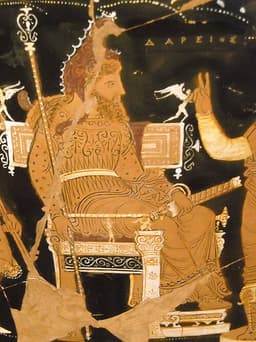
Intaphrenes
General · Ancient
42.5Total

Julius Caesar
General · Ancient
82.8Total
Basic Information
Born
-550
-100
Died
-495
-44
Era
Ancient
Ancient
Nationality
Achaemenid Empire
Roman Republic
Occupation
General
General
Civilization
Middle Eastern
Western
Score Comparison
Military (10%)
47.5
88.0
Political (20%)
35.0
78.0
Influence (20%)
44.0
85.0
Legacy (20%)
34.2
82.0
Leadership (15%)
57.1
80.0
Strategy (15%)
43.7
85.0
TOTAL
42.5
82.8
Intaphrenes — Complete Timeline
522 BC
Conspiracy of the SevenPolitical Action◆ Major
Intaphrenes was one of seven Persian nobles who conspired to overthrow the Magian usurper Gaumata. The conspiracy succeeded, and Darius I became king. Intaphrenes was rewarded with high office.
Achaemenid EmpireDarius ISuccession
Impact: nationalconstructive
520 BC
Execution for InsolencePolitical Action◆ Major
Intaphrenes demanded an audience with Darius I, suspecting the king of plotting against him. When denied, he cut off the ears and nose of the royal messenger. Darius ordered the execution of Intaphrenes and his entire family.
Achaemenid EmpireDarius IExecution
tragic
Julius Caesar — Complete Timeline
58 BC
Gallic WarsWar◆ Major
Caesar, as proconsul of Gaul, launched a series of campaigns that conquered all of Gaul (modern France, Belgium, and parts of Switzerland). He fought numerous battles, including against the Helvetii, the Belgae, and the Gallic chieftain Vercingetorix. The wars brought immense wealth and a loyal army to Caesar.
Gallic WarsConquestRoman Expansion
Impact: regional
49 BC
Crossing the RubiconPolitical Action◆ Major
Caesar led Legio XIII across the Rubicon River into Italy, defying the Roman Senate's order to disband his army. This act triggered a civil war against Pompey and the Optimates, ultimately leading to Caesar's dictatorship and the end of the Roman Republic.
Roman Civil WarEnd of RepublicPower Struggle
Impact: global
48 BC
Battle of PharsalusWar◆ Major
Caesar's outnumbered army defeated the larger forces of Pompey the Great at Pharsalus in Greece. Caesar's tactical use of a reserve line to counter Pompey's cavalry charge proved decisive. Pompey fled to Egypt, where he was assassinated, leaving Caesar as the undisputed master of the Roman world.
Roman Civil WarBattleDecisive Victory
Impact: regional
44 BC
Appointment as Dictator for LifePolitical Action◆ Major
The Roman Senate appointed Caesar dictator perpetuo (dictator for life), granting him unprecedented personal power. This move concentrated military, legislative, and judicial authority in one person, effectively ending the Roman Republic's traditional system of checks and balances and alarming many senators.
DictatorshipEnd of RepublicPower Consolidation
Impact: regionaldestructive
Assassination on the Ides of MarchPolitical Action◆ Major
A group of Roman senators, led by Marcus Junius Brutus and Gaius Cassius Longinus, stabbed Caesar to death at a meeting of the Senate in the Theatre of Pompey. The assassination was intended to restore the Republic, but instead triggered another civil war that led to the rise of the Roman Empire.
AssassinationRoman PoliticsEnd of Republic
Impact: globaldestructive
Expert Analysis
intaphrenes-vs-julius-caesar
# The General and the Conspirator: Two Paths from the Ancient World
On a spring morning in 44 BCE, Julius Caesar fell beneath twenty-three dagger blows in the Senate chamber of Rome. The man who had conquered Gaul, crossed the Rubicon, and made himself master of the known world died not in battle, but at the hands of men he had trusted. Nearly five centuries earlier, in the vast halls of Persepolis, another general met a quieter but equally definitive end: Intaphrenes, one of the seven who had placed Darius the Great on the Persian throne, was executed for the crime of knocking too insistently at the king’s door. Both men rose through conspiracy and bloodshed. Both fell to the very forces they had helped unleash. Yet one became the name that echoes through two millennia of Western civilization, while the other survives only as a cautionary footnote in the annals of a fallen empire. The difference between them is not merely a matter of talent—it is a question of what happens when ambition meets the structure of the world around it.
Origins
Julius Caesar was born into the twilight of the Roman Republic, a world of senatorial intrigue, civil wars, and a political system straining under the weight of its own success. His family, the Julii, claimed descent from the goddess Venus, but their prestige was ancient, not recent—they were patricians who had lost political ground to plebeian upstarts. Caesar’s youth was marked by the proscriptions of Sulla, who ordered him to divorce his wife and nearly had him killed for refusing. He learned early that survival meant navigating between factions, and that mercy was a luxury the powerful could not afford.
Intaphrenes emerged from a different world entirely: the Achaemenid Empire at its height under Cyrus the Great and Cambyses. He was a Persian noble of the highest rank, one of the seven great families whose bloodlines defined the aristocracy of the empire. In Persia, power flowed downward from the king, who was both absolute monarch and living embodiment of the divine order. Loyalty was owed to the throne, not to abstract ideals of liberty or law. Intaphrenes grew up in a system where a man’s status was fixed at birth, and where the only way to rise was to serve the king—or to replace him.
Rise to Power
Caesar’s path was a masterpiece of patience and audacity. He climbed the cursus honorum—quaestor, aedile, praetor, consul—through a combination of military glory, popular reforms, and strategic alliances. His conquest of Gaul between 58 and 50 BCE gave him a veteran army loyal to him personally, immense wealth, and a reputation that made the Senate tremble. When the Senate ordered him to disband his legions and return to Rome as a private citizen, he made his choice: crossing the Rubicon River in 49 BCE with a single legion, he triggered a civil war that would end the Republic forever. His rise was a long, calculated gamble, each step building toward a final confrontation.
Intaphrenes’ rise was swifter and more direct. In 522 BCE, a Magian priest named Gaumata seized the Persian throne by impersonating the dead prince Bardiya. Intaphrenes was one of seven nobles who conspired to overthrow him. The conspiracy succeeded—Darius was crowned king—and Intaphrenes was rewarded with high office and honor. But his rise was not his own making; it was an episode in a dynastic drama. He did not build a power base, command legions, or win provinces. He was a player in a game whose rules were written by the king.
Leadership & Governance
Caesar governed as a reformer and a revolutionary. As dictator, he overhauled the Roman calendar, extended citizenship to provincial communities, initiated public works projects, and reformed debt laws. He centralized power in his own hands but did so with a populist touch—he was loved by the common people, who saw him as a champion against the senatorial oligarchy. His military genius was undeniable: at Alesia, he besieged and defeated a Gallic coalition of perhaps 250,000 men with only 60,000 Romans. He wrote his own accounts of his campaigns, shaping his legacy with every sentence.
Intaphrenes governed as a Persian noble, which meant enforcing the king’s will. He was a general, but his military record is unremarkable—there is no record of a great victory or a strategic innovation. His political acumen was even worse: after Darius took the throne, Intaphrenes grew suspicious that the king was plotting against him. He demanded an audience, and when denied, he cut off the ears and noses of the royal messengers. This act of insolence was not rebellion—it was a misunderstanding of the nature of absolute power. In a monarchy, the king’s door is not a suggestion; it is a boundary. Intaphrenes crossed it, and Darius had him executed.
Triumph & Tragedy
Caesar’s greatest triumph was his own apotheosis: he became dictator for life in 44 BCE, and the Senate heaped honors upon him—the title “Father of the Fatherland,” a golden chair in the Senate, a statue among the kings. But his tragedy was that he could not see the limits of power. He pardoned his enemies, including Brutus and Cassius, expecting gratitude. Instead, they stabbed him. His final words, according to tradition, were “*Et tu, Brute?*”—a recognition that the bonds of friendship and loyalty had been severed by the very system he had tried to master.
Intaphrenes’ triumph was his role in the conspiracy—a single, successful act that placed Darius on the throne. But his tragedy was that he could not recognize the new order he had helped create. He demanded entry to the palace as an equal, not a subject. In doing so, he revealed that he had not understood the revolution he had participated in. Darius, who had no intention of sharing power, killed him not out of anger, but out of necessity.
Character & Destiny
Caesar was driven by an insatiable ambition, but also by a genuine vision of a reformed Rome. He was shrewd, calculating, and ruthless when necessary, yet capable of clemency that astonished his contemporaries. His personality—charismatic, intellectually curious, and supremely confident—shaped every decision. He believed he was destined for greatness, and he was right. But that same confidence made him blind to the resentment he was sowing.
Intaphrenes was a man of pride and loyalty, but not of vision. He acted on instinct, not strategy. His demand to see the king was not a political maneuver; it was a personal affront born of wounded dignity. He had helped Darius rise, and he expected to be treated as a partner. In Persia, there were no partners—only subjects. His character, honorable by the standards of a tribal chieftain, was fatal in the corridors of an empire.
Legacy
Caesar’s legacy is immeasurable. His name became a title—*Kaiser*, *Tsar*—and his reforms laid the foundation for the Roman Empire that would endure for five centuries in the West and a thousand years in the East. His writings, especially the *Commentaries on the Gallic War*, are still read today as models of military and political narrative. He is remembered as a genius, a tyrant, and a martyr.
Intaphrenes is remembered, if at all, as a cautionary tale. The Greek historian Herodotus recorded his story in the *Histories*, noting that Darius executed him and his entire family—except for one son, spared by the king’s mercy. His name appears in the Behistun Inscription, carved into a cliff face by Darius to commemorate his victory. He is a footnote, a lesson in the dangers of presumption.
Conclusion
Standing at the intersection of ambition and structure, Caesar and Intaphrenes reveal a profound truth: the same qualities that lift a man to power can destroy him, but the difference between immortality and obscurity often depends on the world he inhabits. Caesar’s Rome was a republic in crisis, a system that rewarded the audacious and punished the cautious. Intaphrenes’ Persia was an empire in order, a system that rewarded the obedient and punished the insolent. Caesar died because he had risen too high; Intaphrenes died because he had not risen high enough. One became the architect of an age; the other became a warning for those who would follow. In the end, it is not just the man who shapes history—it is the stage on which he stands.
Rankings
🥇
Julius CaesarLeader
Mil: 88.0Pol: 78.0Inf: 85.0
82.8
🥈
Intaphrenes
Mil: 47.5Pol: 35.0Inf: 44.0
42.5
+40.3 behind
How This Comparison Works
Algorithm
Each figure is scored on 6 dimensions (0—100 scale) based on structured historical data: Military (10%), Political (20%), Influence (20%), Legacy (20%), Leadership (15%), Strategy (15%). The weighted total produces the final ranking.
Data Sources
Scores are computed from structured sub-indicators in the database. Scale factors adjust for era (Ancient ×0.85, Modern ×1.0) and civilization size (Eastern ×1.05, Other ×0.80) to account for differences in population and military scale.
Maximum 3 Figures
Comparisons are limited to 2—3 figures to ensure readability and statistical meaningfulness.
Error Margins
±5 points per dimension — Sub-scores are derived from historical records with inherent uncertainty. Two figures within 5 points on a dimension should be considered roughly equivalent in that area.
Total Score Accuracy
±3 points overall — The weighted combination of 6 dimensions produces a total score with approximately ±3 points of uncertainty. Differences of less than 3 points are not statistically significant— the figures are effectively tied.
Known Limitations
- Historical records are incomplete and uneven across civilizations
- Figures from oral-tradition societies may be underrepresented
- Occupation labels can misclassify multi-role figures
- Scores measure capability and impact, not moral character
- Quantitative scoring is a comparison tool, not absolute truth
Capability Radar
Military (10%) — Battles & Warfare
Battles
10
95
Win Rate
10
92
Expansion
10
97
Political (20%) — Governance & Reform
Reform
5
90
Diplomacy
10
85
Economy
5
82
Influence (20%) — Cultural & Global Reach
Cultural
5
88
Global
5
94
Legacy (20%) — Historical Impact
Historical
10
95
Longevity
5
96
Leadership (15%) — Power & Stability
Tenure
10
75
Stability
5
60
Strategy (15%) — Tactics & Innovation
Strategy
10
94
Tactics
10
96
Reform
5
88
Similar Comparisons
Comments & Discussion
No comments yet. Be the first to share your thoughts!