Loading...
Imad ad-Din Zengi vs Julius Caesar
Julius Caesar leads by 20.7 pts · 2 figures compared
…
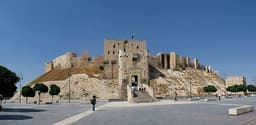
Imad ad-Din Zengi
Emperor · Medieval
62.1Total

Julius Caesar
General · Ancient
82.8Total
Basic Information
Born
1085
-100
Died
1146
-44
Era
Medieval
Ancient
Nationality
Zengid Dynasty
Roman Republic
Occupation
Emperor
General
Civilization
Middle Eastern
Western
Score Comparison
Military (10%)
65.0
88.0
Political (20%)
68.0
78.0
Influence (20%)
59.0
85.0
Legacy (20%)
56.0
82.0
Leadership (15%)
74.0
80.0
Strategy (15%)
55.0
85.0
TOTAL
62.1
82.8
Imad ad-Din Zengi — Complete Timeline
1135 AD
Siege of DamascusWar◆ Major
Imad ad-Din Zengi besieged Damascus, attempting to expand his control over Syria. The siege failed due to strong defenses and the intervention of the Burid dynasty, preventing Zengi from unifying Muslim Syria under his rule.
DamascusSiegeBurid
Impact: regional
1144 AD
Capture of EdessaWar
Imad ad-Din Zengi, atabeg of Mosul, besieged and captured the Crusader city of Edessa. This was the first major Crusader territory to fall to Muslim forces, triggering the Second Crusade and establishing Zengi as a leading Muslim commander.
CrusadesEdessaSecond Crusade
Impact: global
1146 AD
Assassination of Imad ad-Din ZengiPolitical Action◆ Major
Imad ad-Din Zengi was assassinated by a Frankish slave in his sleep while besieging the fortress of Qal'at Ja'bar. His death fragmented his territories, which were divided between his sons Nur ad-Din and Saif ad-Din, but his legacy continued through Nur ad-Din's later successes.
AssassinationNur ad-DinQal'at Ja'bar
Impact: regionaltragic
Julius Caesar — Complete Timeline
58 BC
Gallic WarsWar◆ Major
Caesar, as proconsul of Gaul, launched a series of campaigns that conquered all of Gaul (modern France, Belgium, and parts of Switzerland). He fought numerous battles, including against the Helvetii, the Belgae, and the Gallic chieftain Vercingetorix. The wars brought immense wealth and a loyal army to Caesar.
Gallic WarsConquestRoman Expansion
Impact: regional
49 BC
Crossing the RubiconPolitical Action◆ Major
Caesar led Legio XIII across the Rubicon River into Italy, defying the Roman Senate's order to disband his army. This act triggered a civil war against Pompey and the Optimates, ultimately leading to Caesar's dictatorship and the end of the Roman Republic.
Roman Civil WarEnd of RepublicPower Struggle
Impact: global
48 BC
Battle of PharsalusWar◆ Major
Caesar's outnumbered army defeated the larger forces of Pompey the Great at Pharsalus in Greece. Caesar's tactical use of a reserve line to counter Pompey's cavalry charge proved decisive. Pompey fled to Egypt, where he was assassinated, leaving Caesar as the undisputed master of the Roman world.
Roman Civil WarBattleDecisive Victory
Impact: regional
44 BC
Appointment as Dictator for LifePolitical Action◆ Major
The Roman Senate appointed Caesar dictator perpetuo (dictator for life), granting him unprecedented personal power. This move concentrated military, legislative, and judicial authority in one person, effectively ending the Roman Republic's traditional system of checks and balances and alarming many senators.
DictatorshipEnd of RepublicPower Consolidation
Impact: regionaldestructive
Assassination on the Ides of MarchPolitical Action◆ Major
A group of Roman senators, led by Marcus Junius Brutus and Gaius Cassius Longinus, stabbed Caesar to death at a meeting of the Senate in the Theatre of Pompey. The assassination was intended to restore the Republic, but instead triggered another civil war that led to the rise of the Roman Empire.
AssassinationRoman PoliticsEnd of Republic
Impact: globaldestructive
Expert Analysis
imad-ad-din-zengi-vs-julius-caesar
# The Crosser of Rubicons and the Captor of Edessa
On a January morning in 49 BCE, a Roman general stood at the banks of a small river in northern Italy. The Rubicon was little more than a stream, but it marked the boundary between legitimate command and treason. Gaius Julius Caesar, fresh from conquering Gaul, paused. He knew that crossing meant civil war—that the Republic would never be the same. He crossed anyway, reportedly uttering, “The die is cast.”
Nine hundred years later and a thousand miles east, another general achieved a victory that would echo across Christendom and Islam. In 1144, Imad ad-Din Zengi, the atabeg of Mosul and Aleppo, breached the walls of Edessa, the first Crusader state ever established in the Holy Land. The shockwave reached Rome, Paris, and London, triggering the Second Crusade. But unlike Caesar, Zengi would never see the full consequences of his triumph. He was stabbed to death in his sleep two years later by a Frankish slave.
Two men, two turning points in world history—yet their paths, their fates, and their legacies could hardly be more different.
Origins
Caesar was born into the twilight of the Roman Republic, a world of senatorial intrigue, landless armies, and crumbling traditions. His family, the Julii, claimed descent from the goddess Venus, but their political fortunes had faded. Young Caesar learned early that in Rome, reputation was currency. He borrowed heavily, threw lavish games, and cultivated alliances with the powerful. His uncle by marriage, Gaius Marius, had been a populist general; his father-in-law, Lucius Cornelius Cinna, a radical reformer. Caesar absorbed the lesson that the old aristocracy was a dying order.
Zengi emerged from a very different world—the fractured landscape of medieval Syria and Iraq, where Turkic warlords, Arab princes, and Crusader knights competed for scraps of power. His father, Aq Sunqur al-Hajib, was a Turkish governor executed for treason. Zengi grew up in the shadow of betrayal. He learned that trust was a weakness, that power came from the sword, and that the only loyalty that mattered was the one you could enforce. He was a product of the *atabeg* system—a military governor who ruled in the name of a child prince, but who often ruled for himself.
Rise to Power
Caesar’s rise was a masterclass in political patience. He served as a military tribune, then quaestor, then aedile, then praetor—each step carefully calculated. His governorship of Further Spain gave him military experience and a small fortune. But his true breakthrough came in 60 BCE, when he forged the First Triumvirate with Pompey the Great and Marcus Licinius Crassus. This informal alliance gave him the consulship, then Gaul. For eight years, Caesar did what no Roman general had done: he conquered an entire region—modern France, Belgium, and parts of Germany—killing or enslaving perhaps a million people. His *Commentaries on the Gallic War* turned military report into propaganda, making him a legend in Rome.
Zengi’s path was more brutal and direct. He rose through military service under the Seljuk sultans, proving himself a capable commander in the endless wars between Muslim princes. In 1127, he was appointed atabeg of Mosul—a promotion that came with a mandate: defend the frontier against the Crusaders. But Zengi was no crusader. His ambitions were local. He fought fellow Muslims as often as he fought Franks. His siege of Damascus in 1135 failed because the city’s defenders were determined and his own allies unreliable. He learned that in the Levant, victory required not just steel but patience, treachery, and timing.
Leadership & Governance
Caesar governed through a combination of charisma, calculation, and clemency. He pardoned his enemies—a policy he called *clementia Caesaris*—and integrated them into his administration. He reformed the calendar, granted citizenship to provincials, launched public works, and centralized tax collection. As dictator, he ruled with efficiency, but never with mercy for the old senatorial class. His military genius lay in speed and logistics: he moved armies faster than anyone expected, built bridges across the Rhine in ten days, and defeated Pompey’s numerically superior forces at Pharsalus by anticipating his enemy’s tactics.
Zengi ruled as a medieval warlord. His governance was personal, not institutional. He rewarded loyal followers with land and booty, punished rebels with execution, and kept his army in the field through constant campaigning. His capture of Edessa in 1144 was a masterpiece of siegecraft—he used mining, bombardment, and psychological warfare to break the city’s spirit. But he did not consolidate his conquests into a lasting state. When he died, his empire fractured between his sons. There was no *clementia Zengii*; there was only fear.
Triumph & Tragedy
Caesar’s greatest moment came in 45 BCE, when he returned to Rome as dictator for life. He had defeated every rival, from Gaul to Egypt to Spain. The Republic was at his feet. But his tragedy was that he could not stop. He refused to restore the old constitution, accepted divine honors, and planned a campaign against Parthia. On the Ides of March, 44 BCE, a conspiracy of senators—many of them his former allies—stabbed him twenty-three times. He fell at the foot of Pompey’s statue, bleeding into the floor of the Senate chamber.
Zengi’s triumph was the fall of Edessa. For the first time, a Muslim ruler had recaptured a major Crusader city. The news electrified the Islamic world. But his tragedy came two years later, in 1146, while besieging the fortress of Qal’at Ja’bar. A Frankish slave, perhaps bribed by rivals, crept into his tent and killed him. His body was never properly buried. His sons fought over his lands. Within a generation, his dynasty was eclipsed.
Character & Destiny
Caesar was driven by an almost pathological ambition. He believed he was destined for greatness—and he was right. But his arrogance, his refusal to share power, and his contempt for the Senate sealed his fate. He saw the Republic as a fiction and treated it as one. In the end, his enemies killed him not because they hated him, but because they feared what he would become.
Zengi was driven by survival and opportunism. He was not a visionary. He did not dream of a united Islamic empire or a reconquered Jerusalem. He wanted power, land, and revenge for his father’s death. His assassination was almost inevitable—he had made too many enemies, trusted too few, and built nothing that could outlast him.
Legacy
Caesar’s legacy is immeasurable. His name became a title—*Caesar* meant emperor in Rome, *Kaiser* in Germany, *Tsar* in Russia. His calendar lasted for 1,600 years. His military tactics are still studied. His assassination plunged Rome into civil war, but it also gave birth to the empire he had envisioned. He did not die a martyr; he died a warning.
Zengi’s legacy is more modest but no less significant. He proved that the Crusaders could be defeated. His capture of Edessa inspired a generation of Muslim leaders, including his own son Nur ad-Din and the legendary Saladin. Without Zengi, there might have been no reconquest of Jerusalem in 1187. But he is remembered as a precursor, not a founder—a man who opened a door that others walked through.
Conclusion
In the end, Caesar and Zengi represent two faces of ambition: one that builds an empire, and one that builds a moment. Caesar crossed the Rubicon and changed the world; Zengi captured Edessa and changed a war. Both died by the knife, both left unfinished work, but only one left a name that still echoes. The difference is not talent or courage—it is vision, luck, and the ability to turn conquest into civilization. Caesar understood that power must be institutionalized to survive. Zengi understood only that power must be seized. History remembers the builder, not the taker.
Rankings
🥇
Julius CaesarLeader
Mil: 88.0Pol: 78.0Inf: 85.0
82.8
🥈
Imad ad-Din Zengi
Mil: 65.0Pol: 68.0Inf: 59.0
62.1
+20.7 behind
How This Comparison Works
Algorithm
Each figure is scored on 6 dimensions (0—100 scale) based on structured historical data: Military (10%), Political (20%), Influence (20%), Legacy (20%), Leadership (15%), Strategy (15%). The weighted total produces the final ranking.
Data Sources
Scores are computed from structured sub-indicators in the database. Scale factors adjust for era (Ancient ×0.85, Modern ×1.0) and civilization size (Eastern ×1.05, Other ×0.80) to account for differences in population and military scale.
Maximum 3 Figures
Comparisons are limited to 2—3 figures to ensure readability and statistical meaningfulness.
Error Margins
±5 points per dimension — Sub-scores are derived from historical records with inherent uncertainty. Two figures within 5 points on a dimension should be considered roughly equivalent in that area.
Total Score Accuracy
±3 points overall — The weighted combination of 6 dimensions produces a total score with approximately ±3 points of uncertainty. Differences of less than 3 points are not statistically significant— the figures are effectively tied.
Known Limitations
- Historical records are incomplete and uneven across civilizations
- Figures from oral-tradition societies may be underrepresented
- Occupation labels can misclassify multi-role figures
- Scores measure capability and impact, not moral character
- Quantitative scoring is a comparison tool, not absolute truth
Capability Radar
Military (10%) — Battles & Warfare
Battles
65
95
Win Rate
60
92
Expansion
70
97
Political (20%) — Governance & Reform
Reform
50
90
Diplomacy
65
85
Economy
55
82
Influence (20%) — Cultural & Global Reach
Cultural
45
88
Global
50
94
Legacy (20%) — Historical Impact
Historical
65
95
Longevity
55
96
Leadership (15%) — Power & Stability
Tenure
60
75
Stability
50
60
Strategy (15%) — Tactics & Innovation
Strategy
75
94
Tactics
70
96
Reform
55
88
Similar Comparisons
Comments & Discussion
RubiconRanger6/17/2026
This comparison is deeply flawed. Caesar didn't just "pause" at the Rubicon—he made a calculated gamble that ended centuries of republican governance. Zengi's Edessa capture was impressive, but it was a regional setback for Crusader states, not a world-altering event like the fall of the Republic. Comparing them is like comparing a meteor strike to a bad storm.
历史骰子手6/17/2026
说实在的,拿曾吉和凯撒比,这本身就是个笑话。凯撒跨过卢比孔河,那可是直接改写了整个西方文明的走向。曾吉拿下埃德萨?重要是重要,但也就是十字军东征的一个插曲罢了。要我选,跨过卢比孔河的赌注,比攻占埃德萨大了一百倍都不止。不服来辩。
BarbarianBasher6/17/2026
Military historian here: You're missing the tactical context. Caesar's crossing was political theater—he knew his Gallic legions were unbeatable in Italy. Zengi's Edessa campaign was true siegecraft genius: he deployed sappers, siege towers, and patience against fortifications that had held for decades. Caesar's gamble was brilliant but safe. Zengi's was actually risky.
东方战记6/17/2026
来来来,我来较个真。曾吉是死在自家床上吗?说得好像他是被暗杀就多丢人似的。问题是人家死之前干了啥?统一了叙利亚北部,挡住了十字军的扩张,为萨拉丁铺好了路。凯撒呢?死在元老院里,还被捅了23刀。都是被人弄死的,谁比谁高贵啊?要论死法惨烈程度,凯撒输得没话说。
ArchMind186/17/2026
Statistically speaking, Caesar's Gallic Wars were more consequential than anything Zengi did. Caesar conquered 300+ tribes, killed a million Gauls, enslaved another million, and reshaped Western Europe. Zengi captured one city, Edessa, and it triggered a Crusade that ultimately failed. In terms of measurable historical impact, this isn't even a contest. Sorry, Zengi fans.