Loading...
This comparison has not been analyzed yet.
One-time AI generation (~1 minute). Scores and timeline are already available below.
Ignazio Cassis vs Jose Figueres Olsen
Jose Figueres Olsen leads by 6.7 pts · 2 figures compared
…
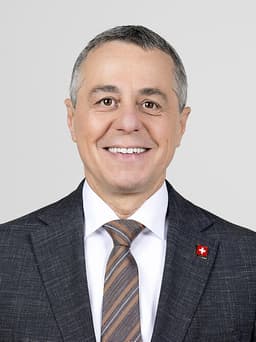
Ignazio Cassis
Politician · Modern
52.1Total
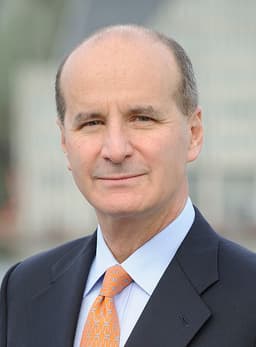
Jose Figueres Olsen
Politician · Modern
58.8Total
Basic Information
Born
1961
1954
Died
—
—
Era
Modern
Modern
Nationality
Switzerland
Costa Rica
Occupation
Politician
Politician
Civilization
Western
Western
Score Comparison
Military (10%)
50.0
50.0
Political (20%)
61.3
72.0
Influence (20%)
51.0
56.4
Legacy (20%)
39.2
50.0
Leadership (15%)
74.0
80.0
Strategy (15%)
42.6
43.5
TOTAL
52.1
58.8
Ignazio Cassis — Complete Timeline
2017 AD
Election to Federal CouncilPolitical Action◆ Major
Cassis was elected to the Swiss Federal Council on September 20, 2017, representing the FDP.The Liberals. He became the first Italian-speaking Swiss president in years, taking over the Federal Department of Foreign Affairs, shaping Swiss foreign policy.
Federal CouncilElectionFDP
Impact: nationalconstructive
2022 AD
Presidency of the Swiss ConfederationPolitical Action◆ Major
Ignazio Cassis served as President of the Swiss Confederation in 2022, a year marked by the Russian invasion of Ukraine. He chaired the Federal Council and represented Switzerland in international diplomacy, including navigating Swiss neutrality and sanctions against Russia.
Swiss PresidencyUkraine WarNeutrality
Impact: national
Foreign policy during Ukraine warPolitical Action◆ Major
As head of the Federal Department of Foreign Affairs, Cassis led Switzerland's response to the Russian invasion of Ukraine, including adopting EU sanctions while maintaining neutrality. He also facilitated humanitarian aid and diplomatic efforts, balancing international pressure with Swiss tradition.
Foreign PolicyUkraine WarSanctions
Impact: global
Jose Figueres Olsen — Complete Timeline
1994 AD
Elected President of Costa RicaPolitical Action◆ Major
José María Figueres Olsen was elected President of Costa Rica as a member of the National Liberation Party (PLN). His presidency focused on economic modernization, environmental sustainability, and technological development.
PresidencyCosta RicaPLN
Impact: nationalconstructive
1995 AD
Implemented Economic Structural AdjustmentReform◆ Major
Figueres pursued neoliberal economic reforms, including privatization of state enterprises and trade liberalization. These policies aimed to reduce the fiscal deficit but faced criticism for increasing social inequality.
Economic ReformNeoliberalismPrivatization
Impact: national
2004 AD
Appointed CEO of the World Economic ForumPolitical Action
After his presidency, Figueres was appointed Managing Director of the World Economic Forum (WEF) in Geneva. He held this position until 2006, focusing on global economic issues and public-private partnerships.
World Economic ForumGlobal GovernanceLeadership
Impact: global
This comparison has not been analyzed yet.
One-time AI generation (~1 minute). Scores and timeline are already available below.
Rankings
🥇
Jose Figueres OlsenLeader
Mil: 50.0Pol: 72.0Inf: 56.4
58.8
🥈
Ignazio Cassis
Mil: 50.0Pol: 61.3Inf: 51.0
52.1
+6.7 behind
How This Comparison Works
Algorithm
Each figure is scored on 6 dimensions (0—100 scale) based on structured historical data: Military (10%), Political (20%), Influence (20%), Legacy (20%), Leadership (15%), Strategy (15%). The weighted total produces the final ranking.
Data Sources
Scores are computed from structured sub-indicators in the database. Scale factors adjust for era (Ancient ×0.85, Modern ×1.0) and civilization size (Eastern ×1.05, Other ×0.80) to account for differences in population and military scale.
Maximum 3 Figures
Comparisons are limited to 2—3 figures to ensure readability and statistical meaningfulness.
Error Margins
±5 points per dimension — Sub-scores are derived from historical records with inherent uncertainty. Two figures within 5 points on a dimension should be considered roughly equivalent in that area.
Total Score Accuracy
±3 points overall — The weighted combination of 6 dimensions produces a total score with approximately ±3 points of uncertainty. Differences of less than 3 points are not statistically significant— the figures are effectively tied.
Known Limitations
- Historical records are incomplete and uneven across civilizations
- Figures from oral-tradition societies may be underrepresented
- Occupation labels can misclassify multi-role figures
- Scores measure capability and impact, not moral character
- Quantitative scoring is a comparison tool, not absolute truth
Capability Radar
Military (10%) — Battles & Warfare
Battles
27
26
Win Rate
30
30
Expansion
34
37
Political (20%) — Governance & Reform
Reform
35
75
Diplomacy
55
70
Economy
40
80
Influence (20%) — Cultural & Global Reach
Cultural
20
40
Global
15
40
Legacy (20%) — Historical Impact
Historical
15
50
Longevity
10
50
Leadership (15%) — Power & Stability
Tenure
40
60
Stability
45
75
Strategy (15%) — Tactics & Innovation
Strategy
39
37
Tactics
38
44
Reform
45
45
Similar Comparisons
Comments & Discussion
No comments yet. Be the first to share your thoughts!