Loading...
Ibrahim Pasha vs Kou Zhun
Ibrahim Pasha leads by 15.9 pts · 2 figures compared
…
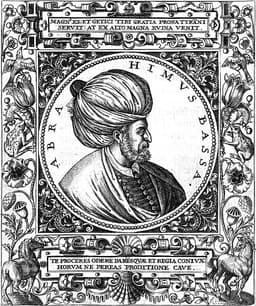
Ibrahim Pasha
Politician · Medieval
68.7Total

Kou Zhun
Politician · Medieval
52.8Total
Basic Information
Born
1493
961
Died
1536
1023
Era
Medieval
Medieval
Nationality
Ottoman Empire
China
Occupation
Politician
Politician
Civilization
Middle Eastern
Eastern
Score Comparison
Military (10%)
60.0
28.1
Political (20%)
78.0
68.0
Influence (20%)
82.0
51.8
Legacy (20%)
52.0
46.7
Leadership (15%)
80.0
66.0
Strategy (15%)
55.0
53.0
TOTAL
68.7
52.8
Ibrahim Pasha — Complete Timeline
1536 AD
Execution by Suleiman the MagnificentPolitical Action◆ Major
Sultan Suleiman ordered the execution of Grand Vizier Ibrahim Pasha, his longtime friend and confidant. Ibrahim was strangled in the Topkapi Palace after being accused of overreaching his authority and possibly plotting against the sultan. His death shocked the Ottoman court.
Ottoman PoliticsExecutionSuleiman
Impact: nationaltragic
Kou Zhun — Complete Timeline
1004 AD
Urging Emperor Zhenzong to lead the campaign at ChanyuanPolitical Action
Kou Zhun, as chancellor, persuaded Emperor Zhenzong to personally lead the Song army against the invading Liao forces. The emperor's presence at the front boosted morale and led to a stalemate that forced the Liao to negotiate.
Song-Liao WarChanyuanLeadership
Impact: nationalconstructive
1005 AD
Negotiation of the Chanyuan TreatyPolitical Action
Kou Zhun played a key role in negotiating the Treaty of Chanyuan with the Liao dynasty. The treaty established a peace agreement where Song paid annual tribute to Liao, ending decades of war and securing a century of peace.
TreatySong-Liao RelationsPeace
Impact: regionalconstructive
1020 AD
Exile to LeizhouPolitical Action
Kou Zhun was exiled to Leizhou in southern China after losing a power struggle at court. His removal from power marked the end of his influence and reflected the factional conflicts of the Song court.
ExilePolitical FallSong Dynasty
Impact: nationaltragic
Expert Analysis
Origins
Ibrahim Pasha (c. 1495–1536) was born to a Christian family in Parga (modern Greece). Captured as a child during an Ottoman raid, he was sold into slavery and later educated at the palace school in Edirne. His intelligence and charm attracted the attention of Prince Suleiman, and they became close friends. In contrast, Kou Zhun (961–1023) was born into a scholarly family in Shanxi, China. He passed the imperial examinations in 980, entering the civil service. His early career was marked by outspokenness and a reputation for integrity, which earned him both admirers and enemies at the Song court.
Rise to Power
Ibrahim Pasha's rise was meteoric. After Suleiman became sultan in 1520, Ibrahim was appointed Grand Vizier in 1523, replacing Piri Mehmed Pasha. He quickly became Suleiman's chief minister and closest confidant. His influence grew through military campaigns and diplomatic missions, including the siege of Rhodes (1522) and the Battle of Mohács (1526). Kou Zhun's ascent was slower. He became a junior official under Emperor Taizong and later served as vice director of the palace secretariat. His defining moment came in 1004 when the Liao dynasty invaded. As chancellor, he convinced Emperor Zhenzong to personally lead the army to the front, a risky move that ultimately led to the Chanyuan Treaty.
Leadership & Governance
Ibrahim Pasha governed with a combination of personal loyalty to Suleiman and administrative competence. He centralized power, reducing the influence of other viziers and military commanders. He also conducted foreign policy independently, negotiating with European powers. However, his accumulation of wealth and power created enemies. Kou Zhun's leadership style was confrontational and principled. He opposed appeasement of the Liao and advocated for military preparedness. At Chanyuan, he successfully negotiated a treaty that secured peace for decades, though he accepted annual tribute payments. His governance score of 68.0 reflects his political acumen, while his military score of 28.1 is low, as his strength was in diplomacy rather than combat.
Triumph & Tragedy
Ibrahim Pasha's greatest triumph was his role in expanding Ottoman influence through diplomacy and war, such as the conquest of Hungary. His tragedy was his execution in 1536, ordered by Suleiman due to suspicions of treason and growing arrogance. Kou Zhun's triumph was the Chanyuan Treaty (1005), which ended the Song-Liao war and brought stability. His tragedy came later: after Emperor Zhenzong's death, he was exiled to Leizhou in 1020 due to court intrigue, dying in obscurity. Ibrahim's leadership score of 80.0 reflects his effective governance, but his legacy score of 52.0 is low due to his abrupt fall. Kou Zhun's influence score of 51.8 and legacy of 46.7 indicate limited long-term impact.
Character & Destiny
Ibrahim Pasha was ambitious and confident, but his close relationship with Suleiman made him overconfident. He reportedly built a palace larger than the sultan's, a fatal mistake. His character—pride and lack of caution—sealed his fate. Kou Zhun was stubborn and outspoken, which earned him respect but also made him vulnerable. His refusal to compromise led to his exile. Both men's destinies were shaped by their inability to navigate court politics. Ibrahim scored 82.0 in influence due to his proximity to power, while Kou Zhun's political score of 68.0 reflects his diplomatic success but also his eventual fall.
Legacy
Ibrahim Pasha is remembered as one of the most powerful grand viziers of the Ottoman Empire, but his legacy is overshadowed by his execution. His policies influenced Ottoman governance for decades. Kou Zhun is celebrated in Chinese history as a loyal minister who secured peace through the Chanyuan Treaty, though he is not as famous as other Song figures. The treaty itself had lasting impact, maintaining peace for over a century. However, Ibrahim's influence score of 82.0 surpasses Kou Zhun's 51.8, reflecting his greater impact on Ottoman statecraft.
Conclusion
Ibrahim Pasha had a greater overall impact, scoring 68.7 total compared to Kou Zhun's 52.8. His political and leadership scores (78.0 and 80.0) demonstrate his effectiveness as a grand vizier, while Kou Zhun's lower scores reflect his narrower influence. Despite his tragic end, Ibrahim's role in shaping the Ottoman Empire under Suleiman was more consequential than Kou Zhun's diplomatic achievement. The score gap of 15.9 points underscores this difference. Ibrahim Pasha's legacy, though marred by execution, remains more significant in world history.
Rankings
🥇
Ibrahim PashaLeader
Mil: 60.0Pol: 78.0Inf: 82.0
68.7
🥈
Kou Zhun
Mil: 28.1Pol: 68.0Inf: 51.8
52.8
+15.9 behind
How This Comparison Works
Algorithm
Each figure is scored on 6 dimensions (0—100 scale) based on structured historical data: Military (10%), Political (20%), Influence (20%), Legacy (20%), Leadership (15%), Strategy (15%). The weighted total produces the final ranking.
Data Sources
Scores are computed from structured sub-indicators in the database. Scale factors adjust for era (Ancient ×0.85, Modern ×1.0) and civilization size (Eastern ×1.05, Other ×0.80) to account for differences in population and military scale.
Maximum 3 Figures
Comparisons are limited to 2—3 figures to ensure readability and statistical meaningfulness.
Error Margins
±5 points per dimension — Sub-scores are derived from historical records with inherent uncertainty. Two figures within 5 points on a dimension should be considered roughly equivalent in that area.
Total Score Accuracy
±3 points overall — The weighted combination of 6 dimensions produces a total score with approximately ±3 points of uncertainty. Differences of less than 3 points are not statistically significant— the figures are effectively tied.
Known Limitations
- Historical records are incomplete and uneven across civilizations
- Figures from oral-tradition societies may be underrepresented
- Occupation labels can misclassify multi-role figures
- Scores measure capability and impact, not moral character
- Quantitative scoring is a comparison tool, not absolute truth
Capability Radar
Military (10%) — Battles & Warfare
Battles
75
20
Win Rate
80
15
Expansion
85
5
Political (20%) — Governance & Reform
Reform
80
40
Diplomacy
90
65
Economy
75
35
Influence (20%) — Cultural & Global Reach
Cultural
65
30
Global
65
20
Legacy (20%) — Historical Impact
Historical
70
50
Longevity
60
40
Leadership (15%) — Power & Stability
Tenure
85
60
Stability
70
55
Strategy (15%) — Tactics & Innovation
Strategy
82
30
Tactics
78
25
Reform
70
10
Similar Comparisons
Comments & Discussion
No comments yet. Be the first to share your thoughts!