Loading...
Ibn Tumart vs Qin Shi Huang
Qin Shi Huang leads by 29.6 pts · 2 figures compared
…
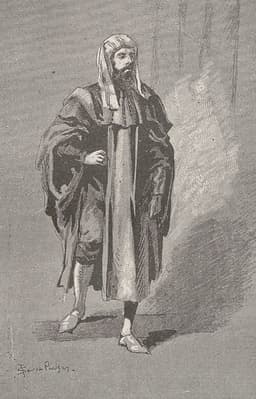
Ibn Tumart
Emperor · Medieval
55.6Total
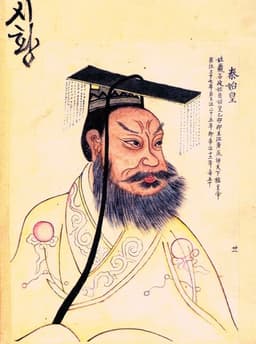
Qin Shi Huang
Emperor · Ancient
85.2Total
Basic Information
Born
1080
-259
Died
1130
-210
Era
Medieval
Ancient
Nationality
Almohad Caliphate
China
Occupation
Emperor
Emperor
Civilization
Middle Eastern
Eastern
Score Comparison
Military (10%)
55.0
80.0
Political (20%)
61.3
90.0
Influence (20%)
58.3
85.0
Legacy (20%)
56.0
90.0
Leadership (15%)
47.3
78.0
Strategy (15%)
52.5
82.0
TOTAL
55.6
85.2
Ibn Tumart — Complete Timeline
1121 AD
Proclamation as MahdiCultural
Ibn Tumart proclaimed himself the Mahdi, the guided one, after returning from the East. He began preaching a strict reformist message, condemning the Almoravids for their perceived religious laxity and calling for a return to the Quran and Sunnah.
Impact: regional
Establishment of the Almohad MovementPolitical Action◆ Major
Ibn Tumart founded the Almohad movement (al-Muwahhidun) in the Atlas Mountains of Morocco. He organized his followers into a disciplined religious and military community, rejecting the Almoravid interpretation of Islam and advocating for tawhid (strict monotheism).
Impact: regionalconstructive
1125 AD
Compilation of the Almohad DoctrineCultural
Ibn Tumart compiled his teachings into a book titled 'A'azz ma Yutlab' (The Most Precious of What is Sought). This work outlined the Almohad doctrine, emphasizing the unity of God and rejecting anthropomorphism, and became the foundation of the movement's ideology.
Impact: regionalconstructive
1130 AD
Battle of al-BuhayraWar◆ Major
Ibn Tumart's Almohad forces were defeated by the Almoravids at the Battle of al-Buhayra near Marrakech. This setback prevented the Almohads from capturing the Almoravid capital and forced them to retreat to the mountains.
Impact: regional
Death of Ibn TumartOther◆ Major
Ibn Tumart died shortly after the Battle of al-Buhayra, possibly from wounds or illness. His death was kept secret by his successor Abd al-Mu'min, who continued the Almohad movement and eventually overthrew the Almoravids.
Impact: regionaltragic
Qin Shi Huang — Complete Timeline
246 BC
Construction of the Mausoleum and Terracotta ArmyOther◆ Major
Qin Shi Huang commissioned a vast mausoleum complex near Xi'an, guarded by thousands of life-sized terracotta soldiers, horses, and chariots. The project employed hundreds of thousands of workers and reflected his obsession with immortality and imperial power.
Impact: global
230 BC
Conquest of the Six Warring StatesWar
From 230 to 221 BCE, Ying Zheng led the Qin state in a series of campaigns that conquered the Han, Zhao, Wei, Chu, Yan, and Qi states. This unified China under a single ruler for the first time, ending the Warring States period.
Impact: global
221 BC
Standardization of Writing, Currency, and MeasurementsReform◆ Major
Qin Shi Huang ordered the standardization of Chinese script, currency, and weights and measures across the unified empire. This facilitated administration, trade, and cultural integration, laying a foundation for future dynasties.
Impact: globalconstructive
Proclamation of the Qin DynastyPolitical Action
After conquering the last independent state, Ying Zheng declared himself Shi Huangdi (First Emperor), founding the Qin Dynasty. He adopted a new title to signify his supreme authority and initiated centralized imperial rule.
Impact: global
214 BC
Initiation of the Great Wall ConstructionOther◆ Major
Qin Shi Huang ordered the connection and extension of existing northern fortifications to create a unified defensive wall against nomadic Xiongnu raids. This project involved massive conscripted labor and became the precursor to the later Great Wall.
Impact: regional
213 BC
Burning of Books and Burying of ScholarsPolitical Action◆ Major
On the advice of Li Si, Qin Shi Huang ordered the burning of historical records and philosophical texts not aligned with Legalist doctrine. He also had 460 Confucian scholars buried alive to suppress dissent and consolidate ideological control.
Impact: nationaldestructive
Expert Analysis
ibn-tumart-vs-qin-shi-huang
# The Emperor and the Mahdi: Two Visions of Power
On a winter morning in 221 BC, a young king in his late thirties stood before the walls of a conquered capital and declared himself *Shi Huangdi*—the First Emperor. Nine hundred miles to the west and thirteen centuries later, a Berber scholar with a burning gaze climbed into the Atlas Mountains of Morocco and proclaimed himself the Mahdi, the guided one. Both men sought to remake the world in their image. One succeeded in founding an empire that would echo through millennia; the other launched a movement that would reshape North Africa but never see his own victory. What separates a world-historical figure from a visionary who falters at the threshold?
Origins
Ying Zheng was born into the violent chaos of the Warring States period, when seven Chinese kingdoms bled each other dry for supremacy. His father was a prince of Qin, a semi-barbarian state on the western frontier that had long been dismissed as crude by the more cultured central kingdoms. Young Zheng inherited a throne at thirteen, surrounded by scheming regents and a state that had already begun its slow, methodical conquest of its neighbors. The Qin court was a forge of Legalist philosophy—a ruthless doctrine that valued order above morality, law above tradition, and the state above the individual.
Ibn Tumart came from a different world entirely. Born around 1080 in the Anti-Atlas mountains of southern Morocco, he was a Berber from the Masmuda tribe, a people who had been conquered and converted by Arab armies centuries earlier but still nursed a fierce independence. As a young man, he traveled east to study in Cordoba, Alexandria, and Baghdad, where he absorbed the rigorous theology of al-Ghazali and the puritanical traditions of the Hanbali school. What he saw in the great cities of Islam horrified him: scholars who compromised with power, rulers who taxed beyond what the Quran allowed, and common people who venerated saints and tombs. He returned to Morocco with a single burning conviction—that the Almoravid dynasty, his people's rulers, had betrayed the pure message of Islam.
Rise to Power
The First Emperor's path was one of relentless military conquest. Between 230 and 221 BC, his armies rolled across China like a bronze tide. Kingdom after kingdom—Han, Zhao, Wei, Chu, Yan, Qi—fell to Qin's superior organization, its disciplined infantry, and its willingness to use terror as a weapon. At the siege of the Zhao capital, Qin soldiers reportedly massacred 400,000 prisoners. This was not cruelty for its own sake; it was a calculated message that resistance meant annihilation. By 221 BC, Ying Zheng had no rivals left. He simply declared himself emperor and ordered the world to conform.
Ibn Tumart's rise was far more precarious. He began not as a conqueror but as a street preacher in the Almoravid capital of Marrakech, smashing wine jars in the market and berating the sultan's sister for appearing in public unveiled. Banished from the city, he fled to the mountains, where he gathered followers among his own Masmuda tribesmen. In 1121, he proclaimed himself the Mahdi—not merely a reformer but the divinely guided figure who would restore justice before the end of days. This was a dangerous claim. In orthodox Sunni Islam, the Mahdi is a figure of the future, not the present. By declaring himself the Mahdi, Ibn Tumart was challenging the very structure of Islamic authority. His movement, the Almohads ("those who affirm the unity of God"), grew slowly in the remote valleys, building a mountain fortress at Tinmel and training an army of fanatical believers.
Leadership & Governance
Qin Shi Huang governed through absolute standardization. He ordered that all writing across his empire use the same script, that all carts have the same axle width to fit the same ruts, that all weights and measures follow the Qin standard. He minted uniform coins, built a network of roads and canals, and began linking the northern walls into what would become the Great Wall. His bureaucracy was a machine of iron efficiency: officials were appointed based on merit, not birth; laws were written down and applied uniformly; and a census counted every subject for taxation and labor. Yet this order came at a terrible price. In 213 BC, on the advice of his chancellor Li Si, the emperor ordered the burning of all historical records and philosophical texts not aligned with Legalist doctrine. Hundreds of scholars who protested were buried alive. The First Emperor was building a civilization, but he was also strangling its memory.
Ibn Tumart ruled through spiritual authority rather than administrative reach. His Almohad state was a theocracy built on oaths of allegiance and the discipline of a religious brotherhood. He divided his followers into units based on tribal structure, with a council of fifty elders and a inner circle of ten devoted disciples. His book, *A'azz ma Yutlab* ("The Most Precious of What is Sought"), laid out a strict monotheistic doctrine that rejected any anthropomorphic description of God—even the name "Almohad" meant "those who affirm God's unity." But Ibn Tumart was a preacher, not an administrator. He could inspire devotion, but he could not build a bureaucracy.
Triumph & Tragedy
The First Emperor's greatest triumph was his tomb. Beginning around 246 BC, he commissioned a vast underground mausoleum near his capital at Xianyang, guarded by an army of seven thousand life-sized terracotta soldiers, each with a unique face, armed with real bronze weapons. It was a monument to his absolute control—an empire in miniature, frozen in clay for eternity. But his tragedy was that he could not control death itself. Obsessed with immortality, he sent expeditions to find the elixir of life and consumed mercury pills prescribed by alchemists. He died in 210 BC at the age of forty-nine, likely poisoned by his own quest for eternal life. Within three years, his dynasty collapsed in rebellion.
Ibn Tumart's tragedy was more immediate. In 1130, he led his Almohad army down from the mountains to besiege Marrakech. At the Battle of al-Buhayra, his forces were crushed by the Almoravid cavalry. The Mahdi himself died shortly afterward—from wounds, illness, or despair, the records are unclear. His followers kept his death secret for three years, propping up his corpse in council meetings to maintain morale. It was a desperate act that revealed the fragility of his movement. Yet unlike the First Emperor's empire, the Almohad cause did not die with its founder. Under his successor, Abd al-Mu'min, the movement would eventually conquer all of North Africa and Andalusia, building an empire that lasted for over a century.
Character & Destiny
Qin Shi Huang was a man of colossal paranoia and colossal ambition. He believed that history began with him—hence his title "First Emperor"—and that all previous traditions were obstacles to his perfect order. He traveled constantly, inspecting his realm, sleeping in different palaces each night to avoid assassination. His character was the product of a world where trust was weakness and mercy was suicide. He had seen his mother's lover conspire against him, his regent Lu Buwei scheme for power, and his own half-brother rebel. He learned to trust no one and to crush every threat without hesitation.
Ibn Tumart was a man of absolute certainty. He had seen the truth in the East and returned to impose it on the West. His character was forged in the conviction that he alone understood God's will. This certainty gave him the courage to challenge the Almoravid empire, but it also made him inflexible. He could inspire followers but not compromise with enemies. He could denounce corruption but not build institutions. His personality was suited to founding a movement, not governing a state.
Legacy
Qin Shi Huang's legacy is the template of Chinese empire. The standardized writing system he imposed is still used today. The Great Wall he began would be rebuilt and extended for two thousand years. The bureaucratic state he created—with its appointed officials, uniform laws, and central control—became the model for every Chinese dynasty that followed. He is remembered as both a unifier and a tyrant, the man who made China possible and the man who tried to erase its memory.
Ibn Tumart's legacy is more ambiguous. The Almohad empire he founded would become one of the great powers of the medieval Mediterranean, building the Giralda of Seville and the Koutoubia Mosque of Marrakech. But his strict theology proved unsustainable. Later Almohad rulers softened his doctrines, and the empire eventually fell to internal division and Christian reconquest. Today, Ibn Tumart is remembered primarily in North Africa as a religious reformer, a figure of Berber pride, and a cautionary tale about the limits of zeal.
Conclusion
These two men, separated by centuries and civilizations, shared a common conviction: that the world as they found it was broken and needed to be remade from scratch. The First Emperor succeeded because he understood power as a practical instrument—a tool for ordering society, controlling resources, and eliminating rivals. Ibn Tumart failed because he understood power as a spiritual force—a weapon for purifying souls and enforcing divine law. One built an empire that lasted, in its essence, for two thousand years. The other built a movement that burned brightly for a century and then faded. The difference between them was not in their vision, but in their understanding of what it takes to make a vision real.
Rankings
🥇
Qin Shi HuangLeader
Mil: 80.0Pol: 90.0Inf: 85.0
85.2
🥈
Ibn Tumart
Mil: 55.0Pol: 61.3Inf: 58.3
55.6
+29.6 behind
How This Comparison Works
Algorithm
Each figure is scored on 6 dimensions (0—100 scale) based on structured historical data: Military (10%), Political (20%), Influence (20%), Legacy (20%), Leadership (15%), Strategy (15%). The weighted total produces the final ranking.
Data Sources
Scores are computed from structured sub-indicators in the database. Scale factors adjust for era (Ancient ×0.85, Modern ×1.0) and civilization size (Eastern ×1.05, Other ×0.80) to account for differences in population and military scale.
Maximum 3 Figures
Comparisons are limited to 2—3 figures to ensure readability and statistical meaningfulness.
Error Margins
±5 points per dimension — Sub-scores are derived from historical records with inherent uncertainty. Two figures within 5 points on a dimension should be considered roughly equivalent in that area.
Total Score Accuracy
±3 points overall — The weighted combination of 6 dimensions produces a total score with approximately ±3 points of uncertainty. Differences of less than 3 points are not statistically significant— the figures are effectively tied.
Known Limitations
- Historical records are incomplete and uneven across civilizations
- Figures from oral-tradition societies may be underrepresented
- Occupation labels can misclassify multi-role figures
- Scores measure capability and impact, not moral character
- Quantitative scoring is a comparison tool, not absolute truth
Capability Radar
Military (10%) — Battles & Warfare
Battles
30
85
Win Rate
35
90
Expansion
40
90
Political (20%) — Governance & Reform
Reform
80
95
Diplomacy
30
75
Economy
20
90
Influence (20%) — Cultural & Global Reach
Cultural
60
95
Global
50
85
Legacy (20%) — Historical Impact
Historical
65
95
Longevity
55
95
Leadership (15%) — Power & Stability
Tenure
25
70
Stability
20
65
Strategy (15%) — Tactics & Innovation
Strategy
45
85
Tactics
40
80
Reform
70
95
Similar Comparisons
Comments & Discussion
The Hammer of Qin6/17/2026
Calling Ibn Tumart a failure is too harsh, but Qin Shi Huang actually *won*. The First Emperor unified China through relentless military campaigns, standardized writing and measures, and built the Great Wall—tangible legacies that lasted millennia. Ibn Tumart died before conquering Marrakech, and his Almohad movement faded within a century. Qin’s Legalist system, brutal as it was, laid the groundwork for imperial China. Victory belongs to the man who saw his vision realized, not the one who only
数据侦察兵6/17/2026
别被这比较骗了。首先,时间跨度差了一千多年,文明形态完全不同。其次,秦朝的“统一”有多彻底?考古发现显示,秦简上各地文字差异依然很大,度量衡推广到基层非常缓慢。更别提秦始皇焚书坑儒的记录,幸存史料可能被汉代刻意渲染。拿帝国存续时间说事也不公平——秦朝自己就十五年灭亡了。这种对比更像是修辞练习,不是历史分析。
The West Abides6/17/2026
As a classics scholar, I see Qin Shi Huang as a twisted echo of Alexander the Great—conquering to *unify*, not just to rule. But Ibn Tumart? He’s more like Muhammad mixed with Plato: a philosopher-king who wanted to purge Islam of innovation. His obsession with *tawhid* (divine unity) mirrors Qin’s Legalist obsession with state unity, yet both failed to see that puritanical vision collapses under human complexity. The First Emperor’s tomb with its terracotta army is a monument to a man who feare
纸上考古侠6/17/2026
从史料批判角度看,两位领袖的形象都经过后世改造。秦始皇的“暴政”记载主要来自汉代史官,他们需要为新王朝合法性服务——比如焚书坑儒中的“儒”更可能指方士而非儒家学者。伊本·图马尔特则被阿尔摩哈德宫廷的辩护士们包装成完美马赫迪,抹去了他早期在贝贾亚被赶出城的失败记录。历史高下之争,往往是胜利者叙事的延续。
Every Inch an Emperor6/17/2026
Qin Shi Huang could raze cities and erase histories—Ibn Tumart just gave sermons. The First Emperor didn’t just conquer; he invented the imperial model that China followed for two thousand years. Standardized roads, unified currency, even the *Great Wall*—these are the acts of a man who thought in geological time. Ibn Tumart’s legacy is a footnote: a short-lived dynasty that couldn’t even hold North Africa. When history asks who truly remade the world, the answer is the man with the sword, not t