Loading...
Analysis will be generated on first visit.
Scores and timeline are available below. The page will refresh automatically when ready.
Ibn Taymiyyah vs Napoleon Bonaparte
Napoleon Bonaparte leads by 20.4 pts · 2 figures compared
…

Ibn Taymiyyah
Politician · Medieval
62.0Total
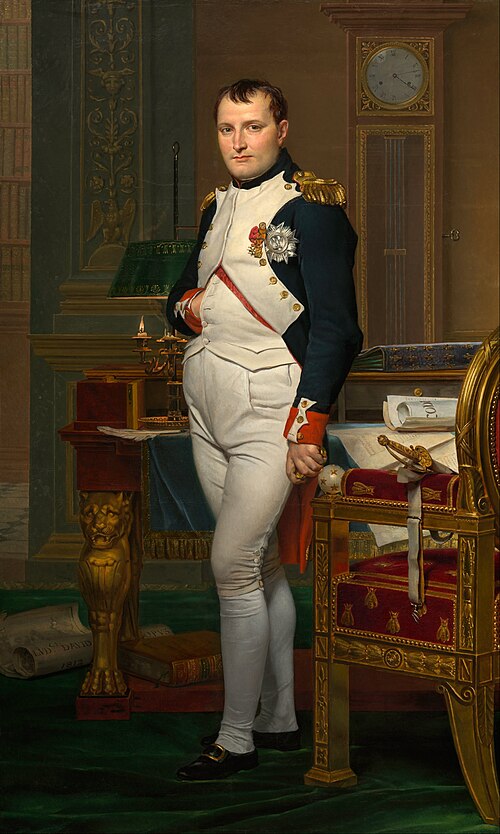
Napoleon Bonaparte
General · Modern
82.4Total
Basic Information
Born
1263
1769
Died
1328
1821
Era
Medieval
Modern
Nationality
Mamluk Sultanate
France
Occupation
Politician
General
Civilization
Middle Eastern
Western
Score Comparison
Military (10%)
34.6
94.0
Political (20%)
64.4
75.0
Influence (20%)
69.2
82.0
Legacy (20%)
65.0
78.0
Leadership (15%)
72.6
80.0
Strategy (15%)
52.6
93.0
TOTAL
62.0
82.4
Rankings
🥇
Napoleon BonaparteLeader
Mil: 94.0Pol: 75.0Inf: 82.0
82.4
🥈
Ibn Taymiyyah
Mil: 34.6Pol: 64.4Inf: 69.2
62.0
+20.4 behind
How This Comparison Works
Algorithm
Each figure is scored on 6 dimensions (0—100 scale) based on structured historical data: Military (10%), Political (20%), Influence (20%), Legacy (20%), Leadership (15%), Strategy (15%). The weighted total produces the final ranking.
Data Sources
Scores are computed from structured sub-indicators in the database. Scale factors adjust for era (Ancient ×0.85, Modern ×1.0) and civilization size (Eastern ×1.05, Other ×0.80) to account for differences in population and military scale.
Maximum 3 Figures
Comparisons are limited to 2—3 figures to ensure readability and statistical meaningfulness.
Error Margins
±5 points per dimension — Sub-scores are derived from historical records with inherent uncertainty. Two figures within 5 points on a dimension should be considered roughly equivalent in that area.
Total Score Accuracy
±3 points overall — The weighted combination of 6 dimensions produces a total score with approximately ±3 points of uncertainty. Differences of less than 3 points are not statistically significant— the figures are effectively tied.
Known Limitations
- Historical records are incomplete and uneven across civilizations
- Figures from oral-tradition societies may be underrepresented
- Occupation labels can misclassify multi-role figures
- Scores measure capability and impact, not moral character
- Quantitative scoring is a comparison tool, not absolute truth
Capability Radar
Military (10%) — Battles & Warfare
Battles
25
95
Win Rate
28
90
Expansion
33
95
Political (20%) — Governance & Reform
Reform
20
95
Diplomacy
15
80
Economy
5
85
Influence (20%) — Cultural & Global Reach
Cultural
85
85
Global
75
90
Legacy (20%) — Historical Impact
Historical
80
95
Longevity
85
90
Leadership (15%) — Power & Stability
Tenure
10
85
Stability
10
70
Strategy (15%) — Tactics & Innovation
Strategy
37
95
Tactics
38
98
Reform
42
92
Analysis will be generated on first visit.
Scores and timeline are available below. The page will refresh automatically when ready.
Ibn Taymiyyah — Complete Timeline
1303 AD
Issued fatwa against the Mongol IlkhanatePolitical Action◆ Major
Ibn Taymiyyah issued a fatwa declaring that Muslims under Mongol rule should rebel, as the Mongols did not fully implement Sharia law. This fatwa justified jihad against the Ilkhanate and influenced later Salafi thought on legitimate authority.
FatwaJihadMongols
Impact: regional
1306 AD
Imprisoned in the Citadel of Cairo for his theological viewsPolitical Action◆ Major
Ibn Taymiyyah was imprisoned in the Citadel of Cairo for his anthropomorphic interpretations of God's attributes and his criticism of Sufi practices. He was tried before a council of scholars and confined for 18 months.
ImprisonmentTheological ControversyMamluk Sultanate
Impact: regionaldestructive
1309 AD
Exiled to Alexandria for his opposition to Sufi practicesPolitical Action
Ibn Taymiyyah was exiled to Alexandria by the Mamluk sultan after he condemned the veneration of saints and the practice of visiting tombs. He remained there for several years before being allowed to return to Cairo.
ExileSufismControversy
destructive
1310 AD
Wrote 'The Book of the Sunnah' (Kitab al-Sunnah)Cultural◆ Major
Ibn Taymiyyah wrote a major theological work defending the Salafi creed, arguing for a literal interpretation of the Quran and Hadith. He rejected allegorical interpretation (ta'wil) and criticized Ash'ari theology.
TheologySalafismHadith
Impact: regional
1328 AD
Died in prison in DamascusPolitical Action◆ Major
Ibn Taymiyyah was imprisoned in the Citadel of Damascus for his continued opposition to the veneration of saints and his criticism of the Ash'ari school. He died in confinement, his body reportedly refused burial in public cemeteries initially.
ImprisonmentDeathMartyrdom
Impact: regionaltragic
Similar Comparisons
Comments & Discussion
No comments yet. Be the first to share your thoughts!