Loading...
Hussein el-Shafei vs John J. Pershing
John J. Pershing leads by 15.6 pts · 2 figures compared
…
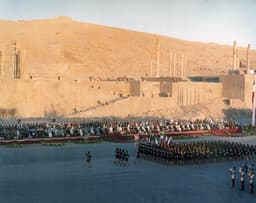
Hussein el-Shafei
General · Modern
45.6Total

John J. Pershing
General · Modern
61.2Total
Basic Information
Born
1918
1860
Died
2005
1948
Era
Modern
Modern
Nationality
Egypt
United States
Occupation
General
General
Civilization
Middle Eastern
Western
Score Comparison
Military (10%)
22.6
82.0
Political (20%)
40.8
45.0
Influence (20%)
53.3
65.0
Legacy (20%)
40.8
55.0
Leadership (15%)
67.0
62.0
Strategy (15%)
36.8
69.1
TOTAL
45.6
61.2
Hussein el-Shafei — Complete Timeline
1952 AD
Participated in the 1952 Egyptian RevolutionPolitical Action◆ Major
Hussein el-Shafei was a founding member of the Free Officers movement that overthrew King Farouk. He helped plan and execute the July 23 coup that ended the monarchy.
Egyptian RevolutionFree OfficersCoup
Impact: national
1954 AD
Appointed Minister of WarPolitical Action
El-Shafei served as Egypt's Minister of War, overseeing the military's reorganization after the revolution. He held this post during the Suez Crisis of 1956.
Minister of WarSuez CrisisMilitary
Impact: national
1961 AD
Served as Vice President of EgyptPolitical Action◆ Major
El-Shafei served as Vice President of Egypt under Nasser from 1961 to 1965. He was involved in implementing socialist policies and land reforms during the Nasser era.
Vice PresidentNasser EraSocialist Policies
Impact: national
John J. Pershing — Complete Timeline
1916 AD
Punitive Expedition into MexicoWar◆ Major
Pershing led a US Army expedition into Mexico to capture Pancho Villa after his raid on Columbus, New Mexico. The expedition failed to capture Villa but provided valuable experience for the US Army and tested new technologies.
Mexican RevolutionUS InterventionExpedition
Impact: regional
1917 AD
Appointed Commander of the American Expeditionary ForcesPolitical Action◆ Major
Pershing was appointed commander of the American Expeditionary Forces (AEF) in World War I. He insisted on keeping the AEF as an independent force rather than integrating it into Allied armies, shaping US military policy.
World War ICommandUS Army
Impact: globalconstructive
1918 AD
Meuse-Argonne OffensiveWar
Pershing commanded the AEF in the Meuse-Argonne Offensive, the largest battle in US history at the time. The offensive helped break the German lines and contributed to the end of World War I, though it cost over 26,000 American dead.
World War IWestern FrontOffensive
Impact: global
Expert Analysis
Origins
**Hussein el-Shafei** (born 1918) was the son of a middle-class Egyptian family. He graduated from the Egyptian Military Academy in 1938 and served in the Egyptian Army during World War II. His formative experiences included frustration with the British occupation and the corrupt monarchy, which led him to join the secret Free Officers movement in the late 1940s. He was influenced by the nationalist and socialist ideas of Gamal Abdel Nasser.
**John J. Pershing** (born 1860) was from a Missouri farming family. He graduated from West Point in 1886 and served in the Apache Wars, the Spanish-American War, and the Philippine-American War. His early command experience included leading a cavalry troop and serving as a military attaché in Japan. He taught at West Point and later commanded the Mexican Punitive Expedition, which shaped his views on modern warfare.
Rise to Power
El-Shafei rose to prominence as a key member of the Free Officers, participating in the 1952 Egyptian Revolution that overthrew King Farouk on July 23, 1952. He was part of the Revolutionary Command Council and quickly became a trusted ally of Nasser. In 1954, he was appointed Minister of War, overseeing military reorganization during the Suez Crisis of 1956. His political ascent culminated in his role as Vice President of Egypt from 1961 to 1965.
Pershing rose through the ranks via merit and political connections. His appointment as commander of the American Expeditionary Forces (AEF) in May 1917 was a turning point. Despite initial opposition, he insisted on keeping the AEF as an independent force, not merging with Allied armies. His leadership during the Meuse-Argonne Offensive in 1918 solidified his reputation as the top US commander of World War I.
Leadership & Governance
El-Shafei's leadership style was bureaucratic and loyal to Nasser. As Vice President, he implemented socialist policies and land reforms, but his role was largely ceremonial. He had a military score of 22.6, reflecting limited direct combat command. His political score of 40.8 indicates moderate influence within Nasser's regime, but he lacked independent authority.
Pershing was a strict, disciplined commander who emphasized organization and logistics. He demanded high standards and was known for his no-nonsense approach. His military score of 82.0 reflects his success in leading the AEF, while his leadership score of 62.0 shows he was effective but not without controversy. He opposed segregating black soldiers but failed to prevent discrimination.
Triumph & Tragedy
El-Shafei's greatest success was his role in the 1952 Revolution and his service as Vice President during a period of Egyptian nationalism. However, his greatest failure was his inability to influence policy independently; after Nasser's death, he faded into obscurity. He scored 53.3 in influence, but his legacy score of 40.8 shows limited lasting impact.
Pershing's triumphs include commanding the AEF during the Meuse-Argonne Offensive, which helped end WWI, and training a generation of future US generals. His Punitive Expedition into Mexico failed to capture Pancho Villa, but provided valuable experience. His legacy score of 55.0 reflects his role in modernizing the US Army, though his tactics were sometimes criticized as outdated.
Character & Destiny
El-Shafei was a loyalist, not a visionary. He followed Nasser's lead and never challenged the regime. His character as a dutiful soldier ensured his rise but limited his historical footprint. He scored 67.0 in leadership, indicating competence within a narrow scope.
Pershing was ambitious, stubborn, and meticulous. His insistence on an independent AEF was controversial but strategically sound. His character shaped his destiny as the father of the modern US Army, but his rigidness sometimes hindered adaptability. He scored 69.1 in strategy, reflecting his operational planning.
Legacy
El-Shafei is remembered as a secondary figure in Nasser's Egypt. His contributions to the revolution and socialist reforms are acknowledged, but he is overshadowed by Nasser and others. His legacy score of 40.8 indicates modest historical significance.
Pershing's legacy is substantial: he is the only US general to be promoted to General of the Armies. The AEF's success established the US as a military power. His methods influenced US military doctrine for decades. He scored 65.0 in influence and 55.0 in legacy.
Conclusion
John J. Pershing had a greater impact than Hussein el-Shafei. Pershing's total score of 61.2 versus el-Shafei's 45.6 reflects his decisive role in World War I and lasting influence on the US military. El-Shafei's role was important within Egypt but limited in global scope. Pershing's leadership shaped modern warfare, while el-Shafei remains a footnote in Nasser's regime.
Rankings
🥇
John J. PershingLeader
Mil: 82.0Pol: 45.0Inf: 65.0
61.2
🥈
Hussein el-Shafei
Mil: 22.6Pol: 40.8Inf: 53.3
45.6
+15.6 behind
How This Comparison Works
Algorithm
Each figure is scored on 6 dimensions (0—100 scale) based on structured historical data: Military (10%), Political (20%), Influence (20%), Legacy (20%), Leadership (15%), Strategy (15%). The weighted total produces the final ranking.
Data Sources
Scores are computed from structured sub-indicators in the database. Scale factors adjust for era (Ancient ×0.85, Modern ×1.0) and civilization size (Eastern ×1.05, Other ×0.80) to account for differences in population and military scale.
Maximum 3 Figures
Comparisons are limited to 2—3 figures to ensure readability and statistical meaningfulness.
Error Margins
±5 points per dimension — Sub-scores are derived from historical records with inherent uncertainty. Two figures within 5 points on a dimension should be considered roughly equivalent in that area.
Total Score Accuracy
±3 points overall — The weighted combination of 6 dimensions produces a total score with approximately ±3 points of uncertainty. Differences of less than 3 points are not statistically significant— the figures are effectively tied.
Known Limitations
- Historical records are incomplete and uneven across civilizations
- Figures from oral-tradition societies may be underrepresented
- Occupation labels can misclassify multi-role figures
- Scores measure capability and impact, not moral character
- Quantitative scoring is a comparison tool, not absolute truth
Capability Radar
Military (10%) — Battles & Warfare
Battles
10
75
Win Rate
10
80
Expansion
5
60
Political (20%) — Governance & Reform
Reform
30
50
Diplomacy
30
75
Economy
20
40
Influence (20%) — Cultural & Global Reach
Cultural
15
55
Global
15
65
Legacy (20%) — Historical Impact
Historical
20
70
Longevity
15
60
Leadership (15%) — Power & Stability
Tenure
40
60
Stability
30
65
Strategy (15%) — Tactics & Innovation
Strategy
10
85
Tactics
10
70
Reform
10
75
Similar Comparisons
Comments & Discussion
No comments yet. Be the first to share your thoughts!