Loading...
This comparison has not been analyzed yet.
One-time AI generation (~1 minute). Scores and timeline are already available below.
Huni vs Nyuserre Ini
Nyuserre Ini leads by 4.5 pts · 2 figures compared
…
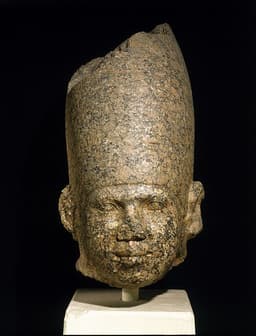
Huni
Emperor · Ancient
41.8Total

Nyuserre Ini
Emperor · Ancient
46.3Total
Basic Information
Born
-2620
-2420
Died
-2600
-2390
Era
Ancient
Ancient
Nationality
Old Kingdom Egypt
Old Kingdom Egypt
Occupation
Emperor
Emperor
Civilization
Middle Eastern
Middle Eastern
Score Comparison
Military (10%)
38.4
10.2
Political (20%)
26.4
46.6
Influence (20%)
45.5
50.2
Legacy (20%)
40.0
41.7
Leadership (15%)
48.4
72.0
Strategy (15%)
53.5
45.0
TOTAL
41.8
46.3
Huni — Complete Timeline
2615 BC
Establishment of the cult of the sun god RaCultural
Huni may have promoted the cult of Ra, as evidenced by the sun temple at Meidum and the use of the sun symbol in his name. This religious shift laid the groundwork for the solar temples of the Fifth Dynasty.
ReligionSun CultRa
Impact: national
2610 BC
Construction of the Meidum PyramidOther◆ Major
Huni is credited with building the Meidum Pyramid, originally a step pyramid later converted into a true pyramid. The pyramid's outer casing collapsed in antiquity, leaving a distinctive three-step core. It represents a transitional phase in pyramid construction from step to true pyramids.
Pyramid ConstructionMeidumArchitecture
Impact: nationalconstructive
Nyuserre Ini — Complete Timeline
2420 BC
Military campaigns in the Sinai and NubiaWar
Nyuserre conducted military expeditions to the Sinai to protect mining operations and to Nubia to secure trade routes. Reliefs from his pyramid complex depict the king smiting Libyan and Asiatic enemies, though the scale of these campaigns is uncertain.
MilitarySinaiNubia
Impact: regional
Construction of the Pyramid of Nyuserre at AbusirCultural◆ Major
Nyuserre Ini built his pyramid complex at Abusir, one of the best-preserved of the Fifth Dynasty. The pyramid originally reached about 50 meters in height and was faced with fine white limestone. The complex included a valley temple, causeway, and a large mortuary temple.
ArchitecturePyramidAbusir
Impact: nationalconstructive
Completion of the sun temple of Nyuserre at Abu GhurabCultural◆ Major
Nyuserre built a large sun temple dedicated to Ra at Abu Ghurab, near Abusir. The temple featured a massive obelisk on a podium, an alabaster altar, and extensive reliefs depicting the king's jubilee festival. It is the best-preserved sun temple from the Old Kingdom.
ReligionSun TempleArchitecture
Impact: nationalconstructive
Long reign and stabilization of Dynasty VPolitical Action◆ Major
Nyuserre Ini reigned for approximately 30 years, the longest of any Fifth Dynasty pharaoh. His reign brought stability after the short reigns of his predecessors, allowing for extensive building projects and the consolidation of royal power.
StabilityLong ReignDynasty V
Impact: nationalconstructive
This comparison has not been analyzed yet.
One-time AI generation (~1 minute). Scores and timeline are already available below.
Rankings
🥇
Nyuserre IniLeader
Mil: 10.2Pol: 46.6Inf: 50.2
46.3
🥈
Huni
Mil: 38.4Pol: 26.4Inf: 45.5
41.8
+4.5 behind
How This Comparison Works
Algorithm
Each figure is scored on 6 dimensions (0—100 scale) based on structured historical data: Military (10%), Political (20%), Influence (20%), Legacy (20%), Leadership (15%), Strategy (15%). The weighted total produces the final ranking.
Data Sources
Scores are computed from structured sub-indicators in the database. Scale factors adjust for era (Ancient ×0.85, Modern ×1.0) and civilization size (Eastern ×1.05, Other ×0.80) to account for differences in population and military scale.
Maximum 3 Figures
Comparisons are limited to 2—3 figures to ensure readability and statistical meaningfulness.
Error Margins
±5 points per dimension — Sub-scores are derived from historical records with inherent uncertainty. Two figures within 5 points on a dimension should be considered roughly equivalent in that area.
Total Score Accuracy
±3 points overall — The weighted combination of 6 dimensions produces a total score with approximately ±3 points of uncertainty. Differences of less than 3 points are not statistically significant— the figures are effectively tied.
Known Limitations
- Historical records are incomplete and uneven across civilizations
- Figures from oral-tradition societies may be underrepresented
- Occupation labels can misclassify multi-role figures
- Scores measure capability and impact, not moral character
- Quantitative scoring is a comparison tool, not absolute truth
Capability Radar
Military (10%) — Battles & Warfare
Battles
39
5
Win Rate
43
5
Expansion
42
5
Political (20%) — Governance & Reform
Reform
20
40
Diplomacy
20
40
Economy
20
50
Influence (20%) — Cultural & Global Reach
Cultural
20
40
Global
10
20
Legacy (20%) — Historical Impact
Historical
30
30
Longevity
20
30
Leadership (15%) — Power & Stability
Tenure
30
70
Stability
30
60
Strategy (15%) — Tactics & Innovation
Strategy
46
5
Tactics
53
5
Reform
54
5
Similar Comparisons
Comments & Discussion
No comments yet. Be the first to share your thoughts!